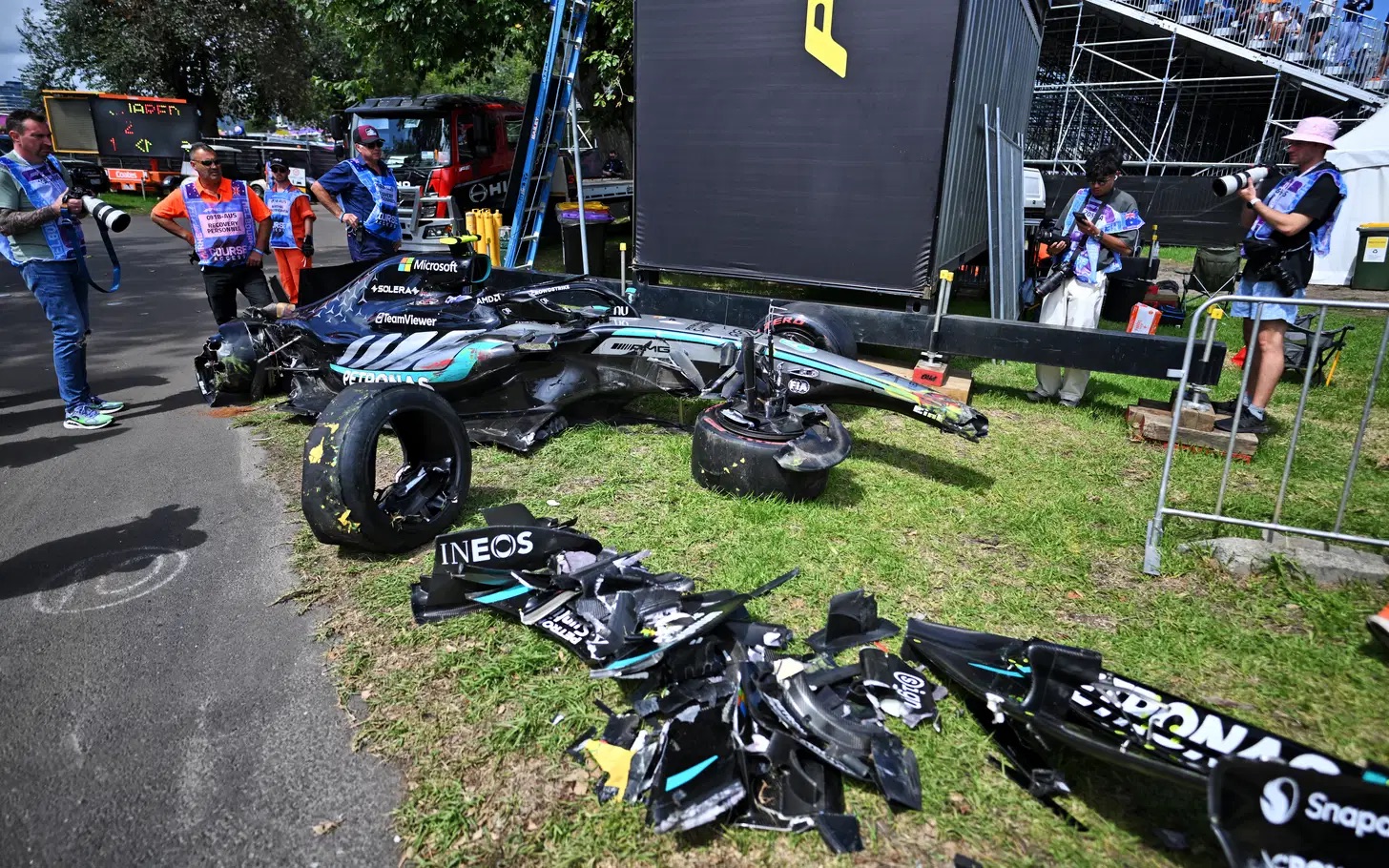
Reports have emerged providing an update on the physical condition of rising Formula One talent Kimi Antonelli following a frightening high-speed crash that recently shook the paddock. The young Mercedes driver was involved in a dramatic accident during a practice session at the Australian Grand Prix, raising immediate concerns about his safety and long-term fitness.
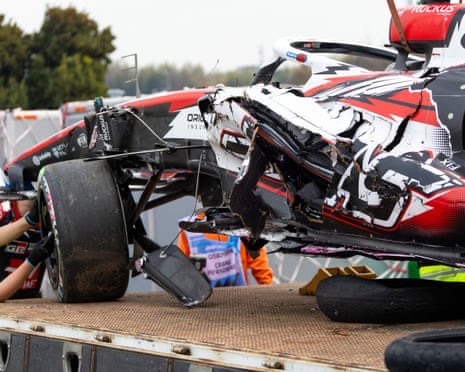
The incident occurred during the final practice session before qualifying, when Antonelli lost control of his car at high speed. As he approached a corner—specifically Turn 2 at Albert Park—his vehicle locked up and slid uncontrollably into the barriers. The collision was forceful, leaving his car severely damaged and scattering debris across the track. One of the wheels even detached due to the impact, underlining just how violent the crash was.
Despite the alarming nature of the crash, Antonelli quickly reassured his team over the radio that he was okay. This immediate response helped calm fears in the Mercedes garage, although the visual severity of the accident continued to spark concern among fans and analysts alike.
In the days following the incident, further medical evaluations were carried out to determine whether the teenage driver had sustained any injuries. Fortunately, scans revealed that there were no broken bones or life-threatening conditions. However, Antonelli did not escape completely unharmed. He later confirmed that he suffered a ligament strain as a result of the crash—an injury that, while not severe, still required attention and recovery time.
As part of his recovery process, Antonelli has been seen wearing a supportive brace on his hand. The device is intended to stabilize the affected area and aid healing while allowing him to continue racing. According to the driver himself, the injury is manageable and does not prevent him from performing behind the wheel. He emphasized that he is still capable of driving normally and that the brace is mainly a precautionary measure to ensure proper recovery.
Interestingly, despite the physical setback, Antonelli demonstrated remarkable resilience almost immediately after the crash. He managed to participate in qualifying and delivered an impressive performance, securing a strong starting position. This alone highlighted his determination and ability to push through adversity, even under physically challenging circumstances.
Even more remarkable was what followed. In the race weekend after the crash, Antonelli went on to achieve a major milestone in his career by claiming his first-ever Formula One victory. This achievement not only marked a turning point in his young career but also served as proof that the injury had not significantly hindered his performance.
The sequence of events—crashing heavily, sustaining an injury, and then winning shortly afterward—has captured the attention of the motorsport world. It has also sparked conversations about the toughness and mental strength required to compete at the highest level of Formula One. Antonelli himself even joked about the situation, suggesting that perhaps the brace had become something of a lucky charm following his success.
This is not the first time Antonelli has experienced a scare involving a crash. Earlier in the year, he was also involved in a road accident near his home in San Marino. Fortunately, he emerged from that incident completely unharmed, further reinforcing the notion that he has been relatively lucky when it comes to avoiding serious injury despite dangerous situations.
The recent Formula One crash, however, was far more intense given the high speeds and competitive environment in which it occurred. Incidents like these serve as a reminder of the inherent risks drivers face every time they step into the cockpit. Even with modern safety advancements in Formula One, accidents at such speeds can have serious consequences.
Antonelli’s case highlights both the effectiveness of current safety measures and the physical resilience required of drivers. The fact that he was able to walk away with only a minor ligament strain is a testament to improvements in car design, protective gear, and track safety standards.
From a broader perspective, this episode has done little to slow down Antonelli’s rapid rise in Formula One. At just 19 years old, he is already regarded as one of the sport’s most promising young talents. His ability to recover quickly and continue delivering strong performances has only strengthened his reputation within the paddock.
Fans and experts alike have praised his composure and maturity, especially considering his age. Dealing with a high-speed crash, managing a physical injury, and still maintaining focus to compete at the highest level is no small feat. It demonstrates not only physical toughness but also mental resilience—qualities that are essential for long-term success in Formula One.
Looking ahead, Antonelli is expected to continue racing without major limitations. While he may still need to wear the brace temporarily, there is no indication that the injury will have lasting effects on his season. Medical assessments have been reassuring, and the driver himself has expressed confidence in his ability to perform.
In conclusion, while the crash at the Australian Grand Prix initially caused widespread concern, the latest updates confirm that Kimi Antonelli has avoided serious harm. Although he is dealing with a minor ligament injury, it has not significantly impacted his racing capabilities. His swift return to form—including a race win shortly after the incident—underscores both his resilience and his immense potential as one of Formula One’s brightest young stars.