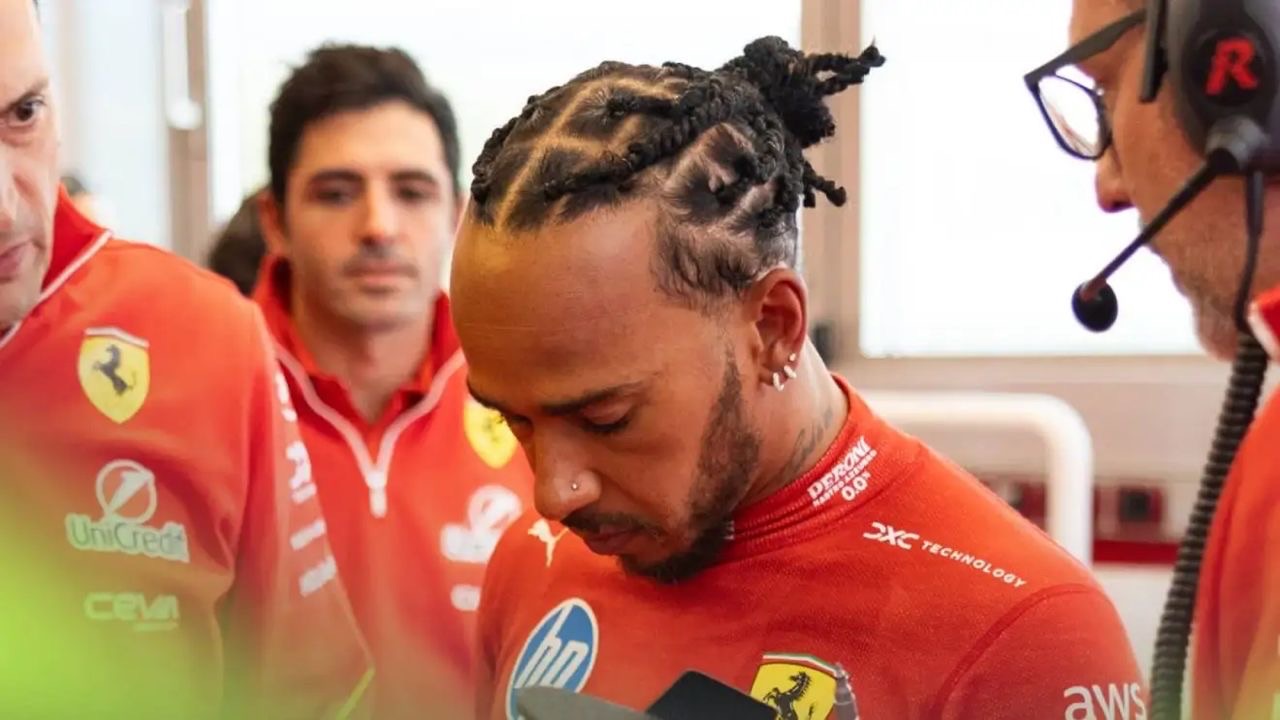
Lewis Hamilton Highlights What’s Next for Ferrari After His First 2026 F1 Car Run
Lewis Hamilton, one of the most successful drivers in Formula 1 history, has begun his first full season with Scuderia Ferrari — and his early impressions of the 2026 Ferrari car have already given a revealing look at his immediate priorities. After completing his initial laps in the new challenger during testing, Hamilton has been candid about what still needs to be understood and improved as he and his team work toward the opening rounds of the 2026 championship.
Hamilton’s debut experience behind the wheel of Ferrari’s 2026 machine took place in Barcelona, where Ferrari split time between himself and teammate Charles Leclerc during one of their early pre-season test sessions. While Leclerc managed to get meaningful mileage in dry conditions, Hamilton’s time on track was mostly in wet weather — meaning his first real feel for the car’s behavior has been limited by the conditions.
This distinction matters. Driving in the wet is fundamentally different from driving in the dry: grip levels vary wildly, the balance of the car shifts unpredictably, and many performance characteristics become harder to assess. As a result, Hamilton has stressed that his most important short-term goal is simply to spend more time in the dry so he can genuinely understand how the car behaves at speed without the added variable of rain.
In a public statement after his first session, Hamilton explained that his checklist for the rest of the week was straightforward but critical: he wants to get the car on a dry circuit, feel its balance properly, and understand one particularly significant technical feature — the new Straight-Line Mode (SM). Hamilton said that while he has simulated the car’s performance in this mode previously, actually feeling how it works on track is something he hasn’t done yet due to the damp conditions.
The Straight-Line Mode is one of several new technical elements introduced in the 2026 regulations. These rules, approved by the sport’s governing body and teams, represent one of the biggest overhauls of Formula 1’s technical framework in decades. They include major changes to the power unit, with a greater emphasis on hybrid energy deployment and battery performance, as well as aero refinements aimed at improving overtaking and race pace.
Hamilton specifically has been focused on understanding how to deploy and recharge the battery system efficiently around a lap. In today’s F1 cars, power comes from both traditional internal combustion and hybrid electric components, but under the new rules this balance shifts so that managing energy usage becomes increasingly crucial. How drivers use battery deployment, when they recharge it, and how they balance these systems with traditional engine power can make significant differences in lap time and race performance.
Because of this, Hamilton said that getting a real feel for battery deployment — including how to use it strategically and effectively — is high on his learning list. While simulator work has given him some familiarity with the systems, Hamilton emphasized that there’s no substitute for real track time to fully grasp how it feels and functions in live conditions.
In addition to the technical learning, Hamilton noted that overall balance and setup understanding still need refinement. The team and the driver have already put significant work into simulator preparation, but he’s aware that data from actual circuits will be indispensable for optimization. So far, most of his on-track experience with the new Ferrari has been limited, meaning Ferrari engineers and Hamilton himself are eager to log more miles to gather meaningful info on tire behavior, aerodynamic balance, and power unit responsiveness.
This focus on development and understanding comes at an important time for Ferrari. The team is entering a fresh regulatory era that many drivers, including Hamilton, have described as one of the most substantial in the sport’s history. Some media outlets have even characterized the rule changes as the biggest shift Hamilton has experienced in his long career.
For Hamilton, this transition provides both challenges and opportunities. After an underwhelming first season with Ferrari in 2025 — one where he struggled to achieve the results he and the team had hoped for — the 2026 regulatory reset offers a chance to start on a more even footing with rivals. Across the 2025 season, Hamilton faced a number of competitive and personal challenges while adjusting to life in red, and now his attention is squarely on making the most of the new package.
To this end, Hamilton’s “next target” isn’t something dramatic like predicting race wins or championships yet — instead, it’s built around incremental mastery and understanding. He wants to know how the new systems behave, how to extract the most performance from the car in both qualifying and race trim, and how best to manage the battery and hybrid systems that are now central to F1 speed.
This methodical approach reflects both the complexity of the new cars and the maturity of Hamilton as a driver. At 41, with seven world titles to his name, Hamilton is well aware that short-term gains in information and setup refinement can translate into long-term competitive advantages as the season progresses. The emphasis now is on preparation — turning data into understanding and then turning that understanding into pace once the racing begins in earnest.
Ferrari, for its part, has been pushing to make its 2026 challenger competitive from the get-go. According to other media coverage of the team and the car’s launch, Ferrari’s leadership believes the new SF-26 represents a major step forward and that the team is refreshed and eager for the new era. While the degree of competitiveness relative to rivals remains to be seen, Hamilton’s detailed and thoughtful focus suggests that Ferrari is treating the testing period as a vital opportunity to fine-tune their approach before the first race.
In summary, Hamilton’s next target isn’t measured in wins or podiums — at least not yet. Instead he’s aiming for deeper technical understanding, more dry laps in the new car, and improved integration with Ferrari’s engineering philosophy as the team heads into what could be one of the most transformative seasons in modern Formula 1.