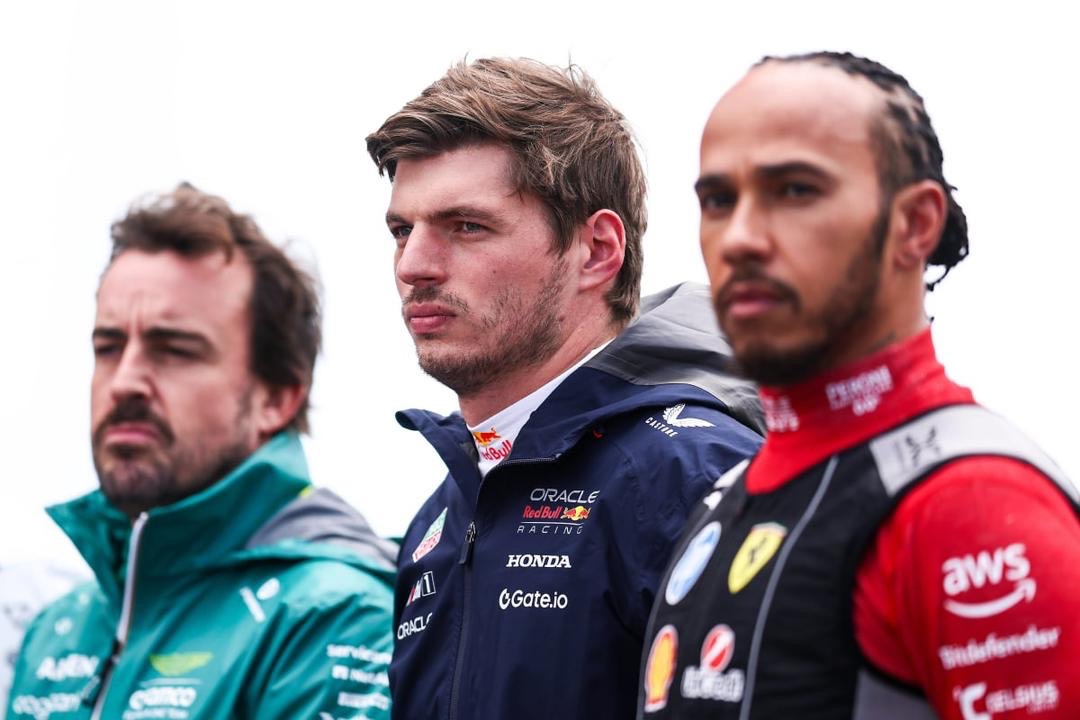
Recent developments in the world of Formula One have sent shockwaves through the paddock and fan community alike, as mounting speculation grows around the future of seven-time world champion Lewis Hamilton at Scuderia Ferrari, one of the sport’s most iconic teams. Despite his huge reputation and an illustrious career that includes multiple world titles with Mercedes, Hamilton’s first season with Ferrari has fallen well short of expectations — and internal discussions within the Italian team now reportedly include contingency planning for life without him, even as public support continues for the British driver.
When Hamilton made the landmark decision to leave Mercedes — where he had become one of the most successful drivers in the history of the sport — to join Ferrari for the 2025 season, the move was billed as historic and a chance for him to chase an elusive eighth world title under the famed Prancing Horse banner. However, the much-anticipated fairy-tale narrative has proved elusive. Through the course of the year, Hamilton has struggled in the Ferrari, often struggling to find the pace and consistency that marked his career at Mercedes. According to reports, he has ended the season without a single podium finish, ultimately placing sixth in the drivers’ championship — a result that has shocked many in the sport given his pedigree.
Ferrari’s management, including team principal Fred Vasseur, has repeatedly publicly backed Hamilton and insisted that the 2025 season represents a transitional period as the sport prepares for major regulatory changes in 2026. These sweeping changes to power unit and chassis rules are widely seen as a reset for the grid, and Ferrari appear determined to make the most of that shift. Vasseur has overseen various internal adjustments meant to help Hamilton adapt more effectively, including closer collaboration with technical staff and efforts to refine the team’s development direction. In public, both Hamilton and Vasseur have projected unity and mutual support, and Ferrari has resisted calls to make drastic leadership changes.
Nevertheless, behind the scenes, sources suggest that Ferrari’s senior leadership has started to quietly draw up plans for a future that may not include Hamilton at the center of their driver lineup. These discussions are not framed as an immediate decision to part ways — Ferrari has repeatedly insisted Hamilton remains part of their plans — but rather as preparation for all eventualities, particularly given the unpredictable nature of Formula One and its high-stakes competitive environment.
This strategic contingency planning should be viewed in light of Formula One’s notoriously ruthless approach to performance and results. Ferrari, no stranger to pressure — both internal and external — when championship ambitions are at stake, have historically shown a willingness to make bold choices if they believe it will enhance their long-term prospects. For Hamilton, who is now in the latter stages of an extraordinary career, the possibility of being replaced — even hypothetically — underscores just how critical the upcoming regulatory overhaul will be for his personal legacy and for the team’s trajectory.
Part of the backdrop to this speculation stems from broader dissatisfaction within certain corners of the paddock regarding Hamilton’s performance with Ferrari. While his legacy remains beyond dispute, some commentators, former team principals and pundits have made public remarks suggesting that Ferrari should consider alternative options if results do not improve. For instance, former F1 CEO Bernie Ecclestone at one stage openly suggested Hamilton consider retirement, naming younger talents such as Isack Hadjar and Gabriel Bortoleto as drivers who might eventually step into his role. Separately, former team boss Guenther Steiner has backed Oliver Bearman, a promising Ferrari Academy driver, as a future replacement should circumstances lead to Hamilton’s departure.
Yet despite these voices, there also remains a strong strand of support for Hamilton within Ferrari and the wider F1 community. Internally, Ferrari leadership have publicly reaffirmed confidence in Vasseur’s ability to guide the team — and he, in turn, has expressed steadfast support for Hamilton. Recently, Hamilton reiterated his endorsement of Vasseur, describing him as the right person to lead Ferrari’s efforts and underlining his own belief in Vasseur’s leadership. This public display of unity is important, signaling that, at least outwardly, both driver and team are committed to a shared vision as they head toward 2026.
Hamilton’s challenges at Ferrari may partly be attributed to the different culture, expectations, and technical characteristics of the Italian team compared with Mercedes. Several insiders and commentators have speculated that the adjustment to Ferrari’s environment — with its deep traditions and unique internal dynamics — has been more difficult than anticipated for the seven-time champion. Ferrari’s engineering approaches, communication styles, and strategic philosophies differ markedly from what Hamilton experienced over more than a decade at Mercedes, contributing to some of the on-track struggles and off-track tensions.
It’s also worth remembering that Ferrari’s move to sign Hamilton was itself a major gamble. While the driver’s global appeal and experience are undeniable assets — both commercially and competitively — the risk of integrating a high-profile champion into a team still finding its footing under the new era’s technical demands was always significant. In some corners of the sport, opinions remain divided on whether the move was the right one in purely sporting terms, even if its cultural and symbolic value cannot be overstated.
As the 2026 season approaches, the next few months are shaping up to be defining ones for both Hamilton and Ferrari. On one hand, the public narrative remains one of mutual respect and collective ambition, with both parties emphasizing growth and unity. On the other, the undercurrents of contingency planning — from identifying future driver prospects to evaluating long-term strategic direction — suggest that Ferrari is keeping its options open, mindful of the fierce competition that lies ahead.
What remains clear is that Hamilton’s tenure at Ferrari will be remembered not just for results on the track, but for the broader questions it raises about legacy, adaptation, and the complex interplay between superstar talent and team evolution in one of the most demanding sports in the world. Only time will tell whether this chapter ends in triumph or gives way to a surprising change of course — but the story has undoubtedly become one of the most compelling narratives of the 2025 Formula One season.