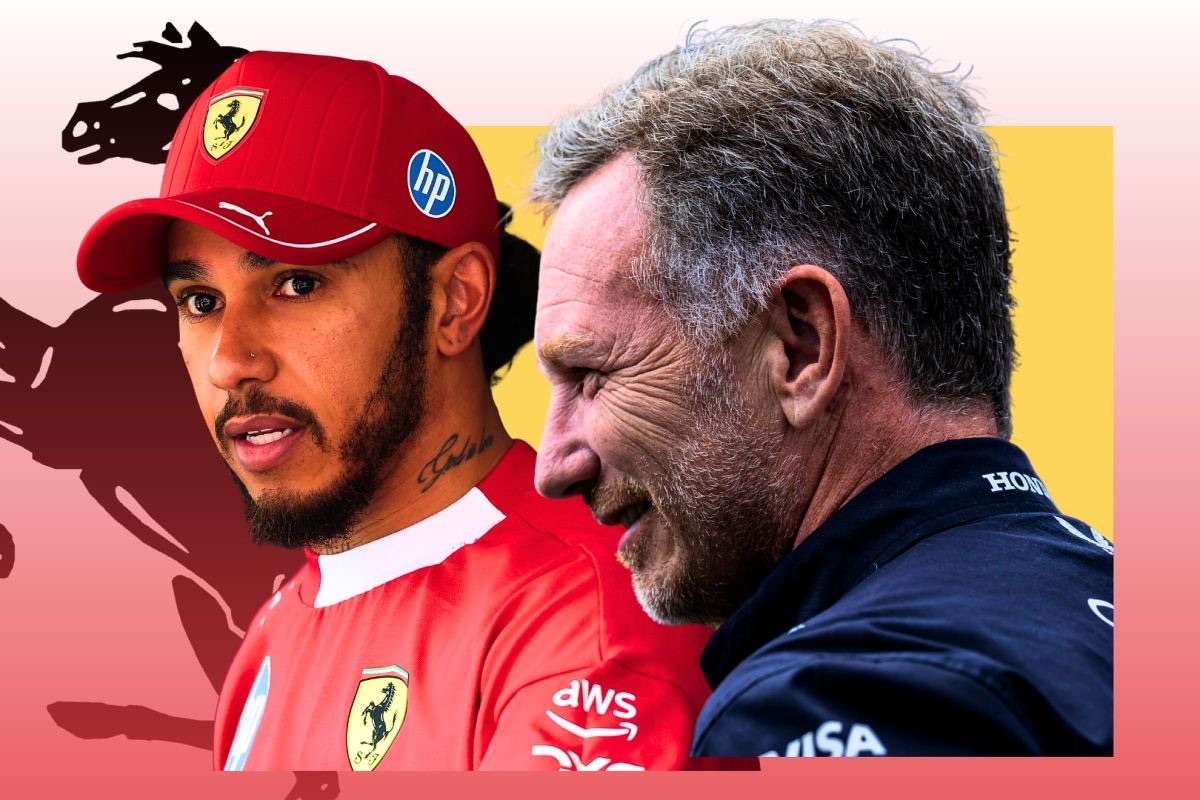
The motorsport world has been sent into fresh speculation after recent talk that Christian Horner, the former long-time team principal of Red Bull Racing, could be poised for a return to the Formula 1 paddock — this time potentially as leader of Scuderia Ferrari. Even more intriguing than the managerial reshuffle itself is how this possible shift could impact one of the sport’s most iconic figures: Lewis Hamilton. According to recent commentary in certain media outlets, the seven-time World Champion might react strongly — possibly even by walking away from Ferrari — if Horner were to take charge at Maranello.
To understand the potential ramifications of this story, it helps to set a bit of context around the situation. Christian Horner, 51, was one of the most prominent figures in Formula 1 leadership for two decades at Red Bull before his dismissal in mid-2025. During his tenure, he led the Milton Keynes-based team to multiple Drivers’ and Constructors’ Championships, establishing Red Bull as a dominant force in the sport.
However, the latter stages of his time there were marred by controversy, internal conflict and declining on-track performance, culminating in the much-publicized decision by Red Bull to part ways with him after 20 years. The departure sent shockwaves across the Formula 1 community — the end of one of the most significant managerial eras in recent history.
Since then, Horner has been linked with several possible new roles within Formula 1 — including, most notably, a high-profile position at Ferrari, one of the sport’s most storied and pressure-loaded teams. Ferrari has struggled to find consistent success and hasn’t won a championship since 2008, making the pursuit of top leadership a priority for its future ambitions.
At the same time, Lewis Hamilton’s own journey has taken an unexpected turn. After spending the majority of his remarkable career with Mercedes — where he secured six of his seven world titles — Hamilton made a headline-grabbing move to Ferrari for the 2025 season. Expectations were sky-high, given his status as one of the greatest drivers in the sport’s history. Yet the first year in red proved far from the renaissance many had hoped for.
In 2025, Hamilton failed to secure even a single podium finish and finished well behind his Ferrari teammate, Charles Leclerc, in the championship standings. The results sparked questions about his adaptation to the new team, the performance of the Ferrari car, and the direction of the squad’s leadership under team principal Fred Vasseur.
Amid that performance struggle, whispers have grown louder about Ferrari considering significant changes, including leadership restructuring. That is where Horner’s name has once again surfaced as a potential candidate to take the helm and steer the team toward competitiveness and championship contention.
It’s in that context that certain reports — particularly a column in Mail Sport referenced by the SportsMan article — have raised the possibility that Hamilton might be unwilling to work under Horner should he indeed be appointed Ferrari team principal. The suggestion is that Hamilton could “walk out” on Ferrari rather than remain under a leadership figure he has historically clashed with or simply does not align with.
Why might such a reaction occur? There are a couple of factors often cited by pundits and insiders. First, Hamilton is believed to have a strong, positive working relationship with Fred Vasseur, his current boss at Ferrari. Their connection reportedly goes back many years, including time spent racing in Formula 2. That history may have influenced Hamilton’s comfort level coming into Ferrari, as well as his confidence in the team’s long-term strategy.
By contrast, Hamilton and Horner have had a tense relationship at times in the past — especially during heated championship battles between their respective teams. While such clashes are not unusual in the hyper-competitive world of Formula 1, they could influence how comfortable a driver like Hamilton feels about working under a figure he has historically viewed as a rival.
Another element is contractual timing: Hamilton’s deal with Ferrari is widely believed to run only through the end of 2026, meaning he will enter that year knowing his future beyond that season is not locked in. For many drivers, that kind of contract situation invites evaluation and potentially major decisions — particularly if the internal structure of the team changes in ways they feel uneasy about.
Still, it’s important to understand that while “walk out” headlines make for eye-catching news, there is significant debate about how seriously such an outcome should be taken. For one thing, Hamilton is primarily driven by goals on the track. Despite personal tensions or history, a competitor of his caliber typically prioritizes performance and championship opportunities above all else. If Horner’s appointment — or any leadership change — were to result in a stronger Ferrari capable of winning races and titles, that could outweigh personal misgivings.
Horner himself is undeniably one of the most successful team leaders in modern Formula 1. His record includes multiple Constructors’ titles and the ability to build a winning culture — a quality Ferrari has long sought. From a purely competitive standpoint, bringing someone of Horner’s experience into Ferrari could help the team achieve its goal of returning to the top of the sport.
Beyond internal dynamics, there’s also the broader picture of Hamilton’s career to consider. At 40 years old and already one of the most decorated drivers in history, his choice to continue racing will likely depend heavily on whether he feels he has a genuine shot at securing an eighth world championship. Strategy, performance, car potential and team environment all intersect in that decision — and the identity of the team principal is just one part of a much larger puzzle.
In the months ahead, as Ferrari continues its preparations for the sweeping technical changes coming in 2026 — expected to dramatically reshape competitiveness across the grid — the team’s direction and leadership choices will be subject to intense scrutiny. Hamilton’s future, and whether he remains fully committed to Ferrari beyond this critical season, is likely to hinge on how all of these elements develop.
To sum up, the story that Hamilton might “walk out” if Christian Horner joins Ferrari represents one of the more dramatic narratives emerging around the drivers and politics of Formula 1. While rooted in legitimate speculation about leadership dynamics and personal histories, it also intersects with much bigger questions about performance, ambition, and legacy — not just for Hamilton, but for Ferrari and Horner as well.