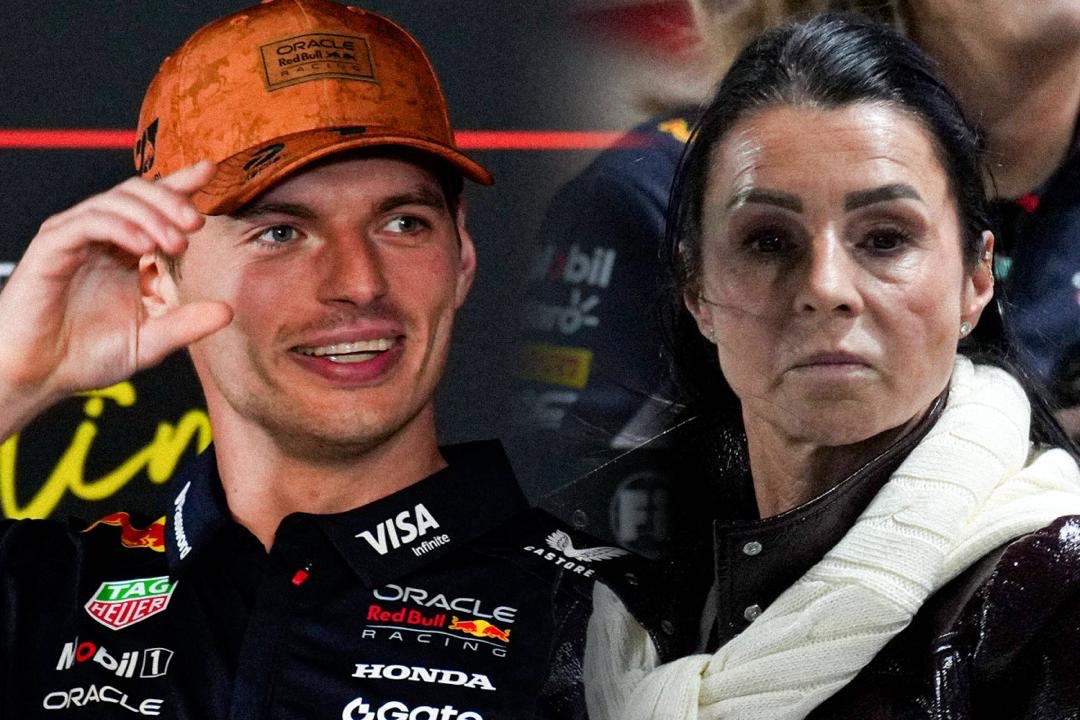
Max Verstappen, the Dutch driver who has become one of the most dominant figures in modern Formula 1, has recently opened up about an insight into his family life that few fans may have fully appreciated. In a candid and reflective moment during a media interview, Verstappen acknowledged that the very fact of his existence played a significant role in bringing his mother’s promising racing career to an end — a revelation that adds a new, deeply personal dimension to his story of success.
From the outside looking in, Verstappen’s rise to the top of motorsport might appear as though it was spun entirely from his own talent and the tough conditioning he received from his father, former Formula 1 driver Jos Verstappen. Jos’s influence on Max’s early development has been well documented over the years, with numerous stories illustrating his intense, sometimes grueling approach to training and guidance. However, Verstappen’s recent comments make it clear that his mother, Sophie Kumpen, had just as important — if not more meaningful — influence on the racing foundation he was built upon.
Sophie Kumpen was no casual hobbyist behind the wheel; she was a serious competitor in her own right, with a rich background in karting that saw her performing at a very high level against some of the most notable names in future grand prix history. During her competitive years, Kumpen raced in categories where the level of competition was intense, and her performances were strong enough to put her on the radars of those who track rising talents in motorsport. Among the drivers she competed with — and in many cases, challenged — were individuals like Jenson Button and Giancarlo Fisichella, both of whom went on to secure seats in Formula 1 and enjoy long, successful careers at the sport’s highest level.
Despite this obvious ability and potential, Kumpen made the deeply personal decision to step away from racing at what many would consider the peak of her involvement in the sport. And though that choice was influenced by various life factors, including the realities and responsibilities of starting a family, Verstappen himself has openly admitted that her pregnancy with him was directly tied to the end of her competitive career. In his own words, voiced partly with a sense of humor and partly with heartfelt honesty, he reflected that the moment she became pregnant with him marked the moment she shifted her life’s focus — away from her own dreams on track and toward supporting her future world champion son.
Verstappen’s remarks shatter the tendency to attribute his success solely to his father’s methods. While Jos’s contributions to Max’s development as a driver are undeniably significant — including his steering of early karting endeavors and the discipline he enforced during decisive moments — the role Kumpen played is now gaining overdue recognition. Verstappen has gone as far as to state that “the real racing genes are on my mum’s side,” underscoring that her influence extends beyond nurturing and into the very core of his natural feel for racing. According to him, her instincts, understanding of vehicle dynamics, and passion for competition were inherited traits that have shaped his own instincts on the racetrack.
This acknowledgment is particularly meaningful because it recasts the narrative of Verstappen’s background. Motorsport fans are familiar with the idea of “racing families,” where multiple generations contribute to a driver’s evolution. But often, the spotlight tends disproportionately toward figures like fathers, male mentors, and famous relatives with visible achievements. In Verstappen’s case, his father’s name certainly carries weight — Jos raced in Formula 1 himself between 1994 and 2003 — but Sophie Kumpen’s contributions were quieter, less publicized, and, until now, less celebrated. Her story is that of a talented racer whose competitive path was reshaped by life choices rooted in love, family, and support for her children’s futures.
Verstappen’s choice to highlight this in a public forum tells us something important about how he views success and heritage. Rather than lean solely on the image of a focused prodigy molded by a strict father figure, he acknowledged the complex, interwoven family environment that shaped his approach to racing. He emphasized that he grew up not only learning about racing techniques but absorbing a philosophy of competition from two seasoned racers whose insights into craft, strategy, and mental fortitude helped lay the groundwork for his ascent. The subtle influence of his mother’s racing mindset, in particular, helped balance some of the more intense aspects of his father’s training, creating a holistic foundation for his own career.
It is also worth noting that Verstappen’s reflection on how his birth impacted his mother’s career resonates with broader discussions about the sacrifices athletes, especially women, often make for family. In motorsport — a field that has historically been male-dominated — stories like Kumpen’s are reminders of the barriers and life decisions that talented women may confront. The fact that she left behind a competitive environment where she was clearly capable of further success speaks to the difficult choices many female athletes face when balancing personal aspirations with family responsibilities. Verstappen’s acknowledgment of this reality elevates the conversation and gives fans and observers a more nuanced appreciation of the human stories behind racing headlines.
As Max Verstappen continues to chase records and cement his legacy among the all-time greats of Formula 1, understanding the personal backstory — including how his mother’s early racing life shaped his journey — enriches the narrative of what it means to succeed in the highest tiers of motorsport. Beyond the trophies, championships, and statistics, there lies a profound tale of generational passion, sacrifice, and the unseen influences that mold a true champion. And for all his accolades, Verstappen’s recent admission stands out as one of the most personal, heartfelt reflections he has shared about the influences that helped make him who he is today.