In a revelation that has stunned the motorsport world, Formula 1 superstar Max Verstappen recently made a candid comment that quickly went viral—he emphatically stated that he does not want his daughter, Lily, to pursue a career in racing. The bluntness of his remarks has sparked intense discussion across the F1 community, raising questions not about his daughter’s talent but about what he truly believes is best for her future.
Verstappen, widely regarded as one of the most dominant drivers in Formula 1 history, has spent more than a decade under constant media scrutiny and public attention. From the moment he broke into the sport as a teenage sensation, his every move—both on and off the track—has been dissected, debated, praised, and criticized. That intense spotlight, he has suggested, is one of the chief reasons he doesn’t want his daughter to follow in his footsteps.
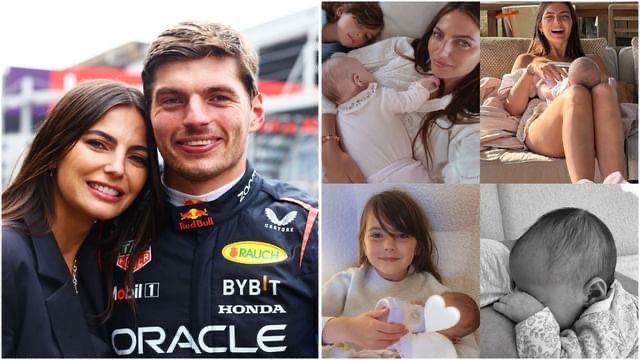
Earlier this year, Verstappen and his partner Kelly Piquet celebrated the birth of their first child together, a daughter named Lily Verstappen-Piquet. The couple’s joy was widely shared across social media and major news outlets, celebrating the arrival of their baby just ahead of the Miami Grand Prix and marking a new chapter in Verstappen’s life as both a sports icon and a father.
But since becoming a parent, there’s been a noticeable shift in Verstappen’s priorities. Those close to the Dutch driver say he now approaches life with a more thoughtful, introspective outlook—something that has been evident in recent interviews and public appearances. Whereas he once thrived on competition, intensity, and unwavering focus on racing success, he now speaks frequently about the value of family, privacy, and personal fulfillment beyond the track.
This evolving perspective came into sharp focus when a media outlet asked Verstappen if he imagined his daughter growing up to compete in F1 or even become a world champion. His answer was strikingly straightforward: “I hope not.” According to the interview published on Sports Man, Verstappen’s response wasn’t about doubting Lily’s ability or potential; rather, it reflected his deep concerns about the relentless and invasive nature of the sport that has shaped so much of his own life.
Verstappen’s career has been defined by exceptional achievements: multiple World Championships, countless race victories, and a place among F1’s all-time greats. Yet, behind that dazzling success has been the reality of living in a constant spotlight—a reality that can be both exhausting and unforgiving. That environment, Verstappen implied, is not something he wants for his daughter, regardless of her passions or natural talent.
He’s no stranger to controversy and constant attention. From as early as his teens, he’s been scrutinized by global media, followed by cameras, and dissected by pundits and fans alike. The relentless commentary and lack of privacy, Verstappen has suggested, can take a toll on mental wellbeing and personal freedom—things he now wants to protect for his family. That’s why his response, seemingly defensive at first glance, was rooted in something far deeper: a parental instinct to shield his child from a world he knows all too well.
It’s worth noting that Verstappen’s stance isn’t hostile toward racing itself. Throughout his life, he has expressed a deep love for the sport—its challenges, competition, and sheer thrill. What he appears to reject is the broader ecosystem that surrounds modern F1: the commercial obligations, intrusive media cycles, contractual demands, and public scrutiny that often leave little space for a normal family life. This nuanced view highlights a generational shift among elite athletes who are increasingly vocal about balancing personal life with professional ambition.
Since Lily’s birth, Verstappen’s approach to both life and racing has looked different to many observers. He has spoken more openly about the joy and grounding effect his family has brought him, suggesting that the fulfillment of being a father outweighs even the greatest of racing triumphs. For many, this candidness adds another layer of admiration for the champion, showing that even the most competitive athletes value their roles outside of sport.
Yet his comment—that he doesn’t want Lily to become an F1 driver—has generated debate. Some fans argue that all children should have the freedom to pursue their dreams, whether they lead to the racetrack or elsewhere. Others believe Verstappen’s views reflect a growing awareness that fame and success can come with personal costs that are not always immediately apparent. Either way, the remark has drawn attention precisely because it comes from one of the sport’s most influential figures.
Verstappen’s declaration also invites broader reflection on how society views athletic legacies. Many children of elite athletes feel pressure—whether internal or external—to follow their parents’ paths. While some embrace that legacy and succeed, others choose different careers entirely. Verstappen’s comments highlight how even within families deeply connected to a sport, there can be very different wishes for the next generation.
Behind the headlines and reactions lies a deeply personal story: a champion at the peak of his career who is also a father thinking about what’s best for his child. His blunt reply—an emphatic “no” to the idea of his daughter becoming an F1 world champion—was not a dismissal of ambition, but a protective instinct shaped by his own life in the limelight.
In the end, Verstappen continues to compete at the highest level and chase further success on the track. But his recent remarks serve as a reminder that even the fiercest competitors have a human side: one shaped by love, hope, and the desire to give their children a life that’s freer and more balanced than the one they’ve known.