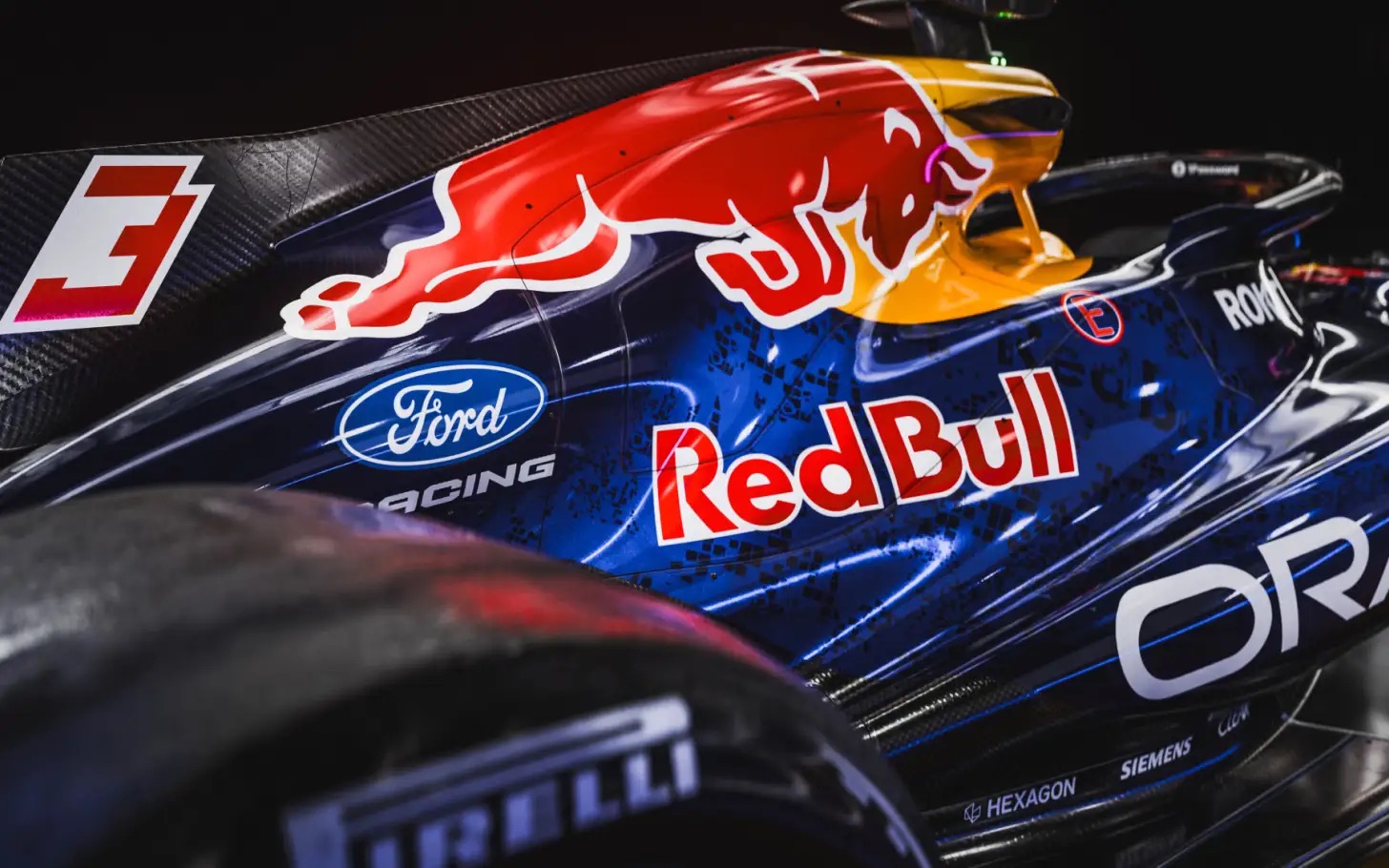
In recent pre-season Formula 1 testing at the Circuit de Barcelona-Catalunya, Red Bull and its new power unit partner Ford achieved a result that has won strong praise from rival teams and figures inside the sport. Despite initial questions and uncertainty about how well Red Bull Powertrains would perform — especially given that this is a completely new project for the team — the early signs suggest they may have exceeded what many expected.
One of the biggest talking points heading into the Barcelona test was Red Bull’s transition to producing its own power unit for the first time in Formula 1. This shift marks a significant change for a team that has traditionally relied on external suppliers for its engines. For the 2026 season, Red Bull decided to build its own power unit, naming the division Red Bull Powertrains, and partnering with Ford, who is contributing key hybrid and electrification components. This move represents one of the most ambitious technical changes in recent F1 history, with Red Bull going up directly against established power unit manufacturers such as Ferrari and Mercedes — teams with decades of experience in designing, building, and developing championship-winning engines.
Before the test began, there were plenty of questions about how Red Bull and Ford’s power unit would cope in real-world conditions, especially when heat, mileage and competitive pressure would really be put to the test. After all, designing and building an engine that can not only perform at the highest level but also survive the rigors of intense day-to-day Formula 1 use is a huge challenge. Many outside the team were watching closely to see if the new unit would show any signs of fragility or reliability issues during its first on-track running.
What happened during the test, though, surprised many observers. Across the first three days of running, Red Bull and its sister team Racing Bulls completed a total of 393 laps with the new power unit without any major breakdowns or technical failures. On top of that, driver Liam Lawson added another 64 laps on Thursday morning, again with no signs of significant problems. This level of mileage is especially noteworthy when considering it was the first time the engine had seen extended action in something approaching race-like conditions.
According to Tim Goss, the technical director of Racing Bulls, the effort behind the new power unit has been “really, really impressive.” He stressed that while it might look straightforward on paper — turning up to a test and completing laps — the achievement should not be taken lightly. Goss pointed out that completing strong mileage without major issues on the very first day as a newcomer to power unit development is a rare accomplishment in Formula 1. He emphasized that reliability of this level, straight out of the gate, “can’t be underestimated.”
Goss also talked about the quality of the engine’s performance with respect to how it feels to drive. He noted that the drivability — which refers to how smoothly and predictably the car responds to throttle inputs, torque delivery, and general powertrain behavior — was “really good” and, in his opinion, even “fantastic.” In Formula 1, drivability is crucial because it affects everything from a driver’s confidence to how easily engineers can manage lap-to-lap strategies and energy recovery.
One of the biggest learning curves this year involves the new Formula 1 regulations, which require a fundamentally different balance between combustion engine power and electrical hybrid systems. The current power unit rules specify a roughly 50:50 split between traditional internal combustion output and electric energy deployment. Managing this hybrid energy balance — and adapting it seamlessly from corner to corner — is a fresh challenge for all teams in the paddock. Goss acknowledged this, pointing out that understanding and tuning energy deployment is part of what teams are still learning. Drivers also must adjust to how these changes affect car behavior in real-time, which requires time, data, and practice to master.
Despite the promising reliability and mileage, Goss was careful to stress that lap times from Barcelona don’t mean much right now. Pre-season testing is always more about gathering data, validating systems, and ironing out early technical issues than it is about showing outright speed. This is especially true in a year with so many new technical variables, such as redesigned power units and new aerodynamic restrictions. Therefore, even if Red Bull and Racing Bulls don’t top the timing sheets this week, that doesn’t necessarily reflect their true potential. What matters at this stage is understanding how the car and engine behave together and building a solid platform for development.
Goss described this phase as “a new phase” for the team, a transition from building the components in factories and on simulators to actually running them together on track. For many engineers and technical staff, this is the exciting part of the process — when theories are tested in reality and data starts to flow that can inform future progress. He spoke about the creativity and challenge that comes with so many changes, suggesting there’s a real sense of momentum and excitement within the team about the work ahead. Everyone, he said, is “up for the fight,” eager to collect knowledge and gradually translate it into performance improvements.
Outside observers have picked up on Red Bull’s achievement as well. Other teams and figures within F1 have publicly commended Red Bull and Ford for what they’ve been able to accomplish so early in the process, highlighting that launching a new power unit under such scrutiny and performing reliably is no small feat. While some teams are focusing on their own programs and development paths, there’s a general recognition that Red Bull’s work with Ford has been noteworthy and deserves credit beyond just the headline figures.
In summary, Red Bull and Ford’s first public outing with their 2026 power unit has shown reliability and performance that few expected so soon. The early laps at Barcelona haven’t revealed major flaws, and the feedback from engineers is positive. While speed and competitiveness won’t be truly measured until later in the season — particularly at the Bahrain test and beyond — these initial results have set a promising tone. The combination of a reliable power unit, encouraging drivability, and a motivated technical team gives Red Bull a strong foundation to build on as the new Formula 1 season approaches.