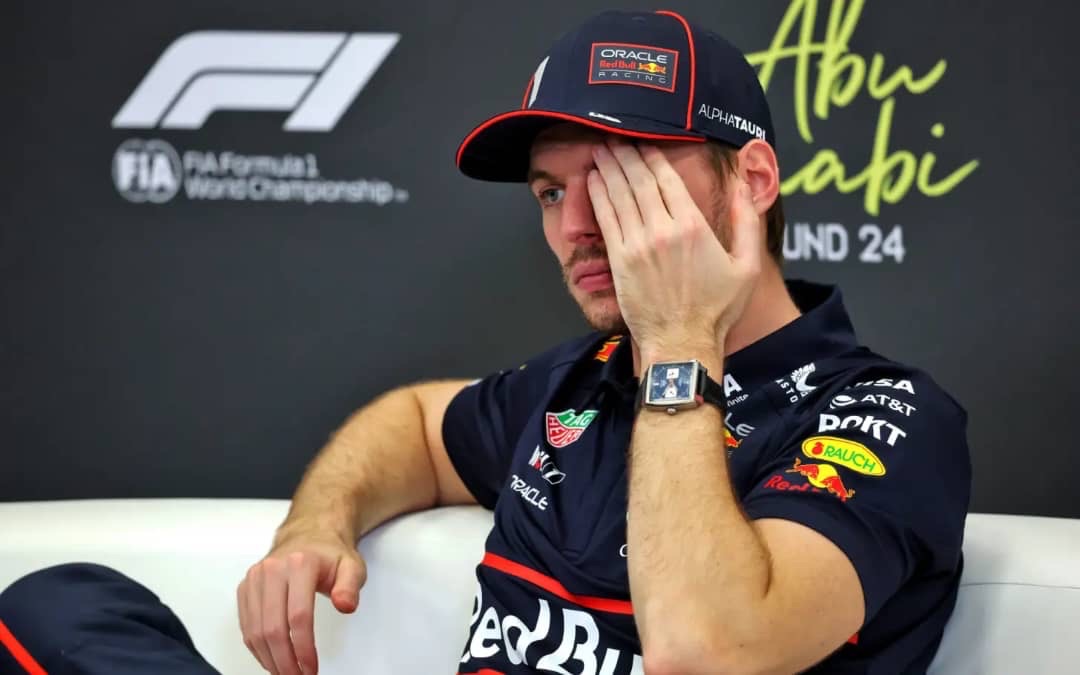
Red Bull’s Growing Anxiety Over Max Verstappen and the Future of F1
As Formula 1 prepares for its most sweeping rule overhaul in decades, Red Bull Racing — the team that has dominated the sport in recent years — is reportedly feeling uneasy about how its star driver, Max Verstappen, will adapt to an evolving era in the sport.
According to the report, people close to Red Bull’s inner workings have admitted privately that they are “nervous” about what lies ahead for Verstappen once Formula 1’s 2026 technical regulations come into effect. These upcoming changes are expected to reshape virtually every aspect of an F1 car’s performance — from how energy is managed and deployed to how drivers extract pace from the machines. It marks a departure from the raw aerodynamic and mechanical emphasis that has long defined the sport’s engineering priorities.
For the better part of the last decade, Verstappen has been the undisputed centerpiece of Red Bull’s racing success. Since his teenage breakthrough into F1, he has developed into a once-in-a-generation talent — fierce in wheel-to-wheel battles, ruthlessly consistent, and capable of outperforming rivals across a huge variety of circuits and conditions. With four consecutive Drivers’ Championships under his belt by 2025, Verstappen’s résumé is already among the sport’s elite.
Yet as thrilling as Verstappen’s dominance has been, the way Formula 1 races are engineered may soon be less about bold, instinctive aggression — his hallmark — and more about ultra-precise energy conservation and cross-system management. Rumors have circulated within the paddock that drivers tested under next year’s specifications struggled to find the sort of rhythm that characterized modern F1 machinery. According to the Sports Man piece, some Red Bull engineers and team personnel fear this new style of competition may not suit Verstappen’s strengths as naturally as the outgoing formula did.
This anxiety stems from how dramatically the next chapter of F1 will change the sport’s competitive DNA. Under the new regulations, the energy deployment and harvesting systems — already crucial — will take on even greater importance. Drivers will be forced to manage and balance several complex parameters mid-race, a mental and technical challenge quite different from maximizing performance through pure commitment and aggressive vehicle positioning. Verstappen’s reputation has been built on fearlessness and a direct approach to racing, traits that could clash with the cerebral style demanded by the next generation of cars.
The nervousness is not just speculative chatter. Several drivers across the grid have themselves expressed reservations after simulator runs with 2026 spec cars. Many have noted that the new handling characteristics and power unit interactions feel alien compared to today’s F1 machines, which reward sheer courage and precision in equal measure. That sentiment reinforces the idea that the next era could reward a different kind of driver mindset — something Red Bull insiders are watching with a degree of discomfort.
This unease is heightened by Verstappen’s own comments over recent seasons. Though still fiercely competitive, he has openly criticized aspects of Formula 1 that he feels diminish the pure joy of racing — including an increasingly congested calendar, frequent sprint events, and elements he views as “less fun.” His honesty about where enjoyment and motivation intersect with performance has raised eyebrows within the paddock, as rarely do elite competitors speak so forthrightly about the emotional side of their craft.
Another layer to this story is Verstappen’s contractual situation. While his current deal with Red Bull runs until at least 2028, the article points out that holding a signed contract on paper doesn’t guarantee long-term happiness or satisfaction in practice — especially if the driving experience undergoes a fundamental shift. Historically, many top drivers have prioritized passion and challenge over contractual security, hinting that a seismic regulatory change could, in theory, prompt a reevaluation of priorities.
It’s also worth noting that tensions and questions about Verstappen’s future have been swirling around much of 2025. For example:
Former Red Bull advisor Helmut Marko — who has been instrumental in Verstappen’s career — has stepped away from the team after two decades, leading to speculation about Verstappen’s long-term motivations and comfort within the organization. Verstappen narrowly missed out on what would have been a fifth consecutive World Championship in 2025, losing the title by just two points to Lando Norris in what has been one of the most dramatic seasons in years. This razor-thin margin of defeat highlighted how tightly contested the sport has become and how the competitive advantage Red Bull once enjoyed is no longer unassailable. Verstappen himself has described aspects of his RB21 car as “difficult” or even “hated” at times during the season — a candid admission that underscores his relentless demand for machinery that responds to his style.
The combination of a changing technical landscape, high internal expectations, and recent organizational shifts explains why whispers in the paddock have grown louder. Red Bull’s nervousness isn’t simply about performance — at least not on paper — but rather about maintaining the alignment between its greatest driver and the sport’s direction moving forward. Keeping Verstappen engaged, motivated, and competitive in a radically updated Formula 1 is now one of the team’s most pressing challenges.
In summary, what once looked like a straightforward championship dynasty for Red Bull and Max Verstappen has entered a more uncertain phase. With 2026’s transformation looming, questions about driving styles, technical adaptability, and emotional commitment have lifted from mere speculation into a genuine strategic concern for one of Formula 1’s most successful partnerships.