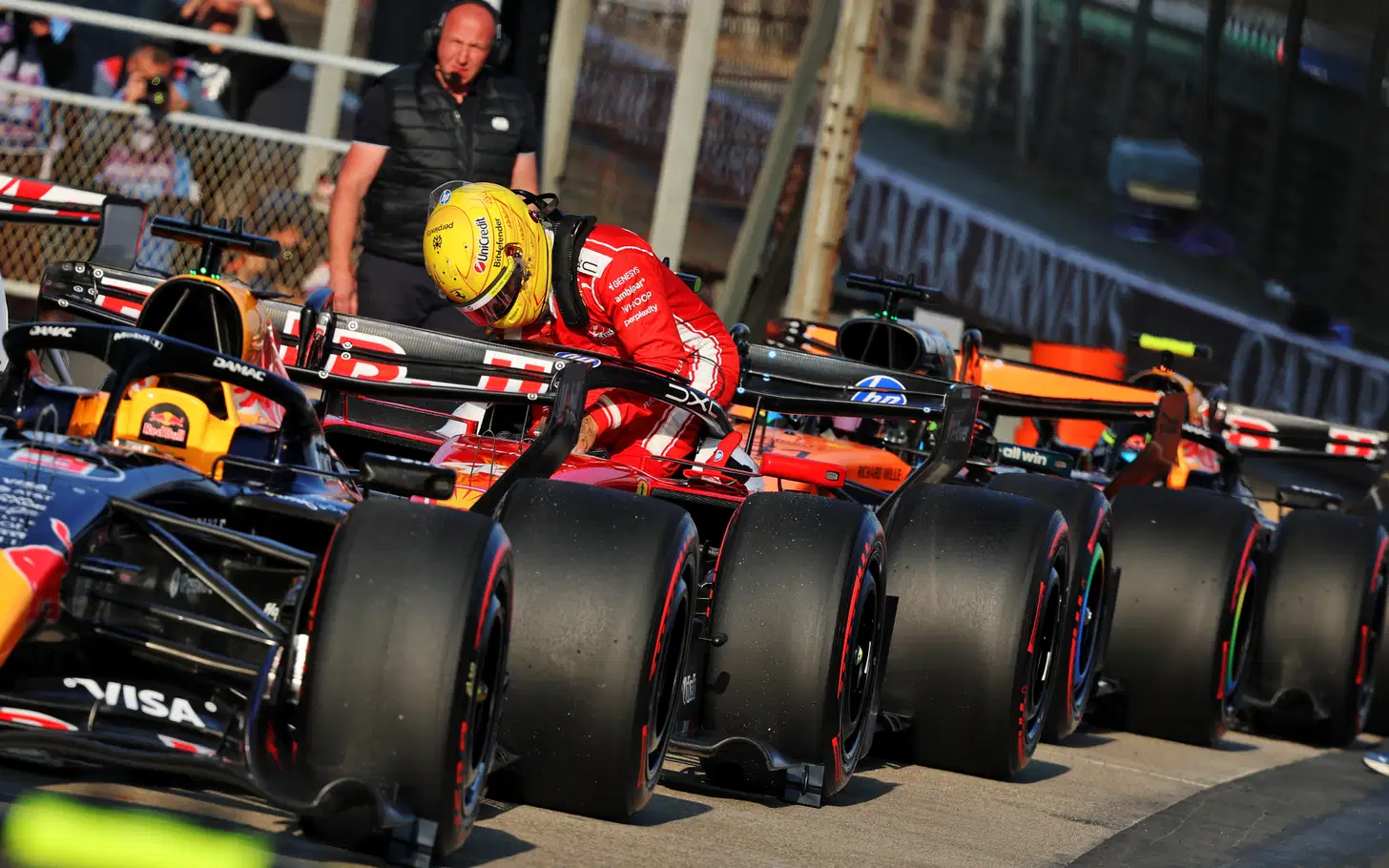
The build-up to the Formula One season opener in Melbourne has been affected by international tensions, after a major global sponsor decided to cancel several of its planned activities during the Australian Grand Prix weekend. The decision comes amid escalating conflict in the Middle East that has disrupted air travel and created uncertainty across multiple industries, including global motorsport.
Qatar Airways, one of Formula One’s key global partners, has announced that it will not proceed with its scheduled hospitality and promotional events at the Australian Grand Prix. The airline had planned to host various activities in Melbourne during the race weekend, including corporate gatherings, media engagements, and exclusive hospitality experiences for invited guests. However, due to the ongoing crisis affecting the Middle East, the company concluded that holding celebratory events would be inappropriate given the wider circumstances affecting the region and the airline’s operations.
The airline’s decision is connected to the significant disruption to aviation caused by the geopolitical situation. The conflict has resulted in the closure of airspace in parts of the Middle East, forcing several airlines to cancel flights or drastically adjust their schedules. In Qatar’s case, the situation has led to a suspension of many of its operations, leaving passengers stranded and creating logistical challenges across its global network. Because of these circumstances, the airline has chosen to focus on supporting affected travelers rather than hosting high-profile promotional events linked to Formula One.
According to statements from the airline, its teams are currently prioritizing the safety and well-being of passengers and crew members while working to manage the disruption caused by the airspace closures. With many travelers experiencing delays or cancellations, the company believes it would be inappropriate to continue with celebratory activities associated with the race weekend. As a result, media appearances, corporate gatherings, and VIP hospitality events organized by the airline have been postponed, with the possibility that they could be rescheduled once the situation stabilizes.
Despite these cancellations, the Australian Grand Prix itself is not expected to be affected. Event organizers and Formula One officials have emphasized that the race weekend in Melbourne will continue as planned. Although the conflict in the Middle East has caused widespread travel disruption, teams, drivers, and personnel have still been able to reach Australia, in some cases by using alternative travel arrangements or charter flights.
Earlier in the week, Formula One teams had expressed concerns about the difficulties involved in traveling to Melbourne because many staff members typically transit through major aviation hubs in the Gulf region. However, contingency plans were put in place to ensure that team members and equipment could arrive in time for the start of the season. As a result, the logistical challenges caused by the crisis have not prevented the race from going ahead.
While the Australian Grand Prix is expected to proceed normally, the situation has raised broader concerns within the Formula One community. The Middle East plays an increasingly important role in the sport, both as a host region for races and as a major source of financial support through sponsorships and partnerships. Several Grands Prix are held in the region each year, including races in Bahrain, Saudi Arabia, Qatar, and Abu Dhabi, and many large corporations from the Gulf are heavily involved in Formula One as sponsors or investors.
Because of this close connection, any instability in the region can have a direct impact on the sport. The current conflict has already caused uncertainty about upcoming races scheduled to take place there later in the season. In particular, the Bahrain Grand Prix and the Saudi Arabian Grand Prix, both scheduled for April, could potentially be affected if the security situation does not improve. Motorsport authorities and Formula One management are closely monitoring developments and will make decisions based primarily on safety considerations.
Some senior figures in Formula One have already acknowledged that the sport must take a secondary role when global crises arise. Team leaders have noted that while racing is important, the broader political and humanitarian issues in the region are far more significant. As a result, organizers are expected to carefully evaluate the situation before confirming whether upcoming races can take place safely.
If races in Bahrain and Saudi Arabia were to be cancelled, the Formula One calendar could face a significant gap. Both events are currently scheduled to take place in mid-April, and removing them would leave several weeks without a race between the Japanese Grand Prix and the Miami Grand Prix. Reports indicate that Formula One may choose not to replace those races with alternative venues due to the limited time available to organize substitute events.
The ongoing conflict has also highlighted how global sports events can be affected by political and military developments. Motorsport competitions often depend on complex international logistics, including air travel for teams, equipment, sponsors, and media personnel. When aviation networks are disrupted, the effects can quickly spread across the sport’s operations, as teams rely on tightly coordinated schedules to move people and cargo between continents.
In this case, the Middle East serves as one of the world’s most important aviation hubs, connecting flights between Europe, Asia, and Australia. As a result, any disruption in the region can have wide-ranging consequences for international travel. For Formula One teams heading to the Australian Grand Prix, the closure of airspace and cancellation of flights forced last-minute adjustments to travel plans.
Nevertheless, the championship’s opening race weekend in Melbourne is still set to proceed, demonstrating the ability of Formula One to adapt to unexpected circumstances. Even though some sponsor activities have been cancelled, the sporting event itself remains intact, and fans attending the race are unlikely to notice major changes to the schedule.
The cancellation of Qatar Airways’ hospitality events serves as a reminder that global sports are closely linked to political and economic realities. While the race itself continues, the wider effects of the Middle East crisis are already being felt within the Formula One community. Sponsors, teams, and organizers will continue monitoring developments in the region as they prepare for the next stages of the 2026 Formula One season.