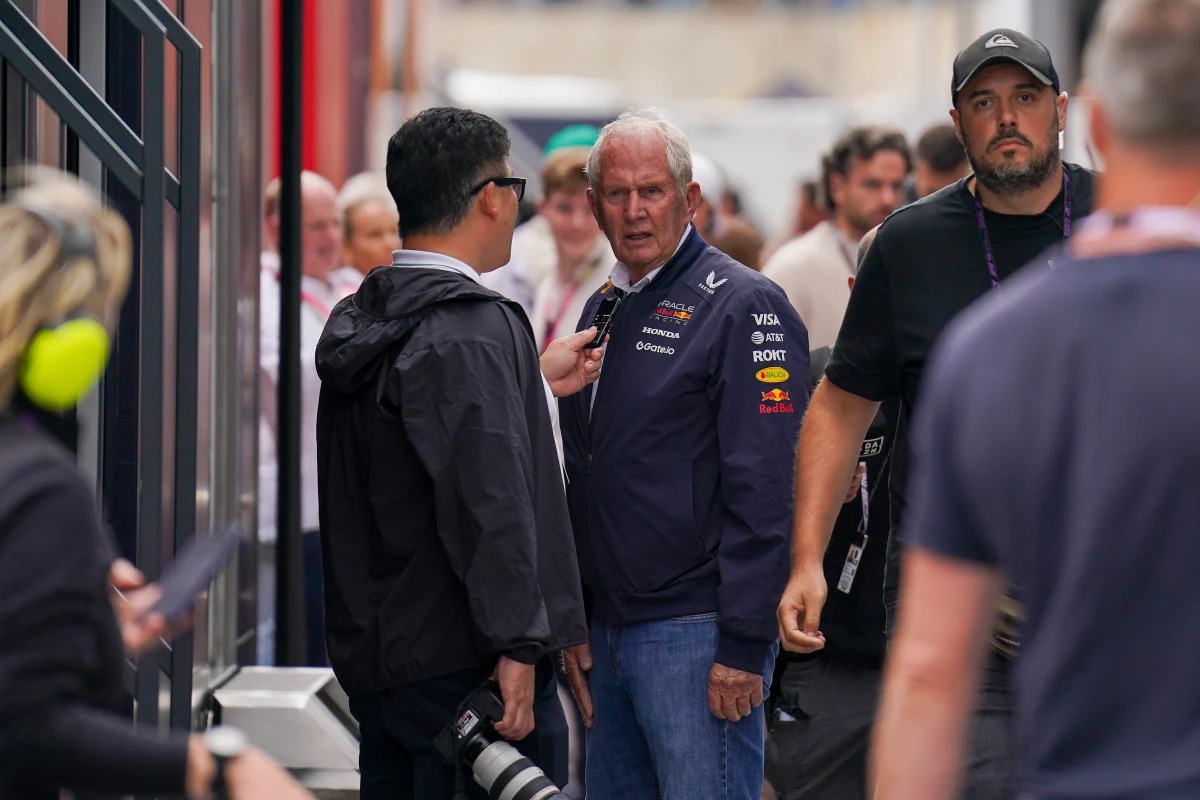
In a development that has sent ripples through the Formula 1 community just days before Christmas 2025, Dr. Helmut Marko, one of the most influential figures in modern Grand Prix racing, has officially been removed from his position as a director of Red Bull’s F1 operation. After more than two decades of involvement with the team that turned into one of the sport’s dominant forces, his departure marks the end of an era for the Austrian-backed racing outfit.
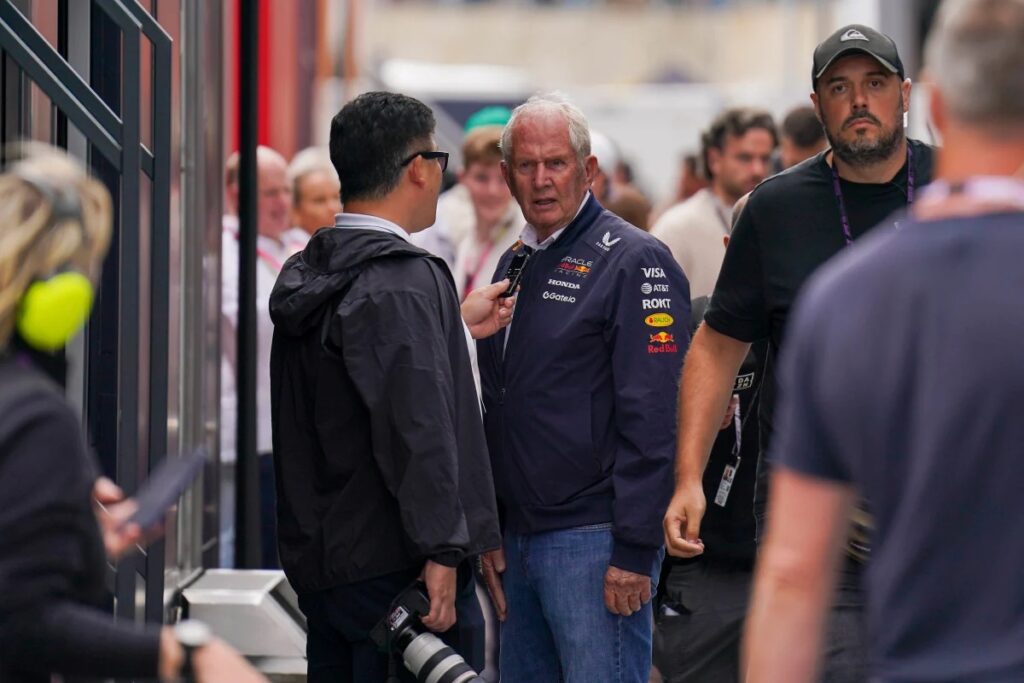
Marko’s connection with Red Bull’s Formula 1 effort dates back to the inception of the team’s entry into the sport in the mid-2000s. Over that period, he became renowned not just as an advisor, but as a cornerstone of the entire racing program. Often described as the architect of Red Bull’s driver development structure, he was instrumental in creating and managing the Red Bull Junior Team — a program that fostered talents such as Sebastian Vettel and Max Verstappen, both of whom went on to win multiple world championships.
The formal change in Marko’s standing came through documentation filed with the UK’s corporate registrar, where it was confirmed that his role as a director at Red Bull Racing Ltd had been terminated effective December 19, 2025. This administrative step was a final and public signal that Marko’s official leadership responsibilities within the team have concluded.
Alistair Rew, who already holds the title of Chief Financial Officer for Red Bull GmbH, has now been registered alongside Laurent Mekies — the current Team Principal of Red Bull Racing — as a director of the company. Mekies replaced Christian Horner in that role in July 2025, after Horner was relieved of his duties amid organizational restructuring earlier in the year. Rew’s elevation signifies a shift toward a leadership structure that more closely integrates Red Bull’s racing operations with its broader corporate oversight.
From a personal perspective, Marko has described the timing of his departure as something he believes to be right for him after decades in motor racing. In his own farewell remarks, he spoke of a career spanning six decades, with “more than 20 years at Red Bull” being especially meaningful. Marko spoke fondly of the people he worked with and the accomplishments they shared, expressing pride in what the team built together. He also hinted that the frustration of narrowly missing out on the 2025 World Championship — with Red Bull falling short in both driver and constructor races — helped crystallize his decision that it was the right moment to bring this long chapter to a close.
Marko’s role at Red Bull was not merely symbolic. As motorsport advisor and head of the Young Driver Programme, he exercised considerable influence over key strategic decisions. Those ranged from talent scouting to major technical partnerships. His ability to identify and nurture racing talent was widely credited with bringing through a generation of drivers who have defined F1’s competitive landscape, particularly throughout the 2010s and early 2020s.
The larger reaction within the sport has reflected this sense of finality. Oliver Mintzlaff, Red Bull’s Managing Director, issued a statement underscoring the team’s deep appreciation for Marko’s contributions over the years. Mintzlaff admitted that he “deeply regrets” the departure of someone who had become synonymous with Red Bull Racing’s identity. He emphasized Marko’s role in shaping the team’s success — including multiple championship titles — and acknowledged that his exit will inevitably leave a significant gap within the organization.
This transition comes at a time of broader change at Red Bull. Earlier in 2025, one of the team’s other longstanding leaders, Christian Horner, was removed from his position as team principal, an event that also generated substantial attention and debate within the sport. With both Horner and Marko no longer in formal leadership roles, some commentators and insiders have noted that this represents not just a personnel change, but a turning point in the culture and strategic direction of one of F1’s most successful teams.
Indeed, outside analysts have even speculated that the departure of such high-profile figures may signal a broader shift within Formula 1 itself — one that could impact how teams approach leadership, talent development, and long-term competitiveness. For example, with personality-driven figures like Marko and Horner no longer at the helm, some worry the sport may lose some of the defining characters that historically helped shape F1’s narrative and intrigue.
The reaction from the driver community also illustrates the respect Marko commanded. Max Verstappen, arguably the most successful product of the Red Bull system, publicly thanked Marko for his belief and support over the years. Verstappen acknowledged their shared accomplishments and expressed gratitude for the trust Marko placed in him early in his career — a testament to the personal influence Marko had on the lives and careers of his protégés.
Interestingly, speculation over Marko’s departure has not been limited to the official statements. Reports from various media outlets have hinted at complex dynamics behind the scenes. Some suggest that internal disagreements and strategic divergences may have played a role, with Marko’s autonomous decision-making on certain driver contracts reportedly causing friction within Red Bull’s broader leadership. Such reports paint a picture of a changing Red Bull structure where the old guard’s latitude for unilateral decisions may be shrinking.
Finally, while Marko’s official role has ended, the question of who will fill the void left by such a significant figure remains a topic of discussion among F1 pundits and insiders. Some suggest that Red Bull may not directly replace him with a single successor, preferring instead to distribute his responsibilities within a more modernized leadership model. Others have even floated the possibility of bringing in new high-profile figures from elsewhere in the sport to fill similar strategic roles.