Tragic Discovery: Humpback Whale Found Dead After Becoming Tangled in Shark Net off Illawarra Coast
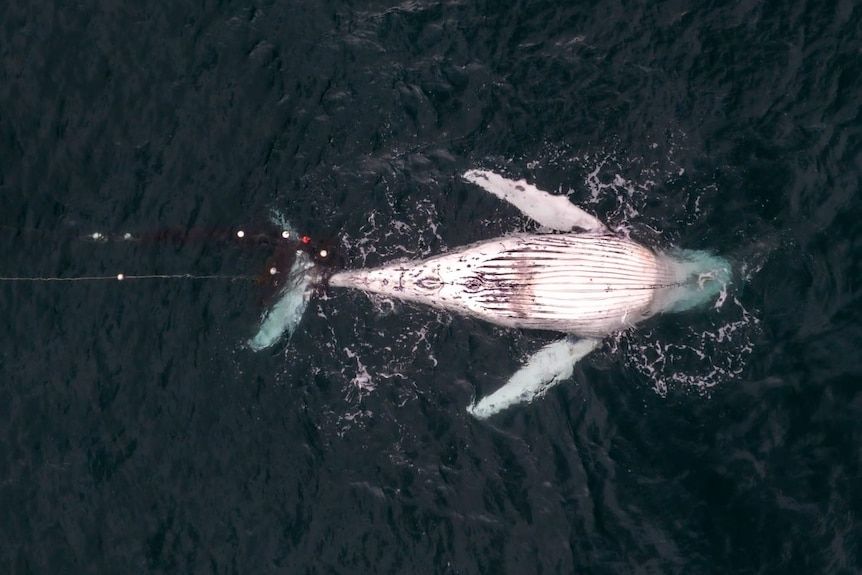
A heartbreaking discovery was made off the coast of New South Wales on Tuesday morning, as an 8-metre humpback whale was found dead, entangled in a government-installed shark net near Coledale Beach, north of Wollongong.
According to witnesses, members of the public first spotted the whale’s lifeless body drifting close to Wombarra Beach—adjacent to Coledale—around 8:30 a.m. The sighting prompted an immediate response from the Organisation for the Rescue and Research of Cetaceans in Australia (ORRCA), Marine Rescue Port Kembla, and the NSW National Parks and Wildlife Service (NPWS). When rescue teams arrived, they confirmed the grim scene: a young humpback whale, trapped and motionless, with shark netting wrapped tightly around its body.
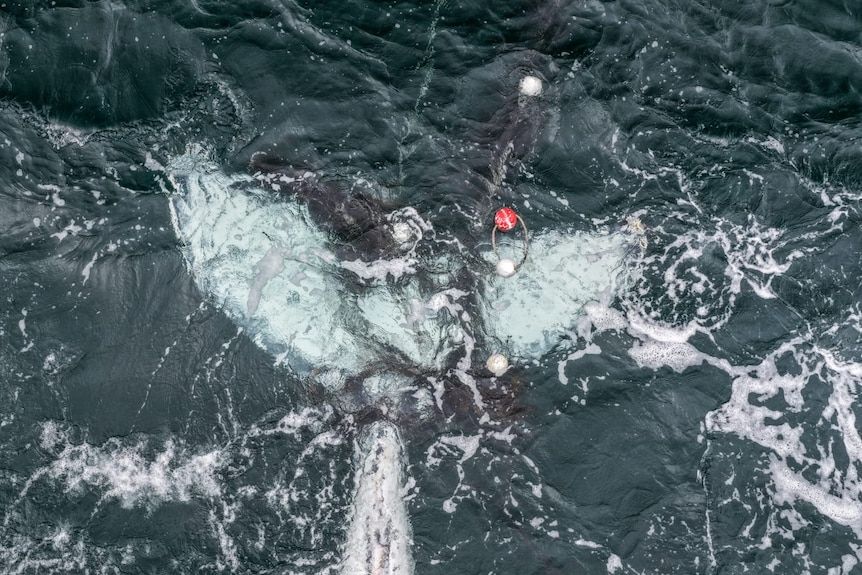
A spokesperson from the Department of Primary Industries and Regional Development (DPIRD) later confirmed that the whale had become ensnared in the Coledale Beach shark net, which is part of the state’s Shark Meshing Bather Protection Program. The program, designed to protect swimmers from shark attacks, currently operates at 51 beaches across New South Wales, including five along the Illawarra coastline.
Ashley Ryan, the president of ORRCA, said the whale was in the middle of its annual migration south toward the icy waters of Antarctica. “At this stage, it appears the whale may have died after becoming trapped in the shark net, but until a necropsy is conducted, we cannot say for certain,” Ryan explained. “It’s not unheard of for whales to become entangled in these nets, though it’s relatively rare for such incidents to end in death.”
Local officials expressed outrage and sadness over the incident. Jess Whittaker, a Wollongong City councillor and NSW Greens representative, called the death “utterly devastating.” “If this young whale got caught in the net and suffered a slow, painful death by drowning, that’s just heartbreaking,” Whittaker said. “So many people will find this distressing—it’s horrible to think of such a magnificent creature dying this way.”
Efforts to recover the whale’s carcass took several hours and involved multiple agencies, including Marine Rescue NSW, NPWS, and Wollongong City Council. Using drones provided by ORRCA, teams worked throughout the afternoon to bring the animal to shore. However, due to safety concerns and rough sea conditions, recovery operations were halted around 3 p.m. “It was reasonably close to shore, but conditions became too dangerous to continue,” explained Marine Rescue NSW Inspector Stuart Massey.
By the evening, the tide had pushed the whale’s body onto the beach. NPWS and council crews are now waiting for stable weather conditions to remove the carcass and perform a necropsy to determine the exact cause of death. Meanwhile, ORRCA has issued a warning urging the public to stay out of the water near Coledale and Wombarra due to an increased risk of shark activity attracted by the whale’s remains.
The tragedy has reignited the heated debate over New South Wales’ shark net program. Critics, including conservation groups and local officials, argue that the nets pose a far greater threat to marine wildlife than the danger of shark attacks they are meant to mitigate. Councillor Whittaker called for an immediate review of the program, urging the government to reconsider the use of what she described as “outdated and cruel” technology.
“I think we need an immediate review of the shark net program—we shouldn’t wait until the end of the season,” she insisted. “We already know these nets don’t effectively protect swimmers, and they cause immense harm to marine life, including dolphins, turtles, and now whales. It’s time the agriculture minister and the premier stepped in.”
The Shark Meshing Bather Protection Program, introduced decades ago, deploys nets measuring approximately 150 metres long and six metres deep, designed to entangle sharks considered a threat to humans. However, the nets do not create a complete barrier, and many experts say they give swimmers a false sense of security. Environmental groups have long called for modern, non-lethal alternatives such as sonar detection systems, drones, and smart drumlines.
While Premier Chris Minns and Agriculture Minister Tara Moriarty have yet to comment publicly on the incident, pressure is mounting for a reassessment of the shark net policy following the whale’s death.
For now, authorities and marine conservationists are left to grapple with yet another reminder of the delicate balance between public safety and wildlife protection—a balance that, for one young humpback whale off Coledale Beach, came tragically too late.