The 2025 Formula One season has closed out with a significant shift for one of Red Bull Racing’s drivers, Yuki Tsunoda, who will not return to a full-time race seat in the sport next year. Instead, Tsunoda has been relegated to the role of test and reserve driver for Red Bull in 2026, as the team promotes Isack Hadjar from its sister team, Racing Bulls, to partner with four-time world champion Max Verstappen.
This change marks the end of a chapter in Tsunoda’s career — one in which he stepped up to Red Bull’s primary squad partway through the season only to find the position far more demanding than he anticipated. After several struggles in the dominant Red Bull machine, he was unable to consistently match expectations or deliver performances close enough to Verstappen’s blistering standards. At the end of the year, the team decided to adjust its driver lineup for 2026, giving Hadjar a chance in the senior team and moving Tsunoda aside.
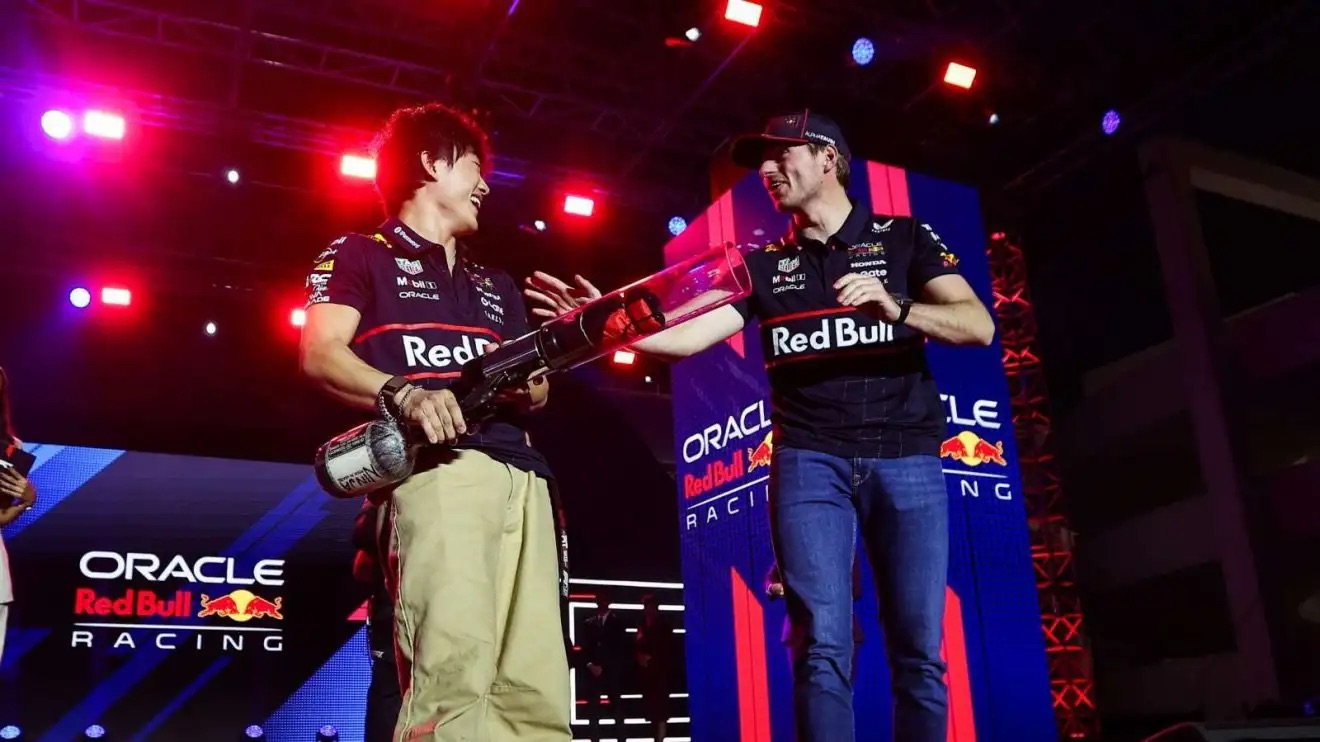
In the Abu Dhabi Grand Prix, which was the final race of the season, Verstappen and Tsunoda shared a symbolic moment that underscored their time together as teammates. The pair exchanged helmets — a longstanding tradition in Formula 1 to show mutual respect and gratitude between drivers. Verstappen wrote a brief message on the crash helmet he gave Tsunoda, the Japanese driver, simply stating, “Arigato Yuki-san” — which translates to “Thank you, Yuki.” Tsunoda’s own inscription on Verstappen’s helmet reflected on their partnership more personally: “Enjoyed a lot being teammate with you. Nice memories. Thanks for the lessons.”
These messages highlighted a connection built through competition, even if Tsunoda fell short of the team’s ultimate performance targets. It was also a moment of acknowledgment from Verstappen, one of the sport’s most successful drivers, showing respect for Tsunoda’s effort during a season that presented both highs and lows.
Tsunoda himself admitted in post-race comments that missing out on a race seat for 2026 was a blow — one that he faced with the honesty of a driver who understood both the opportunity and the challenge he had before him. He recognized that he left behind a solid prospect when he moved up from Racing Bulls, where he had spent years developing racing experience and building confidence. That car had been a platform where he thrived more comfortably, in contrast to the highly competitive and exacting machinery of Red Bull’s main team.
Despite these difficulties and the disappointment of not remaining on the grid next year, Tsunoda also offered praise for Verstappen, acknowledging him as “the best driver on the grid.” This statement highlighted the respect Tsunoda holds not only for Verstappen’s talent but also for what it means to compete alongside him.
In describing the season as one of the most closely contested in recent memory, Tsunoda noted how tight the field had become. Even as he struggled to extract performance from the Red Bull car relative to his teammate’s benchmark, he pointed to the general competitiveness of this year’s competition. While he may not have been able to match the results he — or Red Bull — hoped for, he nonetheless saw value in the experience of racing in such an intense environment.
The broader context of Tsunoda’s departure from the Red Bull race lineup includes ongoing discussions about performance gaps between him and Verstappen, along with speculation that Red Bull needed someone who could better complement the team’s leading driver. Across much of the 2025 season, Tsunoda’s results were overshadowed by Verstappen’s dominance — Verstappen scored a very large number of championship points compared to his teammate, illustrating the challenge that Tsunoda faced in competing at that highest level.
Tsunoda’s move to a reserve role means he will continue to work within the Red Bull organization, albeit not as a front-line competitor on Sundays. This position still places him within reach of potential future opportunities, whether at Red Bull itself or elsewhere, because reserve drivers often stay connected with teams while continuing to hone their skills, data analysis, and technical feedback.
While this transition might be seen as a setback by some, it also reflects a common dynamic in Formula 1 — where driver roles evolve based on performance, strategy, and team needs. Verstappen’s continued presence at Red Bull has set an exceptionally high performance bar for any teammate, and throughout the season, Red Bull’s decisions around driver roles have mirrored its aim to maximize championship potential while also fostering talent.
Overall, Tsunoda’s farewell messages and the helmet exchange with Verstappen captured the emotional and competitive complexities of being a Formula 1 driver in a top team. There is admiration, acknowledgment of inner team challenges, and a recognition that sometimes opportunities do not unfold exactly as a driver hopes. Tsunoda’s words of thanks and reflection on the memories made during his tenure as Verstappen’s teammate encapsulate both his gratitude for the chance to race at the pinnacle of motorsport and his readiness to continue giving his best efforts — even in a different role in the coming season.