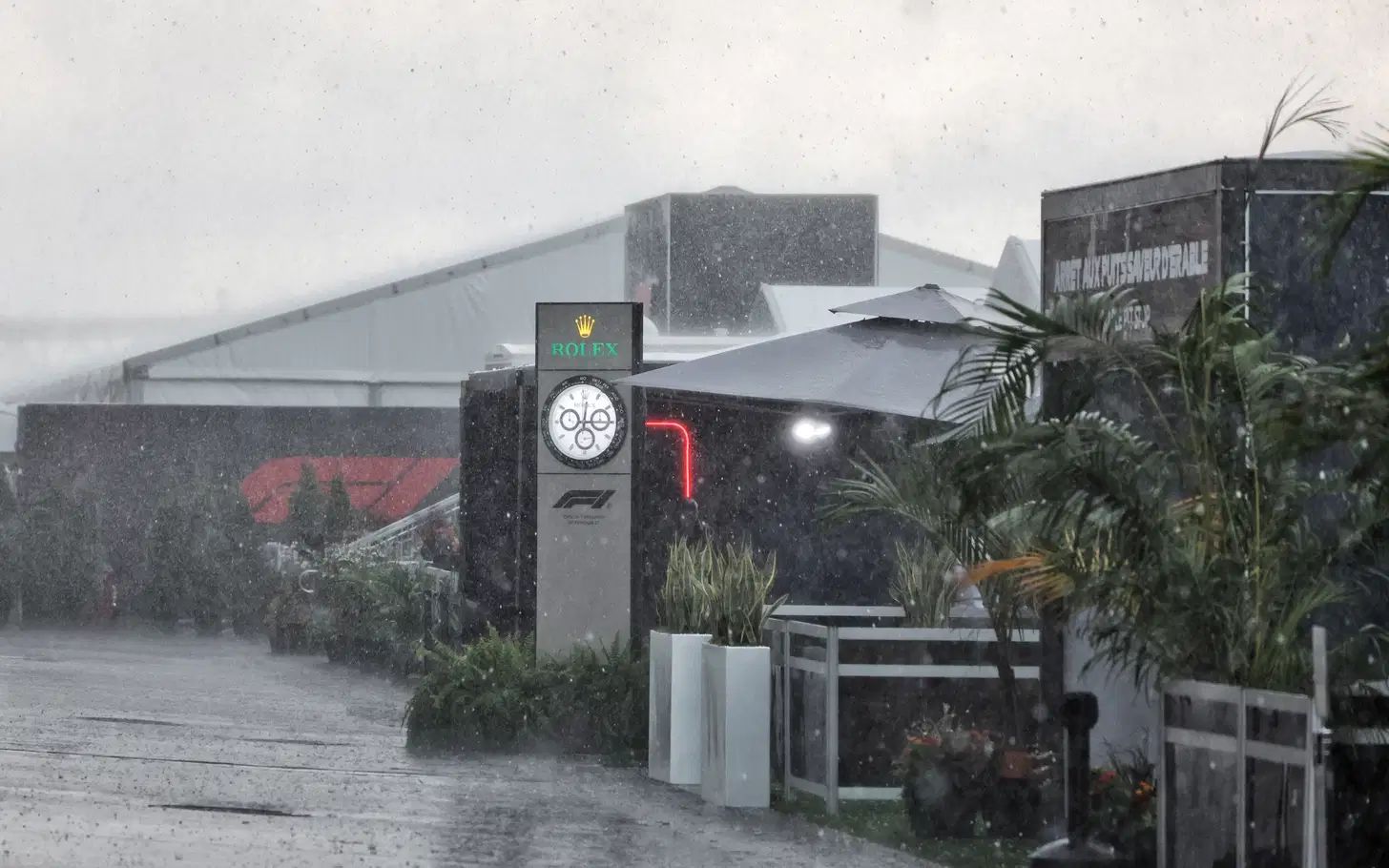
The Canadian Grand Prix weekend is shaping up to be another unpredictable chapter in Formula 1 history, with changing weather conditions expected to play a major role at the legendary Circuit Gilles Villeneuve in Montreal. The famous Canadian venue has long been associated with chaotic races, dramatic strategy calls, safety cars, and unexpected outcomes caused by rapidly changing weather. This year’s event appears likely to continue that tradition, especially with forecasts indicating a significant possibility of rain on race day.
The Circuit Gilles Villeneuve, located on Notre Dame Island in the St. Lawrence River, is already known as one of the most difficult tracks for teams and drivers to predict accurately. Weather systems in Montreal can change quickly, and even minor shifts in wind direction or rainfall intensity can dramatically alter grip levels and tire performance. Over the years, the circuit has delivered several unforgettable wet-weather moments, including the iconic 2011 Canadian Grand Prix, which became the longest race in Formula 1 history after heavy rain caused a lengthy suspension before Jenson Button eventually claimed victory. More recently, the 2024 edition also experienced interruptions and difficult mixed conditions that created strategic headaches for teams.
For the opening day of the 2026 Canadian Grand Prix weekend, conditions are expected to remain calm and manageable. Friday’s sessions should take place under mostly dry skies, giving teams a valuable opportunity to gather data without worrying too much about unpredictable weather interference. Temperatures are forecast to sit around 19°C, accompanied by a light west-northwest breeze. The stable conditions will be especially welcomed because teams have only a single practice session before sprint qualifying begins later in the day. Engineers will want uninterrupted running to fine-tune car setups and understand tire behavior on the low-grip Montreal circuit.
Saturday is also expected to remain relatively stable, at least compared to what could happen on Sunday. Current forecasts suggest only a very small chance of rain during the sprint race and qualifying session. Temperatures are expected to stay close to 19°C, while winds should remain fairly light. These conditions should allow drivers to push harder and provide a clearer indication of outright pace across the grid. Teams such as Mercedes, Red Bull, Ferrari, and McLaren are all expected to be competitive, particularly because several outfits are bringing important upgrade packages to Montreal. Dry conditions during qualifying would likely produce an intense fight for pole position, with minimal disruption from the weather itself.
However, the real concern begins on Sunday, when the likelihood of rain rises sharply. Forecasts currently indicate around a 60 percent chance of rainfall during the race itself, with cooler temperatures and stronger winds also expected to arrive. Temperatures may fall to around 17°C, while shifting wind patterns could create additional handling challenges through the high-speed chicanes and long straights of the circuit. Because the track is positioned on an island surrounded by water, weather systems can move in rapidly and unpredictably, meaning teams may need to react instantly to changing conditions.
Rain in Montreal has historically produced thrilling races because the circuit punishes even the smallest mistakes. The walls are extremely close to the racing line, especially at the final chicane where the famous “Wall of Champions” has caught out many world champions over the years. In wet or damp conditions, braking zones become treacherous, visibility decreases, and tire strategy becomes incredibly difficult to manage. Teams must decide exactly when to switch between slick tires, intermediates, or full wet compounds, and one wrong decision can ruin an entire race.
Another factor that could influence the outcome is the possibility of gusting winds during Sunday’s race. Stronger winds can destabilize the cars under braking and through fast corners, especially with the current generation of Formula 1 machinery that relies heavily on aerodynamic efficiency. Drivers may also struggle with traction exiting slow-speed corners if rain arrives intermittently rather than continuously. These mixed conditions often create the most unpredictable races because parts of the track may remain dry while other sectors become slippery.
The changing weather may also benefit drivers who traditionally excel in difficult conditions. Historically, racers such as Max Verstappen and Lewis Hamilton have demonstrated exceptional ability in wet-weather situations, using superior car control and tire management to gain advantages over rivals. Strategic flexibility could become just as important as raw pace if the rain intensifies during key moments of the race. Safety cars, red flags, or delayed starts could also become possibilities if thunderstorms or heavy showers arrive suddenly.
Fans are already anticipating a dramatic weekend because the Canadian Grand Prix rarely delivers straightforward racing when rain enters the equation. Social media discussions and Formula 1 communities have highlighted Montreal’s reputation for rapidly changing forecasts and unpredictable weather patterns. Some local fans even noted that weather predictions in the region can shift completely within hours, making it difficult to know exactly what conditions teams will face until the cars are already on track.
Despite the uncertainty, teams will likely spend much of Friday and Saturday preparing wet-weather setups and practicing various race strategy simulations. Engineers will monitor radar systems constantly, while drivers will need to remain adaptable throughout the event. Tire preservation, pit-stop timing, and confidence in low-grip conditions could ultimately determine who succeeds in Canada this year.
If the forecast remains accurate, the 2026 Canadian Grand Prix may once again become one of the most dramatic races of the season. The combination of a technically demanding circuit, volatile weather, and tightly matched teams creates the perfect ingredients for chaos. Whether the rain arrives lightly or develops into a full wet-weather showdown, Formula 1 fans can expect a tense and highly unpredictable weekend in Montreal.