
F1 2026 Dutch Grand Prix: Latest Weather Forecast Raises Questions Ahead of Zandvoort Showdown
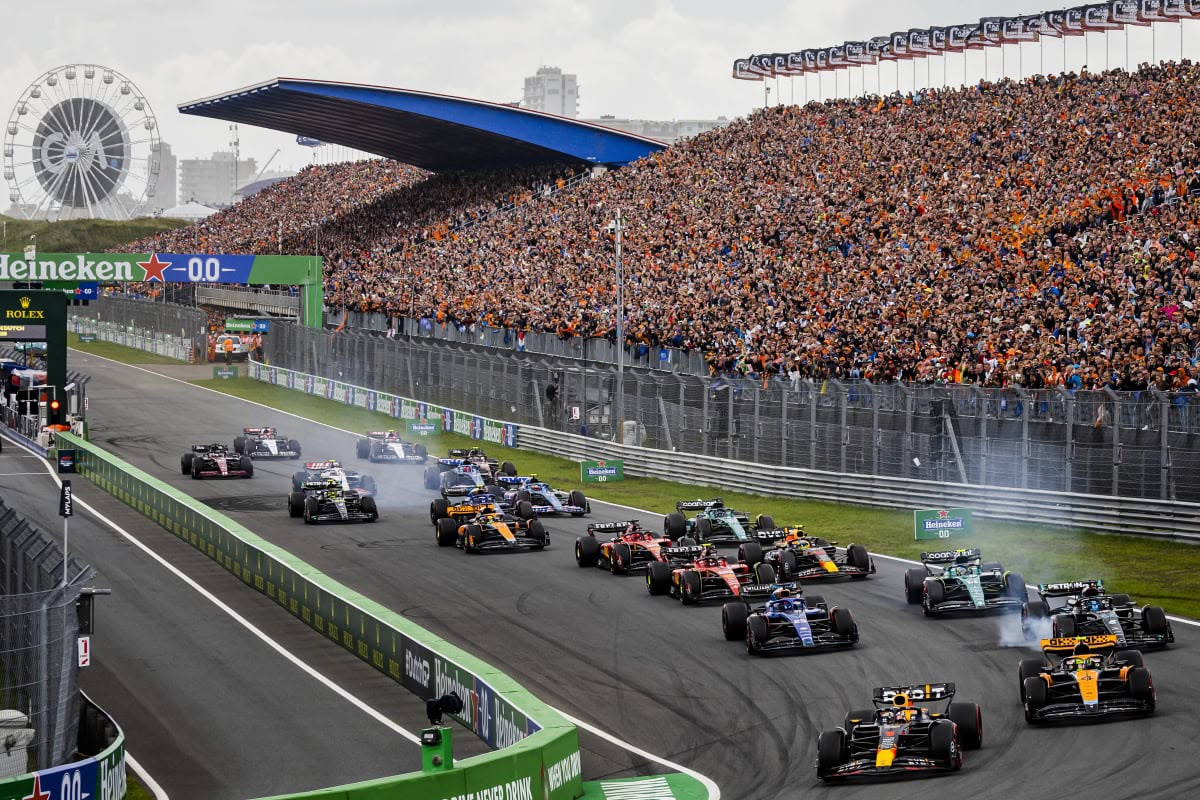
Formula 1 is back in action after the summer break, with the 2026 Dutch Grand Prix taking place at the iconic Circuit Zandvoort. As teams and drivers prepare for the 12th round of the championship, attention is not only focused on the competitive battle on track but also on the weather conditions that could influence the weekend.
The Dutch Grand Prix is particularly significant this year because Zandvoort is scheduled to host its final Formula 1 race for the foreseeable future. The circuit will not feature on the calendar from 2027, making this weekend the last opportunity for drivers such as Max Verstappen and Lewis Hamilton to compete at the historic seaside venue for now.
Weather could therefore become an important factor as the teams attempt to make the most of the final Dutch Grand Prix. Zandvoort’s location close to the North Sea means conditions can change quickly, with rain, wind, cloud cover and relatively low temperatures capable of affecting tyre performance and car balance.
Friday Begins With Wet Conditions
The opening day of the Dutch Grand Prix weekend brought some wet weather to the Zandvoort area. Rain was reported during the morning, creating the possibility of challenging conditions for teams preparing for the first on-track sessions.
However, the weather improved as the day progressed. The latest forecast suggested that the likelihood of precipitation would fall significantly during the afternoon, particularly around Sprint Qualifying.
Between approximately 3:00pm and 8:00pm local time, the chance of rain was expected to remain at zero per cent. Temperatures were forecast to remain relatively cool, sitting between approximately 17°C and 18°C. Although rain could return later in the evening, it was not expected to interfere significantly with Sprint Qualifying.
The broader Formula 1 forecast also pointed toward generally mild conditions on Friday, with temperatures between 16.5°C and 19°C. Earlier predictions had suggested a 60 per cent chance of rain, although most of the track action was still expected to take place under largely dry conditions.
Saturday Could Be More Complicated
Saturday presents a more interesting weather picture because the Sprint and qualifying sessions are both scheduled for the same day.
The Sprint is scheduled to begin at 12:00pm local time, with qualifying following at 4:00pm. The latest forecast indicates that there could be a meaningful risk of rain around the Sprint, potentially creating difficult conditions for the drivers.
According to the latest report, temperatures around the start of the Sprint are expected to be approximately 16°C, while the probability of precipitation is around 44 per cent.
A wet or damp track could dramatically change the complexion of the Sprint. Zandvoort is already a narrow and technically demanding circuit, meaning drivers have limited room for mistakes. Rain could make the challenge even greater by reducing grip and forcing teams to make important tyre and setup decisions.
The situation is expected to improve later in the day. By the time qualifying gets underway at 4:00pm, the probability of rain is forecast to have fallen to around seven per cent. Temperatures should also remain close to 17°C.
Wind is another factor that teams will have to monitor. Gusts of approximately 15 to 16mph are possible, potentially affecting the cars through Zandvoort’s fast corners and banked sections.
The official Formula 1 forecast is broadly consistent with this outlook. It predicts temperatures between 16°C and 18°C on Saturday, with a 40 per cent chance of rain, mainly during the morning and early afternoon. Winds are expected to average around 14.4km/h, with stronger gusts possible.
Qualifying Could Be Less Threatened By Rain
One of the biggest positives for teams is that the weather is expected to become more favourable as Saturday progresses.
If the current forecast holds, qualifying should take place in predominantly dry conditions. This would be particularly important because qualifying at Zandvoort is crucial due to the circuit’s narrow layout and limited overtaking opportunities.
A dry qualifying session would allow drivers to maximise their confidence and extract the most from their cars on the soft tyres. However, the threat of wind and changing track temperatures could still make the session challenging.
Zandvoort’s banked corners are among its most distinctive features. The circuit combines fast sections with technical corners, while its proximity to the sea means wind can have a noticeable effect on the cars. Mercedes, McLaren, Ferrari, Red Bull and the other teams will therefore need to carefully monitor conditions before making their final setup decisions.
Sunday Forecast Looks More Settled
The good news for Formula 1 fans is that Sunday’s race is currently expected to be considerably more settled.
The latest forecast predicts sunny intervals and temperatures between approximately 17°C and 18°C, while the chance of rain is expected to remain relatively low. Current estimates put the probability of precipitation at around eight to 12 per cent during the morning and early afternoon.
The official Formula 1 forecast is slightly more conservative but also points toward a predominantly dry race. Temperatures are expected to range between 15°C and 18°C, with only a 20 per cent chance of rain. Wind speeds are expected to average around 14km/h, with gusts potentially reaching 32.4km/h.
If those conditions remain unchanged, Sunday could provide a relatively stable environment for the final Dutch Grand Prix at Zandvoort.
Weather Could Still Influence Strategy
Despite the improving forecast, teams cannot afford to ignore the weather.
Formula 1 cars are extremely sensitive to changes in track temperature and grip. Cooler conditions can influence tyre warm-up, while wind can affect aerodynamic balance. A sudden shower could also force teams to react quickly and potentially change the order on track.
This is especially relevant during the Sprint weekend because teams have less practice time than at a conventional Grand Prix. The 2026 Dutch Grand Prix features a Sprint format, meaning teams have only one free practice session before Sprint Qualifying. The Sprint then takes place on Saturday before traditional Grand Prix qualifying later that afternoon.
That compressed schedule leaves engineers with less time to understand how their cars behave in different conditions.
A Historic Final Race At Zandvoort
Beyond the weather, the 2026 Dutch Grand Prix carries considerable historical importance.
Zandvoort returned to the Formula 1 calendar in 2021 after a lengthy absence, and the event quickly became one of the most popular races of the season. The circuit is located among the dunes near the North Sea and is renowned for its distinctive banking, fast corners and limited runoff areas.
Max Verstappen has also enjoyed enormous support at his home event, making the race one of the biggest occasions on his calendar. However, this year’s event marks the final Dutch Grand Prix currently scheduled at Zandvoort.
That adds another emotional dimension to the weekend, particularly for Verstappen and the thousands of Dutch supporters expected to attend.
What Fans Should Expect
The latest weather outlook suggests that Formula 1 fans could see a mixed but fascinating weekend at Zandvoort.
Friday started with some wet weather, but conditions improved sufficiently for largely dry running. Saturday carries the greatest possibility of disruption, especially during the Sprint around midday. Rain could create difficult conditions and potentially produce unexpected results.
By qualifying time, however, the risk of precipitation is expected to fall sharply. Sunday currently looks even more promising, with mostly dry conditions and only a small chance of rain.
Nevertheless, weather forecasts can change, particularly at a coastal circuit such as Zandvoort. Teams will therefore need to remain flexible and prepared for sudden changes.
With the Sprint, qualifying and final Dutch Grand Prix all packed into one weekend, there is plenty at stake. The weather may not ultimately determine the winner, but if rain arrives at the wrong moment, it could significantly influence tyre choices, strategy, qualifying positions and the outcome of the final race at Zandvoort.
The 2026 Dutch Grand Prix is therefore shaping up to be much more than a normal round of the championship. With changing weather, a demanding circuit, a Sprint format and the final scheduled F1 race at Zandvoort, fans can expect an intense and potentially unpredictable weekend as Formula 1 bids farewell to the Netherlands for now.