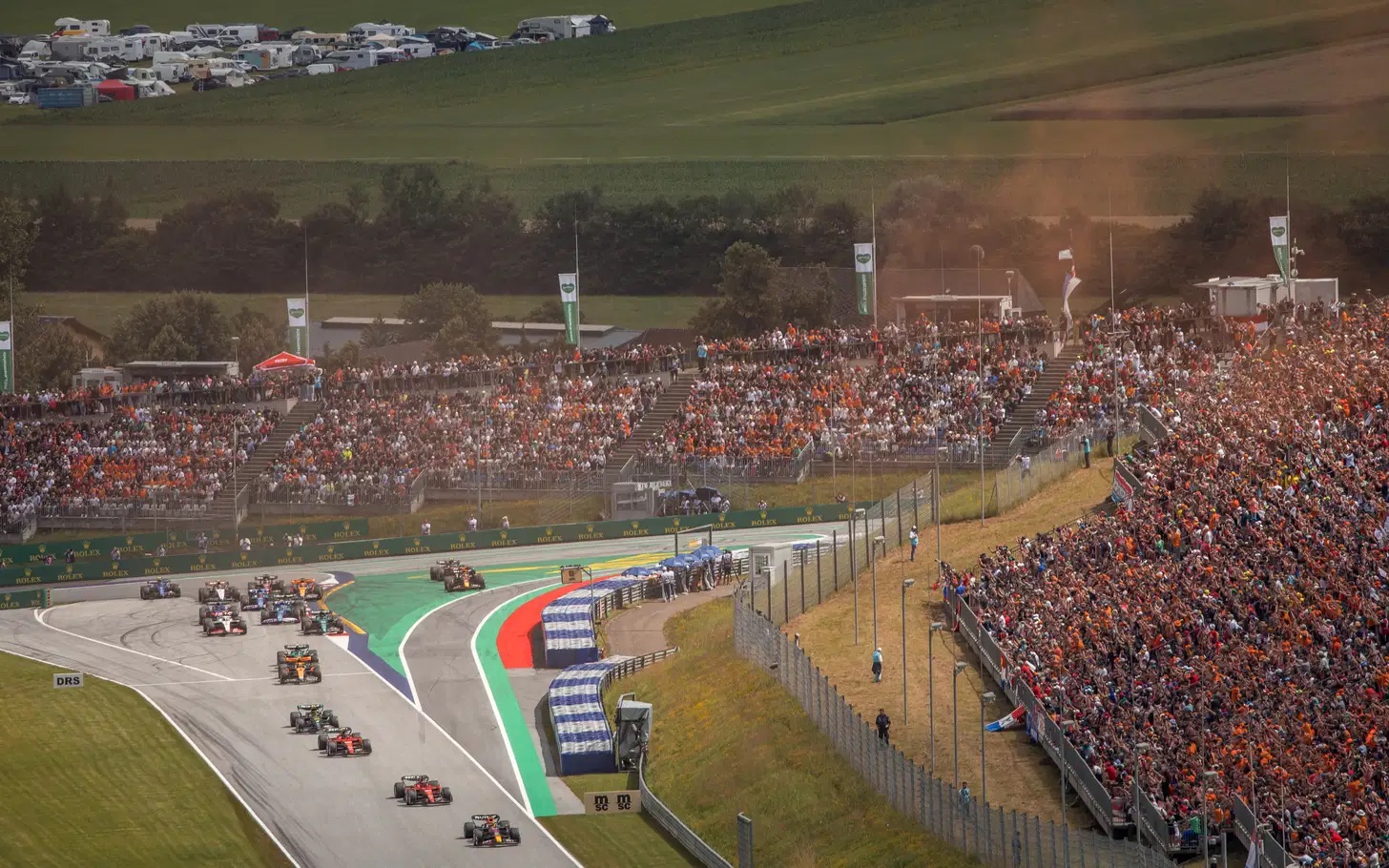
Three years ago today, the Formula 1 world witnessed one of the most remarkable and controversial race weekends in recent memory at the Austrian Grand Prix. Although Max Verstappen delivered another dominant performance at the Red Bull Ring, the race is remembered far more for the unprecedented wave of penalties that followed after the chequered flag than for the action on the circuit.
Starting from pole position, Verstappen controlled the race from start to finish, showcasing the incredible pace of his Red Bull machine. The Dutchman never looked under serious pressure as he secured his seventh victory of the 2023 season, extending Red Bull’s incredible winning streak to 10 consecutive Formula 1 Grands Prix. It was another statement performance during what became one of the most dominant campaigns in the sport’s history.
Behind the race winner, Charles Leclerc drove a solid race to claim second place for Ferrari. Despite briefly finding himself ahead during the pit-stop phase, the Monegasque driver was unable to prevent Verstappen from reclaiming the lead shortly after racing resumed. Verstappen executed a clean and decisive move into Turn 3 before steadily pulling away, eventually crossing the finish line more than five seconds clear.
Meanwhile, Sergio Pérez produced one of the standout recovery drives of the afternoon. After beginning the race from 15th on the grid following a difficult qualifying session, the Mexican driver carved his way through the field with a series of impressive overtakes. His determined performance earned him a well-deserved third-place finish and completed a successful day for Red Bull Racing on home soil.
An early Virtual Safety Car period briefly added an element of strategy to the race after Nico Hülkenberg was forced to retire. Ferrari reacted by bringing both Leclerc and Carlos Sainz Jr. into the pits during the neutralisation, allowing Leclerc to temporarily emerge ahead of Verstappen. However, the advantage lasted only moments, with the reigning world champion quickly reclaiming the lead and re-establishing complete control.
To underline his dominance, Verstappen even made a late pit stop for a fresh set of tyres before producing the fastest lap of the race on the final tour, capping off another flawless afternoon.
However, the biggest talking point was still to come.
Following the race, Formula 1 officials launched an extensive review of track limits violations after hundreds of potential infringements had been reported throughout the weekend. The investigation took several hours to complete and resulted in one of the largest batches of post-race penalties ever issued in Formula 1 history.
In total, 12 drivers received time penalties after exceeding track limits multiple times during the race. The sanctions dramatically altered the final classification, with several competitors gaining or losing positions long after the podium celebrations had concluded. The lengthy review sparked widespread debate among drivers, teams and fans about the effectiveness of track limits enforcement and whether changes to the circuit or sporting regulations were needed.
Although Verstappen’s victory remained untouched, the 2023 Austrian Grand Prix became famous for reasons beyond Red Bull’s dominance. Instead, it entered Formula 1 history as the race where post-race steward decisions overshadowed the on-track spectacle, making it one of the most unforgettable and controversial events of the modern era.