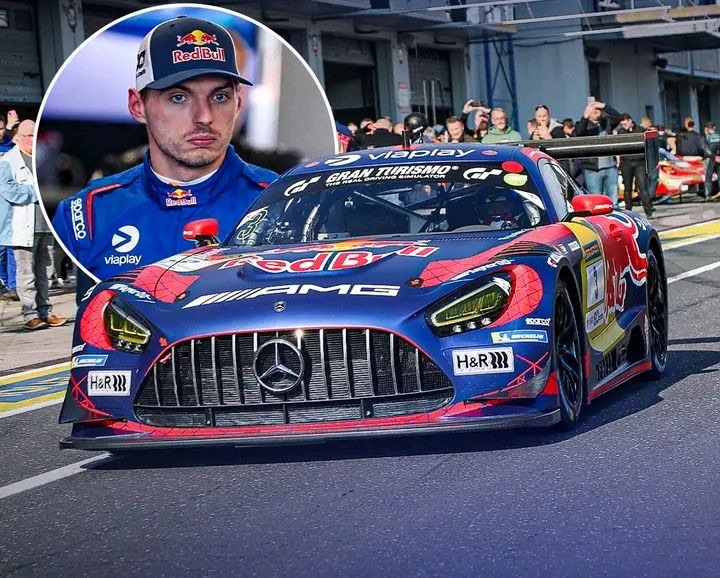
Max Verstappen’s first crack at the legendary Nürburgring 24 Hours just got a lot more tactical. The four-time Formula 1 world champion will line up for the May 14-17 endurance classic in a Mercedes-AMG GT3 run by his own Verstappen Racing squad, but organizers have rolled out a new set of minimum pit stop rules that will force every team — including his — to rethink strategy.
The 24h Nürburgring is infamous for its complexity. The 25.3km combination of the Nordschleife and GP circuit, unpredictable Eifel weather, and a grid of 130+ cars from GT3 to tiny touring cars already make it one of motorsport’s toughest tests. Now, race officials have added another layer: rigidly enforced minimum pit stop times designed to level the playing field.
The goal is simple. By setting a mandatory duration for every stop that includes refueling, organizers want to curb the advantage of teams with ultra-expensive, lightning-fast fuel rigs, keep costs sustainable, balance performance, and improve safety in a packed pit lane. No more gaining 10 seconds just because your crew can dump fuel quicker.
How the new pit stop timing works
From 2026, a stop is measured from the moment a car crosses the pit-entry line to when it crosses the pit-exit line. The minimum time a car must spend in the lane is dictated by how many laps it completed in the stint before pitting. Skip refueling, and you’re free to leave whenever the work is done — no minimum. But take on fuel, and you’re on the clock.
The rules are laid out in Appendix 6.1 of the regulations, with a detailed table for each class. For SP9 GT3 cars — Verstappen’s category — the numbers are strict.
After just one lap, the first stop of the race must be 1m05s. Every stop after that, if done after one lap, must be at least 56s. The longer the stint, the longer the mandatory stop. Run 11 laps before pitting? Your first stop must be 4m29s, and subsequent stops 4m20s.
Here’s the SP9 breakdown for early stops:
Laps Completed | First Pit Stop | From Second Pit Stop
11 | 4m29s | 4m20s
10 | 4m09s | 4m00s
9 | 3m49s | 3m40s
8 | 3m26s | 3m17s
7 | 3m05s | 2m56s
6 | 2m45s | 2m36s
5 | 2m25s | 2m16s
4 | 2m05s | 1m56s
3 | 1m45s | 1m36s
2 | 1m25s | 1m16s
1 | 1m05s | 56s
That means strategy becomes a game of trade-offs. Short-stint to react to a safety car or rain? You’ll still sit for nearly a minute. Try to double-stint tires and stretch fuel? You’ll be stationary for over four minutes when you finally come in. Teams can no longer “undercut” rivals with a 30-second splash-and-dash.
Special rules for the final hour
It gets even more granular in the closing stages. Once the race clock drops below 70 minutes, the minimum stop time is no longer based on laps done. It’s based on time remaining.
At 69 minutes to go, an SP9 car must spend 3m32s in the pits. That drops steadily: 3m08s at 60 minutes, 2m41s at 50 minutes, 2m00s at 35 minutes, 1m47s at 30 minutes, 1m20s at 20 minutes, and down to just 31s with 2 minutes left.
The idea is to prevent teams from throwing a Hail Mary fuel stop in the last 15 minutes to gain track position. If you need fuel at 69 minutes, you’re giving up over three and a half minutes. At 10 minutes, it’s 53 seconds. The table forces teams to plan their final stop well in advance.
Why this matters for Verstappen
For Verstappen, who’s used to F1’s sub-2.5-second stops and total strategic freedom, this is a different world. He’ll be sharing the Mercedes-AMG GT3 with teammates, and every driver will need to hit fuel numbers, tire life, and driver-time limits while obeying the stopwatch.
The rules punish mistakes. Come in a lap too early for fuel and you still serve the full time. Take a penalty for track limits and need a stop-go? That’s separate — but if you combine it with service, you still have to meet the minimum. Crew chiefs will be counting seconds, not tenths.
It also blunts one of Verstappen Racing’s potential advantages. As a new but well-funded team, they could have invested in top-tier equipment to shave seconds. Now, that’s irrelevant. Execution, stint length, and timing the final stop become king.
Other F1 stars are also joining the grid, meaning Verstappen won’t be the only big name wrestling with the new regs. But for a driver who thrives on control and optimization, having to sit in the box for 4m20s after an 11-lap stint will be a new kind of patience test.
The 53rd Nürburgring 24 Hours runs May 14-17, and while fans will watch to see if Verstappen can translate his F1 dominance to the ‘Green Hell,’ the pit lane might be where this race is won or lost. In F1, he controls the pit stop. At the N24, the pit stop controls him.