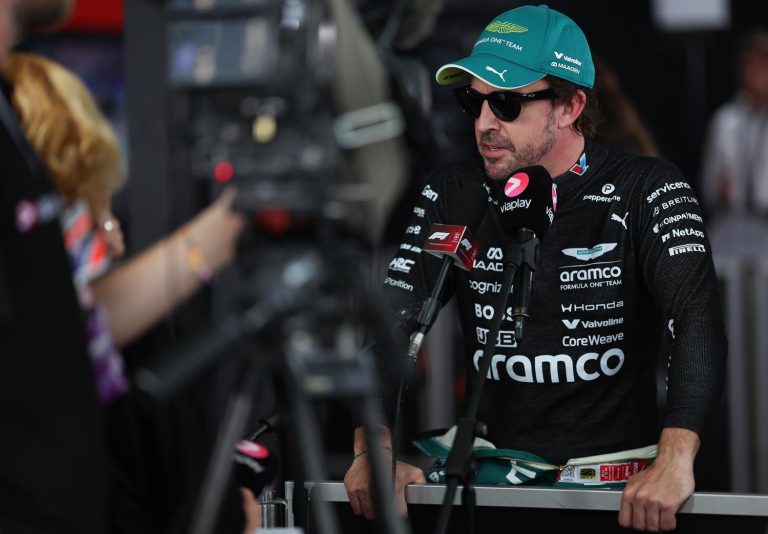

Fernando Alonso endured another frustrating and physically demanding weekend during the Canadian Grand Prix after revealing that severe discomfort inside his Aston Martin cockpit forced him to consider stopping the race altogether. The two-time Formula 1 world champion admitted that the pain he experienced became so intense that he briefly thought about retiring from the event before eventually battling through to the finish.
The veteran Spaniard has built a reputation throughout his Formula 1 career for toughness, resilience, and an extraordinary ability to push through difficult situations. However, even Alonso conceded that the circumstances he faced in Montreal pushed him close to his limit.
According to the Aston Martin driver, the problem originated from a seating issue inside the cockpit that gradually became worse as the race progressed. The discomfort reportedly affected his posture and caused increasing pain during the long and physically exhausting Grand Prix. Formula 1 cars are already among the most physically demanding machines in motorsport, with drivers experiencing intense G-forces, extreme temperatures, and constant vibration throughout a race distance. Any seating imbalance or ergonomic issue can therefore quickly become a major problem over the course of nearly two hours behind the wheel.

Alonso explained after the race that the pain became especially difficult to manage during the closing stages. At one point, he even considered bringing the car back to the garage simply to stop the discomfort from becoming unbearable. Despite those thoughts, the 44-year-old ultimately chose to continue racing, determined to collect valuable data and points for Aston Martin.
The Canadian Grand Prix weekend had already proven challenging for Aston Martin before Alonso’s physical struggles became public. The Silverstone-based team has been searching for greater consistency throughout the season and arrived in Montreal hoping the circuit characteristics would allow them to compete more effectively against midfield rivals. While flashes of pace appeared at certain moments, the team once again found itself fighting a difficult battle against competitors that currently appear to have stronger overall race packages.
For Alonso personally, the weekend became less about pure performance and more about endurance.
The Spaniard revealed that the cockpit discomfort began relatively early in the race and steadily intensified as the laps passed. In modern Formula 1, drivers are tightly secured inside extremely narrow cockpits designed around aerodynamic efficiency and safety requirements. Even small adjustments in seat positioning can dramatically influence comfort levels during a race. When a driver experiences continuous pain while simultaneously operating at high speed, concentration can become increasingly difficult to maintain.
Alonso admitted that the situation reached a stage where finishing the race itself became an achievement. Although he continued fighting on track, he acknowledged that he was no longer fully focused on maximizing lap time because much of his energy was directed toward managing the physical pain.
The issue also highlighted one of the less visible aspects of Formula 1 competition. Fans often focus on strategy, overtaking, tire management, and technical development, but the physical punishment drivers endure during a race remains immense. Cockpit temperatures frequently rise to exhausting levels, while constant braking, acceleration, and cornering forces place enormous strain on the neck, back, and core muscles. Any additional physical complication can rapidly become overwhelming.
Despite the discomfort, Alonso’s determination once again demonstrated why he remains one of the most respected drivers on the grid. Even at this stage of his career, the Spaniard continues to display the relentless mentality that made him a two-time world champion earlier in the 2000s. Many younger drivers might have opted to retire the car under similar circumstances, especially during a difficult race where points opportunities were limited. Alonso instead chose to continue, believing it was important for both himself and the team to complete the race distance.
After the Grand Prix, Aston Martin confirmed that the seating problem would be investigated thoroughly before the next race weekend. The team acknowledged the issue and indicated that adjustments would be made to prevent a repeat of the situation in future events. Given the fine margins involved in Formula 1, even relatively minor ergonomic problems can negatively impact driver performance over an entire race weekend.
The incident also arrives during an important phase for Aston Martin as the team continues attempting to rebuild momentum following an inconsistent campaign. After showing encouraging pace earlier in previous seasons, expectations surrounding the team increased significantly. However, the current season has proven more complicated, with Aston Martin struggling to consistently challenge the leading teams.
Alonso himself has often spoken about the need for patience while the organization continues developing its long-term project. The arrival of high-profile technical figures, major investment in infrastructure, and expanded ambitions have all signaled Aston Martin’s intention to become a future championship contender. Still, progress in Formula 1 is rarely straightforward, and the team remains in the middle of an intense development battle against rivals with greater recent success.
Even amid those challenges, Alonso has continued delivering strong individual performances whenever opportunities arise. His experience, racecraft, and technical feedback remain extremely valuable to Aston Martin’s growth. Team personnel have repeatedly praised his commitment and professionalism, particularly given the demanding circumstances surrounding the current campaign.
The Canadian Grand Prix therefore became another example of Alonso’s refusal to give up easily, even when faced with significant physical discomfort.
Throughout Formula 1 history, drivers have often competed through pain and exhaustion in pursuit of results. From extreme heat conditions to injuries sustained during race weekends, many legendary moments in the sport have involved drivers pushing beyond normal physical limits. Alonso’s experience in Montreal may not rank among the most dramatic examples in Formula 1 history, but it nevertheless illustrated the remarkable endurance required to compete at the highest level.
The Spaniard later admitted that his primary objective eventually shifted from performance to simply reaching the checkered flag. While the final result may not have matched Aston Martin’s ambitions, completing the race under such circumstances still reflected considerable mental toughness.
For Aston Martin, resolving the cockpit issue quickly will be essential. Formula 1 teams spend enormous amounts of time optimizing every aspect of car design, including driver ergonomics and comfort. Small details can significantly influence performance, especially over long race distances where physical fatigue becomes a major factor.
The incident may also raise broader discussions about how aggressively modern Formula 1 cars are packaged. Teams constantly prioritize aerodynamic efficiency and weight reduction, often leaving very limited space inside the cockpit area. While drivers are accustomed to uncomfortable conditions, there remains a fine balance between performance optimization and ensuring drivers can operate safely and effectively throughout a race.
Alonso’s comments after the race were delivered in a calm and measured manner, consistent with the experienced attitude he has shown throughout his long Formula 1 career. Rather than using the problem as an excuse, he simply described the reality of what he experienced during the Grand Prix and praised the team for attempting to manage the issue as best as possible during the event.
As the Formula 1 season continues, Aston Martin will now focus on ensuring Alonso is fully comfortable heading into the next round of the championship. With such a competitive midfield battle unfolding, the team cannot afford avoidable setbacks if it hopes to regain stronger form in the coming races.
For Alonso, meanwhile, the Canadian Grand Prix served as another reminder that even after decades in Formula 1, the sport still demands extraordinary physical sacrifice from those determined to compete at the very highest level.