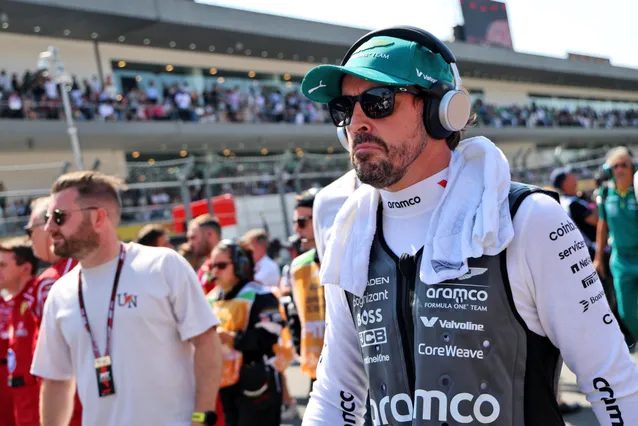

Fernando Alonso has opened up about the real problems affecting Aston Martin after a frustrating and costly crash during Sprint Qualifying at the Canadian Grand Prix. The two-time Formula 1 world champion admitted that the team’s current struggles go far beyond a single mistake on track, revealing that the AMR26 continues to suffer from serious performance limitations that are leaving both drivers forced to push beyond the car’s natural capability.
The Canadian weekend proved difficult once again for the Silverstone-based outfit. Alonso appeared to be on course to safely progress through the opening phase of Sprint Qualifying after briefly sitting inside the top 15, but disaster struck when he locked the front tyres and crashed into the barriers. The incident triggered another red flag during a chaotic day in Montreal and added further damage costs to an already troubled campaign for Aston Martin.
Speaking after the accident, Alonso explained that the crash was largely the result of having to drive the car beyond its limits in order to remain competitive. According to the Spaniard, Aston Martin currently lacks the pace required to naturally fight in the midfield, forcing drivers to extract more from the car than it can comfortably deliver. He admitted that the team was effectively trying to gain several positions through sheer aggression and commitment alone, a strategy that inevitably increases the risk of mistakes.
Alonso described the moment of the crash by saying that once the front tyres locked, he immediately became “a passenger,” unable to avoid the barriers because of the narrow margins offered by the Circuit Gilles Villeneuve. The veteran driver stressed that the team is operating too close to the edge simply to stay relevant in qualifying sessions.
Despite the accident, Alonso still progressed into SQ2 because several drivers behind him were unable to complete improved laps before the red flag interruption. However, the damage to the Aston Martin prevented him from taking any further part in the session, leaving him down in 16th position for the Sprint. Team-mate Lance Stroll endured another disappointing session as well, qualifying only 18th at his home Grand Prix.
The latest setback adds to what has already been an extremely difficult 2026 season for Aston Martin. Early in the year, the team battled severe vibration problems linked to the Honda power unit partnership. Reports suggested that the issue became so serious that drivers feared physical discomfort and potential long-term strain from the excessive vibrations inside the cockpit.
Although Aston Martin and Honda have reportedly made progress in solving the vibration concerns, Alonso recently revealed that another major weakness has now emerged. After the Miami Grand Prix, he disclosed that the team was struggling with gearbox and drivability problems, particularly during downshifts and upshifts. He explained that the car’s electronic behaviour felt inconsistent and unpredictable, especially under heavy braking conditions.
That issue became even more worrying heading into Canada, a circuit known for its aggressive braking zones and traction demands. Alonso openly admitted that improving the gearbox behaviour was the team’s number one priority before arriving in Montreal. Unfortunately for Aston Martin, the Canadian weekend has once again exposed just how far behind the competition they currently are.
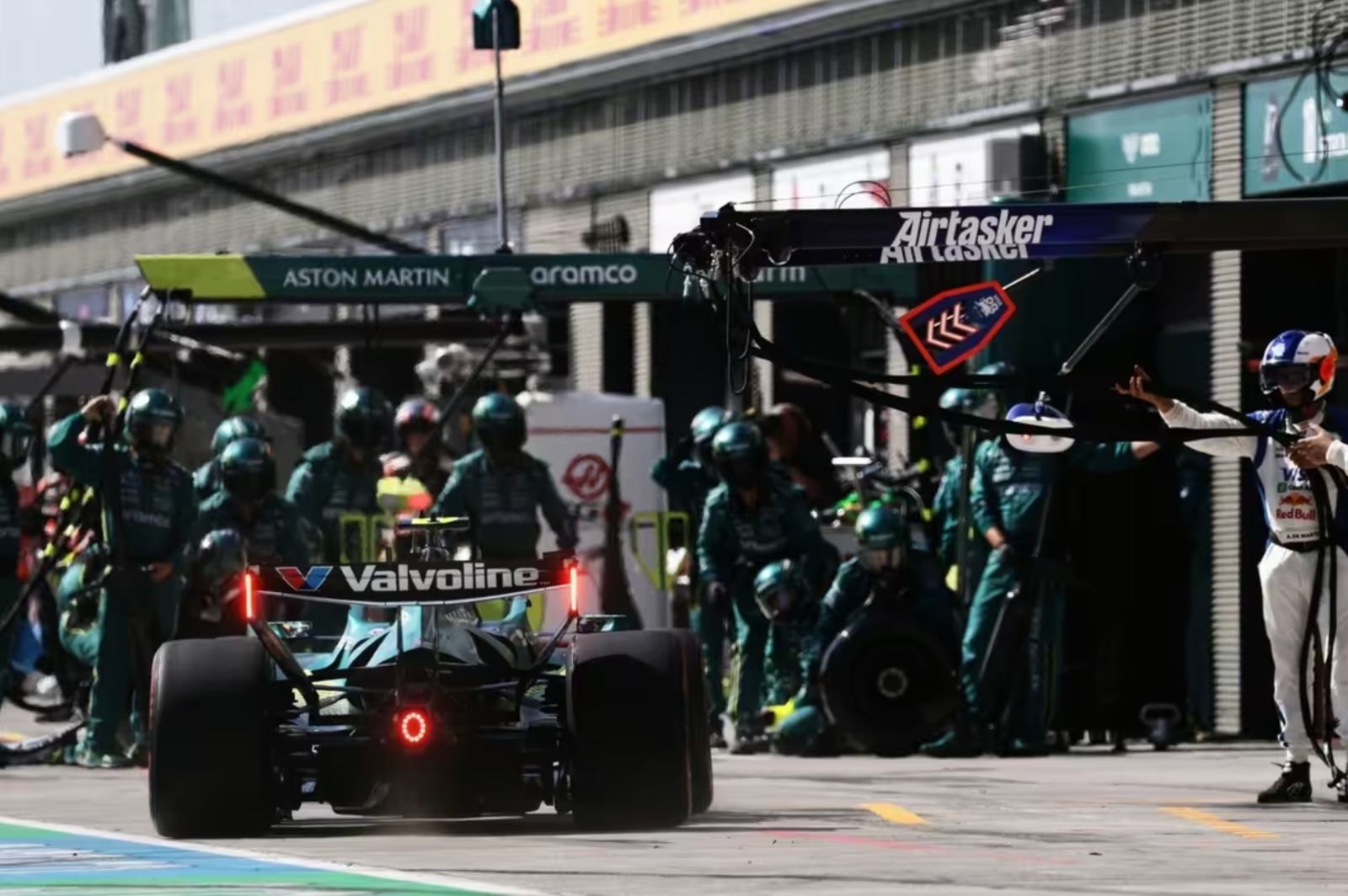
The 43-year-old has also acknowledged that Aston Martin’s immediate future may continue to be painful. According to Alonso, the team does not expect any major upgrade packages before the summer break, meaning the current performance limitations are likely to remain for several races. Rather than introducing small developments that offer only minor gains, Aston Martin has decided to focus resources on producing a much larger step later in the year.
Alonso explained that bringing tiny improvements race after race would not significantly alter the team’s position on the grid. In his view, spending heavily under Formula 1’s strict budget cap regulations for only a few tenths of performance makes little sense when rivals remain nearly a second ahead. He suggested that Aston Martin would rather wait until they can unlock a far more substantial performance increase before committing to aggressive development spending.
Even with the disappointing results, Alonso has attempted to remain calm and realistic about the situation. He admitted that answering the same questions every race weekend about Aston Martin’s lack of pace is becoming repetitive, but insisted the team remains united internally. The Spaniard emphasized that frustration levels are being carefully managed and that everyone within the organization understands the long-term plan.
There is also growing attention surrounding the influence of legendary designer Adrian Newey, who recently joined Aston Martin’s ambitious long-term project. While Newey’s arrival has generated enormous excitement, the team’s current technical problems highlight the scale of the rebuilding challenge ahead. Reports throughout the season have suggested that Aston Martin’s transition into a genuine championship contender may take longer than initially expected.
The combination of reliability concerns, gearbox inconsistencies, lack of pace, and delayed upgrades has left Aston Martin trapped near the back of the grid for much of the campaign. Alonso’s comments after Canada paint the picture of a team still searching for answers despite massive investment and major restructuring behind the scenes.
For Alonso himself, the season has become an exercise in patience and resilience. Even at 43 years old, the Spaniard continues to extract everything possible from the car, often outperforming expectations despite the machinery underneath him. However, the Canadian crash served as another reminder that there is only so much a driver can do when a car fundamentally lacks competitiveness.
Aston Martin now faces a critical period in the season. The team must not only improve reliability and drivability but also find a way to close the massive performance gap to the midfield. With rivals continuing to bring upgrades while Aston Martin waits for a larger development package later in the year, the pressure is mounting rapidly.
Canada was supposed to offer signs of progress after minor improvements shown in recent races, but instead it exposed the harsh reality of Aston Martin’s situation. Alonso’s brutally honest assessment made it clear that the team’s true problem is not simply driver error or isolated reliability failures — it is the fact that the AMR26 still lacks the pace, balance, and confidence needed to compete consistently in modern Formula 1.