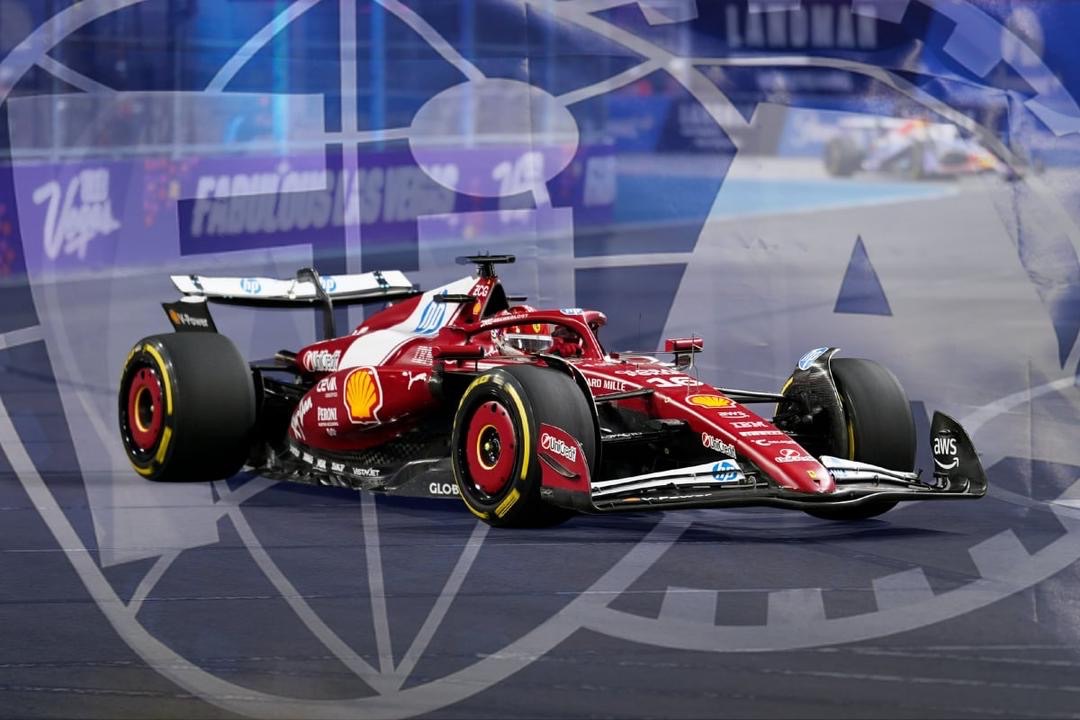
Charles Leclerc and Ferrari have suffered a minor setback at the Miami Grand Prix after the FIA confirmed a financial penalty for a pit-lane speed infringement during the opening practice session. While the sanction is not severe enough to affect Ferrari’s competitive prospects on track, it serves as a reminder of how tightly Formula 1 regulations are enforced, even in seemingly routine situations.
The incident occurred during the sole free practice session of the Miami sprint weekend, a session that carries extra significance because teams have limited time to fine-tune their cars before competitive running begins. Leclerc, who was quick from the outset, exceeded the pit-lane speed limit by a very small margin. According to the FIA stewards, the Ferrari driver was clocked at 81.4 km/h in an area where the maximum permitted speed is 80 km/h. That difference of just 1.4 km/h may seem trivial in ordinary driving terms, but in Formula 1, even the slightest breach of the regulations triggers an automatic response.
As a result, Ferrari was handed a €200 fine. Importantly, the punishment applies to the team rather than directly affecting Leclerc’s race weekend in sporting terms. There is no grid penalty, no deduction of championship points, and no impact on his qualifying or sprint race position. Instead, the sanction is purely financial, reflecting the FIA’s standard procedure for minor pit-lane speeding offences.
Such penalties are commonplace in Formula 1. The pit lane is one of the most tightly regulated areas at any circuit, largely for safety reasons. With mechanics, engineers, FIA officials, and other team personnel constantly moving around in a confined space, strict speed enforcement is essential. Even a slight excess over the limit is treated seriously, regardless of intent or the competitive context.
For Leclerc, the fine came during what was otherwise a highly encouraging session. The Monegasque driver topped the timing sheets in FP1, suggesting Ferrari’s latest upgrades are delivering immediate performance gains. His pace around the Miami International Autodrome indicated that the Scuderia may be in a strong position to challenge frontrunners McLaren and Mercedes throughout the weekend.
That performance will be particularly reassuring for Ferrari, which arrived in Miami with significant expectations. The team has introduced a notable package of updates aimed at improving both outright pace and consistency. Early indications suggest those developments are working as intended, with Leclerc appearing comfortable and confident behind the wheel.
The penalty itself is therefore unlikely to cause any real concern within the Ferrari camp. In the broader context of a Formula 1 weekend, a €200 fine is relatively insignificant, especially for a front-running team with Ferrari’s resources. More importantly, it does not compromise strategy, car setup, or Leclerc’s opportunity to compete for strong results in either the sprint race or Sunday’s Grand Prix.
Leclerc’s form in Miami has been one of the standout stories of the weekend so far. After a strong opening phase to the 2026 season, Ferrari has been working hard to close the gap to the leading teams. The Miami upgrades appear to represent an important step in that process. Leclerc’s ability to immediately extract performance from the updated car is a positive sign, not only for this race weekend but also for Ferrari’s trajectory over the remainder of the season.
The timing of the incident is also worth noting. Sprint weekends offer only one practice session before parc fermé conditions come into effect. That makes every lap especially valuable. Drivers and teams must gather data quickly, assess balance, and optimize setup in a compressed timeframe. Despite the brief interruption caused by the FIA review, Ferrari emerged from the session with plenty of optimism.
Leclerc’s teammate, Lewis Hamilton, also stands to benefit from Ferrari’s upgraded package. The seven-time world champion has been adapting to life at Ferrari, and the team will hope the new components provide both drivers with the tools needed to mount a sustained challenge against their rivals.
The FIA’s decision underscores the governing body’s unwavering commitment to procedural consistency. Pit-lane speeding fines are issued according to a clear and well-established framework. There is little room for discretion in such cases; if the speed limit is exceeded, a fine follows. This ensures fairness across the grid and reinforces the importance of compliance.
While fans often focus on dramatic penalties involving grid drops, time additions, or disqualifications, smaller sanctions like this are an equally important part of Formula 1’s regulatory landscape. They reflect the sport’s attention to detail and its emphasis on operational discipline. Teams are expected to execute flawlessly not only on the track but in every aspect of their weekend.
For Ferrari supporters, there is little reason for alarm. The fine is merely a footnote in what has otherwise been an encouraging start to the Miami Grand Prix weekend. If anything, the bigger takeaway is Ferrari’s apparent competitiveness. Leclerc’s speed suggests the team could be firmly in contention during sprint qualifying, the sprint race, and the main Grand Prix.
As the weekend progresses, attention will shift away from this minor administrative issue and back to the battle at the front. Ferrari’s real focus will be on converting promising practice pace into meaningful results. With McLaren, Mercedes, and Red Bull all expected to be in the mix, the competition promises to be intense.
Leclerc, meanwhile, will be eager to capitalize on the strong early showing. A competitive result in Miami would further strengthen his championship campaign and provide Ferrari with valuable momentum. The upgraded car appears capable of fighting near the front, and the team will be keen to maximize that opportunity.
In the end, the FIA’s penalty is best viewed as a routine enforcement of standard regulations rather than a major controversy. It carries no sporting consequences and should have no bearing on Ferrari’s overall weekend prospects. For Leclerc and Ferrari, the priority remains unchanged: translating promising pace into podiums, victories, and a stronger challenge in the 2026 Formula 1 season.