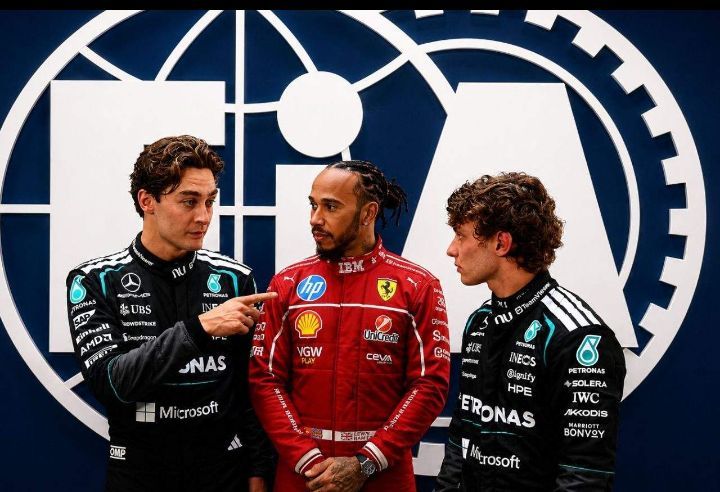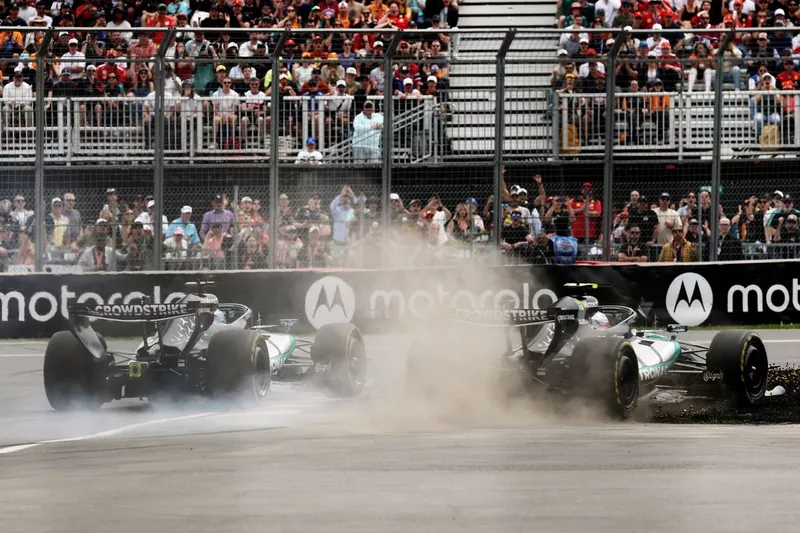

Mercedes endured one of its most dramatic internal battles of the 2026 Formula 1 season during the Canadian Grand Prix sprint race, as teammates Kimi Antonelli and George Russell went wheel-to-wheel in a fierce contest that immediately sparked debate across the paddock. What could have developed into a damaging team conflict, however, appears to have been handled maturely behind closed doors, with both drivers confirming they held productive discussions after the race to clear the air.
The sprint race in Montreal produced some of the most intense action of the season so far. Russell eventually emerged victorious, but the biggest talking point was the aggressive duel between the two Mercedes drivers while fighting for the lead. Both drivers refused to back down, resulting in moments of contact, accusations over the radio, and visible frustration from Antonelli during the race.
Antonelli was particularly unhappy with Russell’s defensive driving. During the battle, the young Italian accused his teammate of pushing him off the track and described one of Russell’s moves as “very naughty” over team radio. The exchanges immediately drew attention because Mercedes has spent much of the season presenting an image of harmony between its drivers.
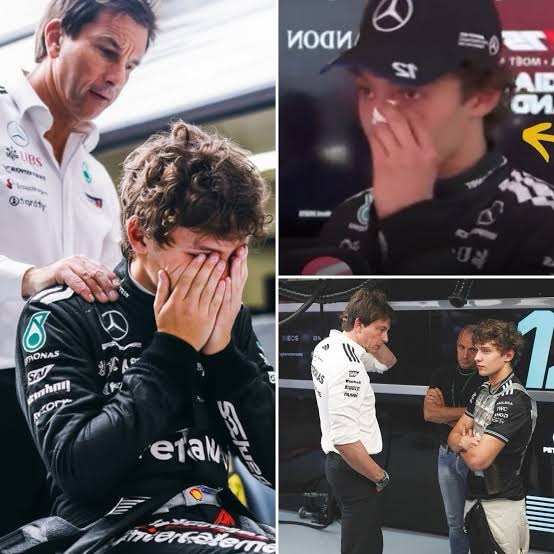
The confrontation escalated enough for Mercedes team principal Toto Wolff to intervene directly over the radio. Wolff urged Antonelli to focus on driving rather than continuing the complaints, reminding him that internal frustrations should not distract from the bigger objective of securing strong results for the team.
Despite the emotional exchanges during the sprint, both drivers later downplayed the seriousness of the incident. Russell insisted that the fight had been hard but fair, explaining that intense racing between teammates is inevitable when both drivers are competing at the front of the field. The British driver maintained that he did not believe he had crossed any lines and stressed that his relationship with Antonelli remained positive.
Antonelli, meanwhile, admitted that emotions had been running high in the cockpit. As a young driver fighting for victories and championship momentum, the Italian acknowledged that adrenaline naturally played a role in his reaction during the race. However, he also revealed afterward that he and Russell had spoken calmly following the sprint and managed to clarify their understanding of how they should race each other going forward.
According to both drivers, the post-race conversation was constructive rather than confrontational. Antonelli explained that there may have been some misunderstanding regarding Mercedes’ “rules of engagement” before the sprint started. The discussion after the race therefore focused on ensuring that both drivers shared the same interpretation of what level of aggression was acceptable when racing wheel-to-wheel against each other.
The incident has also highlighted the growing competitiveness inside Mercedes this season. Antonelli has rapidly established himself as one of Formula 1’s breakout stars, showing remarkable pace and maturity despite his young age. The Italian has already become a genuine title contender in 2026, and his emergence has inevitably increased pressure on Russell, who is determined to prove himself as Mercedes’ leading figure following the departure of Lewis Hamilton to Ferrari.
That context explains why the battle in Canada attracted so much attention. The duel was not simply about sprint race points; it also represented a glimpse into a potentially defining rivalry within Mercedes. Some observers have even compared the situation to the famous internal tensions Mercedes experienced in previous eras when teammates were fighting at the sharp end of the grid.
Still, Wolff appeared determined to prevent the clash from escalating into a damaging feud. Although he publicly criticised Antonelli’s repeated radio complaints during the race, he later defended the passion shown by both drivers. Wolff reportedly appreciated the competitive spirit but wanted the disagreements resolved privately and professionally rather than emotionally over team radio broadcasts.
The timing of the incident also added further intrigue because Mercedes had shown impressive pace throughout the Canadian Grand Prix weekend. Russell secured sprint victory before later taking pole position for the main race, narrowly ahead of Antonelli. Their strong performance suggested Mercedes may finally have produced a package capable of consistently challenging rivals such as McLaren and Red Bull Racing at the front of the grid.
For Antonelli, the sprint proved both encouraging and frustrating. On one hand, he demonstrated once again that he possesses the speed to challenge established stars in Formula 1. On the other hand, he lost valuable points after the clash and subsequent mistakes allowed Lando Norris to move ahead and claim second place.
Russell, meanwhile, emerged from the sprint with renewed momentum in the championship fight. His victory reduced Antonelli’s lead in the standings and reinforced the perception that the Mercedes intra-team battle could become one of the defining stories of the season.
The broader Formula 1 community also weighed in on the clash. Former drivers, analysts, and fans debated whether Russell’s defensive manoeuvres had crossed the line or whether Antonelli simply needed to accept tougher racing at the elite level. Some experts defended Russell’s aggressive positioning as legitimate racecraft, while others sympathised with Antonelli’s frustration after being forced wide during key moments of the battle.
Importantly for Mercedes, however, the situation appears to have cooled quickly. Instead of allowing resentment to build, both drivers chose to communicate openly after the race. That willingness to discuss the incident calmly could prove crucial as the season progresses, especially if Mercedes continues to provide a car capable of fighting for wins on a regular basis.
The Canadian sprint may ultimately be remembered as a pivotal moment in the Russell-Antonelli relationship. It exposed the fierce competitive instincts of both drivers but also demonstrated a level of professionalism in how the conflict was resolved afterward. In Formula 1, where teammate rivalries can quickly spiral into destructive internal wars, Mercedes will be relieved that both men appear committed to maintaining respect while still racing each other aggressively.
As the championship battle intensifies, incidents like the one in Montreal may become increasingly common. Yet if Russell and Antonelli continue handling those situations with honest communication and mutual understanding, Mercedes could benefit from having two drivers pushing each other to even greater levels of performance rather than tearing the team apart from within.