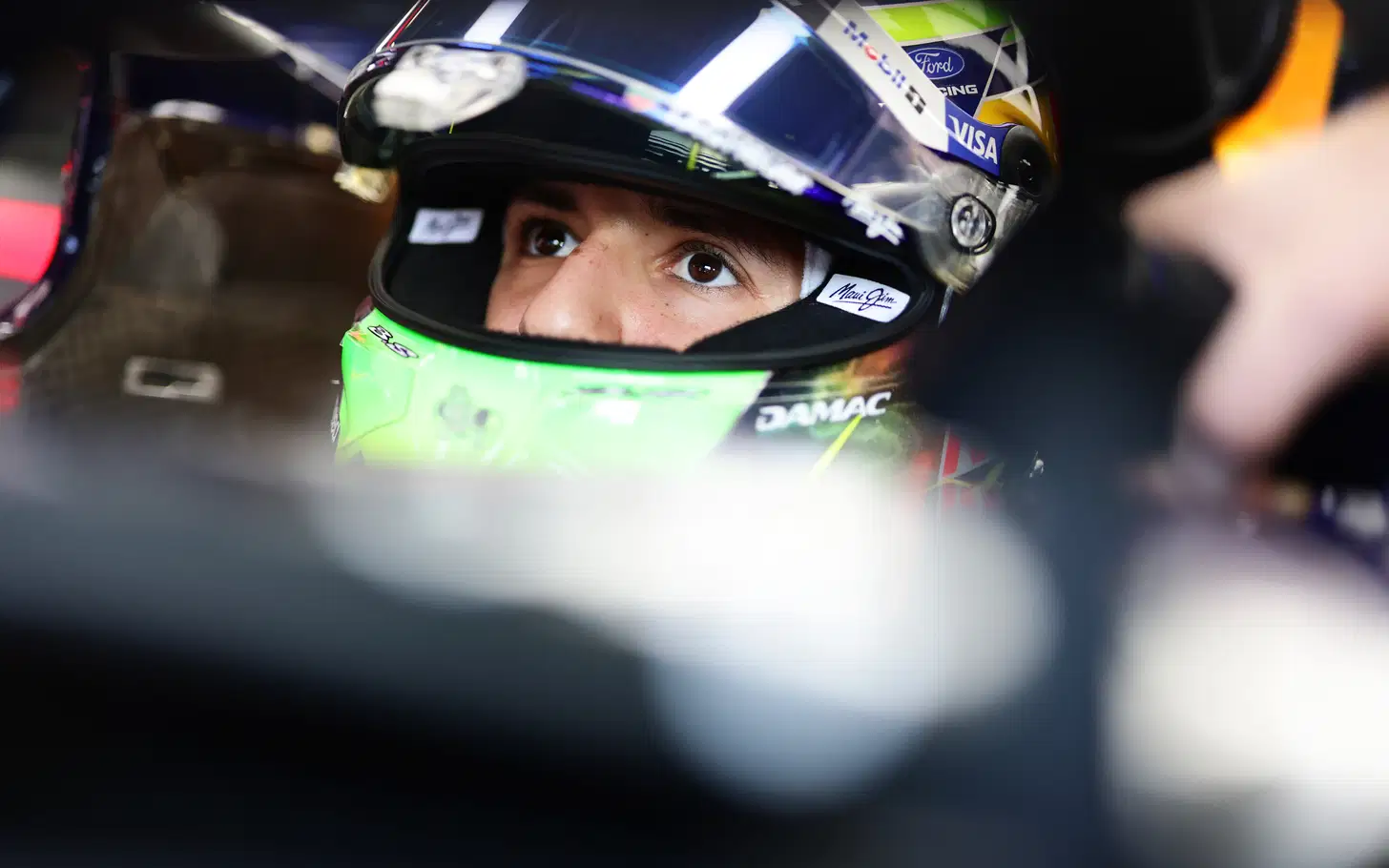
Red Bull has officially confirmed that rookie driver Isack Hadjar will face a significant setback at the Belgian Grand Prix after making multiple changes to the power unit of his RB22. As a result of these modifications, the French driver will be forced to start Sunday’s race from the back of the grid, regardless of where he qualifies during the weekend.
The decision follows Formula 1’s strict technical regulations regarding power unit usage throughout a season. Every driver is allocated a limited number of specific engine components, and exceeding those limits automatically triggers grid penalties. Since Red Bull has installed several new power unit elements in Hadjar’s car ahead of the Spa-Francorchamps weekend, the accumulated penalties are severe enough to send him to the rear of the starting order.
According to the regulations, the first time a driver exceeds the permitted allocation of a particular component, they receive a 10-place grid penalty. If additional components beyond the allowed limit are introduced, further penalties are added, typically five places for each subsequent element. In Hadjar’s case, the combination of several new components has produced a total penalty that exceeds the available grid positions, making it mandatory for him to begin the Belgian Grand Prix from last place.
Among the newly installed parts are a fresh internal combustion engine, updated control electronics, and a replacement exhaust system. Each of these components forms a crucial part of Formula 1’s highly sophisticated hybrid power unit, and replacing multiple elements simultaneously is often done to maximize long-term reliability and performance during the remainder of the season.
Because these changes were made before competitive running even began at Spa-Francorchamps, Hadjar’s fate for Sunday’s race was effectively sealed before the first practice session got underway. Even if he delivers an exceptional qualifying performance, the regulations leave no room for avoiding the penalty.
While starting from the back is never ideal, Spa-Francorchamps is widely regarded as one of the most forgiving circuits for drivers serving grid penalties. The Belgian venue features long straights, high-speed sections, and several overtaking opportunities, allowing faster cars to recover positions more easily than at many other circuits on the Formula 1 calendar.
The famous Kemmel Straight, combined with heavy braking zones and varying elevation changes, has historically provided numerous passing opportunities. For that reason, teams frequently choose Spa as the preferred venue for introducing fresh engine components. Accepting a penalty here can be strategically smarter than waiting until races held on circuits where overtaking is considerably more difficult.
This year’s calendar further strengthens that strategy. After Belgium, Formula 1 heads to the Hungaroring and then Zandvoort—two tracks known for making overtaking much more challenging. By taking the engine penalty at Spa, Red Bull hopes Hadjar will have the benefit of a healthier power unit for the remainder of the European leg of the championship while minimizing the overall damage to his points campaign.
The decision reflects a longer-term approach rather than focusing solely on one race weekend. Teams constantly weigh the risks of continuing with ageing engine components against the advantages of introducing fresh equipment. Although taking a grid penalty hurts immediate race prospects, a more reliable and powerful engine can prove valuable over several future races.
Hadjar’s challenge now shifts from qualifying performance to race recovery. Starting from the rear means he will need to navigate traffic carefully while managing tyre wear, fuel strategy, and race pace. Modern Formula 1 races often reward drivers who can make steady progress through the field, especially when strategy, weather conditions, or safety cars create opportunities.
Spa-Francorchamps has produced many memorable comeback drives over the years. Its unique layout allows teams to employ different strategic approaches, including varying tyre compounds and pit-stop timings, making recovery drives more realistic than at tighter circuits.
Red Bull’s engineers will undoubtedly focus on giving Hadjar a race setup that prioritizes overtaking and long-run pace rather than a qualifying-focused configuration. Since his grid position is already fixed at the rear, maximizing race performance becomes the obvious priority.
Hadjar is not the only driver receiving a grid penalty this weekend. McLaren has also confirmed that Lando Norris will drop ten places on the starting grid after replacing the control electronics component of his power unit. Like Red Bull, McLaren has exceeded the permitted allocation for that particular element, leaving the British driver subject to Formula 1’s penalty system.
Although Norris’ sanction is less severe than Hadjar’s, it still represents a considerable disadvantage on a weekend where championship points remain highly valuable. McLaren will likely attempt to recover lost ground through strategy and race pace, much as Red Bull intends to do with Hadjar.
Another driver affected by power unit regulations is Aston Martin’s Lance Stroll. The Canadian has also received a ten-place grid penalty after installing a new MGU-K beyond his seasonal allocation. The MGU-K is one of the hybrid system’s most important components, recovering kinetic energy under braking and converting it into additional power during acceleration.
With three drivers already confirmed to receive significant penalties, Sunday’s starting grid will look considerably different from the qualifying classification. Such situations often create unpredictable races, as faster cars attempt to move through the midfield while other competitors capitalize on improved starting positions.
Power unit management has become one of Formula 1’s most critical strategic elements under the current regulations. Teams must carefully balance reliability, performance, and component lifespan across a demanding calendar that stretches over more than twenty races. Every decision regarding engine usage can have major consequences for championship ambitions.
Installing new components too early can result in repeated penalties later in the season, while delaying replacements increases the risk of mechanical failures during races. Engineers therefore spend months planning when each power unit element will be introduced, often targeting circuits where overtaking opportunities make penalties less costly.
For Red Bull, selecting Spa-Francorchamps as the venue for Hadjar’s engine changes aligns with a strategy that has frequently been employed by leading teams in previous seasons. The Belgian circuit’s characteristics provide one of the best chances to recover from a poor starting position, making it a logical location for accepting unavoidable penalties.
Attention will now turn to how effectively Hadjar can limit the damage during Sunday’s race. If Red Bull’s upgraded power unit delivers stronger performance and reliability, the young driver may still be capable of climbing through the field and challenging for valuable championship points despite beginning from the very back of the grid.
Meanwhile, the Belgian Grand Prix weekend continues to generate headlines beyond Hadjar’s situation. Reports have emerged that Carlos Sainz is under investigation following practice, while Mercedes rookie Kimi Antonelli is also facing scrutiny over a potential grid penalty. Ferrari’s recent upgrades remain another major talking point, as rival teams continue introducing developments in the increasingly competitive 2026 Formula 1 season.
With multiple penalties reshaping the grid, evolving technical developments across several teams, and one of the sport’s most iconic circuits providing plenty of overtaking opportunities, the Belgian Grand Prix promises to deliver an unpredictable and exciting race. Hadjar’s uphill battle from last place may ultimately become one of the defining stories of the weekend as he attempts to transform a difficult starting position into a memorable recovery drive.