George Russell Admits He Took a ‘High-Risk’ Gamble After Costly Pit-Lane Spin at the 2026 Sao Paulo Grand Prix
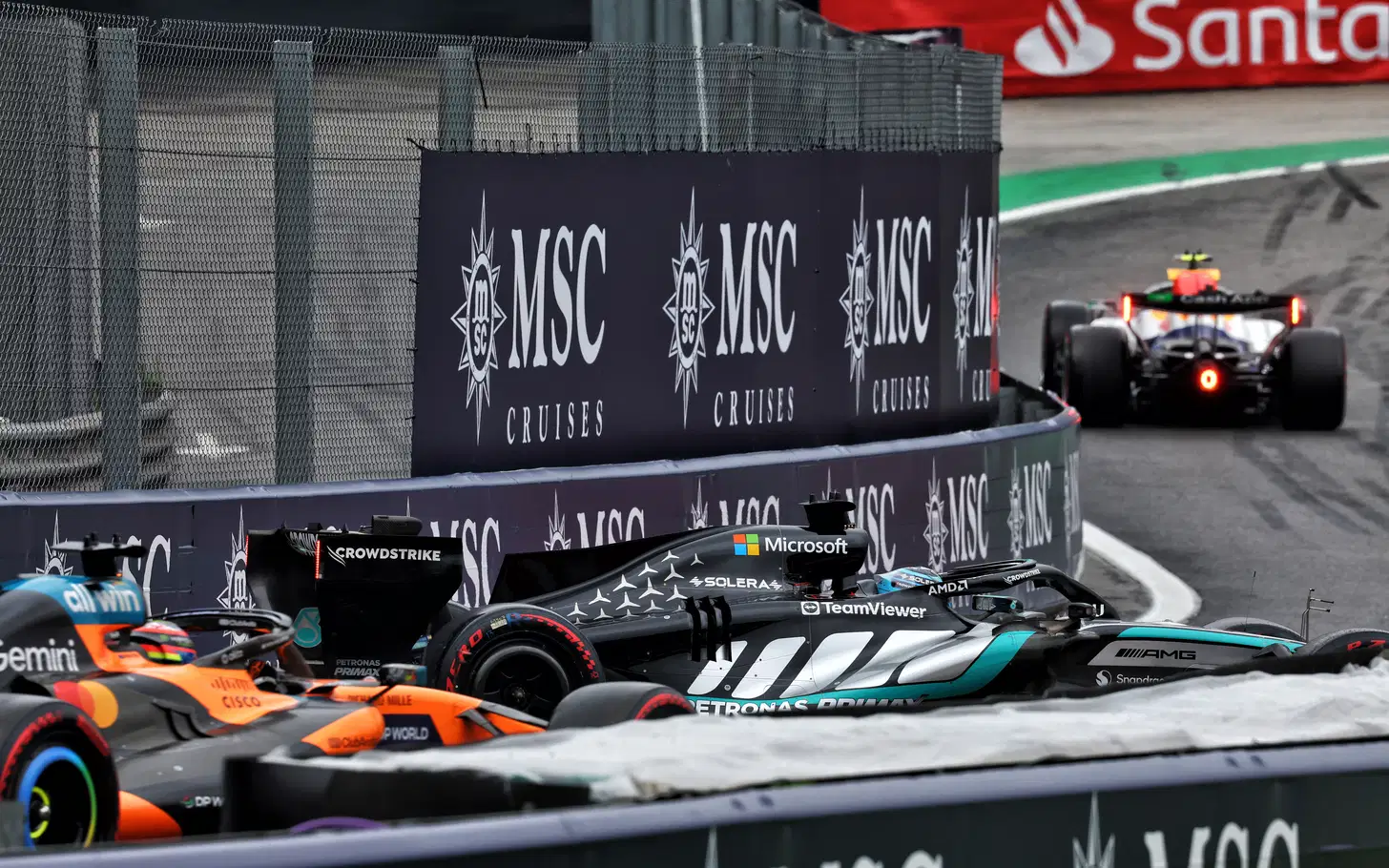
George Russell has opened up about the expensive mistake that disrupted his race at the 2026 Sao Paulo Grand Prix, admitting that he deliberately took a high-risk approach when changing tyres but ultimately paid the price for his decision. The Mercedes driver experienced a dramatic spin while exiting the pit lane after switching from intermediate tyres to slicks, costing him valuable time and several positions during Sunday’s race in Brazil.
Although the incident initially appeared to have ruined his afternoon, Russell eventually recovered to finish fourth, delivering an important result that helped Mercedes secure the 2026 Constructors’ Championship. Interestingly, the British driver also acknowledged that the mistake unexpectedly created an opportunity that allowed him to remain competitive during the closing stages of the race.
The Sao Paulo Grand Prix provided plenty of excitement, with changing weather conditions, complicated tyre decisions and several strategic battles keeping the teams occupied throughout the afternoon. For Russell, however, the race became a mixture of frustration, recovery and satisfaction as Mercedes managed to turn a difficult situation into a positive championship outcome.
Changing Track Conditions Create an Early Strategic Battle
The race began with drivers using intermediate tyres because the circuit was still affected by wet conditions. However, as the opening laps progressed, the track gradually started drying out, creating an opportunity for teams to consider switching to slick tyres.
In Formula 1, making the correct tyre decision during unpredictable weather conditions can have a significant influence on the final result. Changing too early can leave a driver struggling for grip, while waiting too long can result in losing valuable time to competitors who have already moved onto more suitable tyres.
At the Sao Paulo circuit, the conditions developed in such a way that teams were forced to make important decisions about when to abandon their intermediate tyres.
Lewis Hamilton and Carlos Sainz were among the first drivers to take the risk, entering the pit lane on Lap 15 to change to red-marked soft slick tyres. Their decisions reflected the increasing confidence that the circuit had become sufficiently dry for slick compounds.
Several other drivers followed shortly afterwards, including George Russell, Lando Norris, Isack Hadjar, Liam Lawson and Oscar Piastri.
Russell entered the pit lane from fourth position and appeared to be in a reasonable position to continue fighting near the front of the field. His intention was to complete the tyre change and return to the circuit behind Norris, maintaining his position within the leading group.
Unfortunately, things did not go according to plan.
Russell Suffers Costly Spin During Pit-Lane Exit
After completing his tyre change, Russell encountered trouble while attempting to leave the pit lane. The Mercedes driver lost control of his car and spun, briefly blocking the pit-lane exit.
The incident created an unexpected obstacle for drivers approaching the same section. Isack Hadjar, Liam Lawson and Oscar Piastri managed to pass Russell while he was recovering from the spin.
The situation became even more damaging when Nico Hulkenberg’s Audi also moved ahead, leaving Russell with additional positions to recover.
What should have been a routine pit stop consequently turned into one of the most expensive moments of his race.
The incident reportedly cost Russell approximately 30 seconds, a substantial amount of time in a Formula 1 race where even a small delay can completely change a driver’s position.
The loss was particularly disappointing because Russell had been running fourth before making the stop. Instead of returning to the circuit in a competitive position, he found himself having to rebuild his race after losing significant ground to several rivals.
Despite the setback, Russell did not allow the incident to completely destroy his afternoon. Mercedes continued working on its strategy, looking for an alternative opportunity that could help the British driver recover some of the lost time.
The unusual circumstances surrounding the spin eventually influenced the team’s decision-making for the remainder of the race.
A Costly Mistake Unexpectedly Creates a Strategic Opportunity
Following the pit-lane incident, Russell and Mercedes were forced to reconsider their approach. The time lost during the spin made it difficult to follow the conventional strategy being adopted by several other competitors.
When the soft tyres eventually began wearing out, many drivers returned to the pit lane for another set of tyres. However, Russell remained on the circuit instead of immediately following the others.
The decision effectively moved him towards an attempted one-stop strategy on dry tyres.
Although the approach carried considerable uncertainty, it provided Russell with an opportunity to recover some of the time lost earlier in the race.
The strategy was not necessarily the original plan, but the circumstances surrounding his pit-lane spin had created a situation in which taking another risk became a reasonable option.
As the race approached its closing stages, the weather conditions changed once again. Rain returned to the circuit, forcing drivers and teams to reconsider their tyre choices.
This development became particularly important for Russell because he had managed to avoid making an additional stop for another set of slick tyres.
When the rain intensified, he eventually entered the pit lane for intermediate tyres. The timing of the stop worked in his favour, allowing him to take advantage of the changing conditions while several competitors struggled with their decisions.
The strategy helped Russell regain valuable ground and secure fourth position at the chequered flag.
Although the pit-lane spin had initially threatened to ruin his afternoon, the unexpected strategic opportunity helped him transform the situation into a respectable result.
Russell Explains Why He Took the Risk
Speaking after the race, Russell admitted that he was not entirely certain what had caused the spin while leaving the pit lane.
However, he acknowledged that he had deliberately approached the situation with a more aggressive mindset because he believed there was an opportunity worth pursuing.
According to the Mercedes driver, the decision involved significant risks, and he understood that the potential reward could come with serious consequences.
Russell explained that Formula 1 sometimes requires drivers to make decisions that can either produce major gains or result in substantial losses. Unfortunately, on this occasion, the outcome went against him.
His comments reflected an understanding that aggressive decisions are sometimes necessary when competing at the highest level of motorsport.
He said that he had recognised an opportunity and decided to take a high-risk approach, but ultimately paid the price when things failed to work out.
Interestingly, Russell also highlighted the unexpected benefit of the incident.
He explained that because of the time lost during the pit-lane spin, he did not make another stop when other drivers returned to the pits for fresh soft tyres.
That decision eventually helped bring him back into contention when the rain returned.
The British driver also expressed satisfaction with the performance of his Mercedes car on the soft tyres, claiming that the team had demonstrated particularly strong race pace.
Russell suggested that his car had delivered the fastest race pace during the relevant period, describing the performance as an encouraging development after what had been a considerable wait for such competitive speed.
He acknowledged that there were positive aspects to take away from the Brazilian weekend despite the frustrating incident.
Mercedes Gets Its Strategy Right When It Matters Most
Another important aspect of Russell’s recovery was the performance of the Mercedes strategy team.
Although the team had experienced difficulties during qualifying, its decisions during the race proved much more effective.
Russell had previously expressed frustration after being instructed to abort a qualifying lap that he believed was good enough to secure pole position.
The decision had left him disappointed, particularly because he felt that an opportunity to achieve a much stronger starting position had been taken away.
However, Mercedes managed to respond positively during Sunday’s race.
When the rain returned, the team made the correct strategic decision to bring Russell into the pits for intermediate tyres.
The timing of the stop proved beneficial, allowing him to avoid some of the difficulties experienced by rival drivers who had made different strategic choices.
Reflecting on the contrast between qualifying and the race, Russell praised the team’s ability to recover from its earlier disappointment.
He explained that the team had made mistakes during qualifying but performed exceptionally well when the race presented another difficult challenge.
Russell also pointed out that motorsport often highlights mistakes more prominently than successful decisions. When a team gets something wrong, the consequences are immediately visible, but successful strategic calls can sometimes receive less attention.
His comments demonstrated appreciation for the work carried out by the Mercedes engineers and strategists throughout the race.
Fourth Place Provides an Important Result for Mercedes
Despite the unfortunate pit-lane incident, Russell’s fourth-place finish represented a significant achievement for Mercedes.
The result helped the German manufacturer secure the 2026 Constructors’ Championship, making the Brazilian Grand Prix an important occasion for the team.
For Mercedes, winning the constructors’ title represents the reward for consistent performance, effective teamwork and strong results throughout the season.
Russell’s contribution was particularly valuable because he managed to recover from a situation that could easily have resulted in a much lower finishing position.
Instead of allowing the spin to determine the outcome of his afternoon, he remained focused and worked with the team to make the best possible decisions.
His recovery also demonstrated the importance of adapting to changing circumstances in Formula 1.
A race strategy that appears unsuccessful at one moment can sometimes become advantageous when unexpected developments occur. Russell’s experience in Sao Paulo provided another example of how quickly fortunes can change in the sport.
Russell Takes Encouragement From Mercedes’ Race Pace
Beyond the championship celebrations, Russell identified the car’s performance as one of the biggest positives from the Brazilian weekend.
He was particularly encouraged by the pace demonstrated on the soft tyres, suggesting that Mercedes had shown considerable competitiveness during the race.
For a driver looking ahead to the remaining rounds of the championship, discovering improvements in race pace can be extremely encouraging.
Russell will undoubtedly want to carry that momentum into the upcoming Las Vegas Grand Prix on November 22, followed by the Qatar Grand Prix on November 29 and the season-ending Abu Dhabi Grand Prix on December 6.
Although the Sao Paulo race included a frustrating mistake, the overall performance provided reasons for optimism.
Mercedes demonstrated that it could make effective strategic decisions under pressure, while Russell showed that he could recover from a difficult situation and still deliver an important result.
Ultimately, his fourth-place finish was a reminder that Formula 1 races are rarely decided by a single incident. Strategy, tyre management, changing weather conditions and the ability to respond to unexpected challenges can all determine the final outcome.
For Russell, the pit-lane spin was undoubtedly an expensive mistake, but the high-risk decision also produced an unexpected opportunity.
His experience in Sao Paulo therefore ended with mixed emotions: disappointment over the lost time, satisfaction with the car’s pace and pride in helping Mercedes secure another major achievement.
As the 2026 season approaches its final three races, Russell and Mercedes will be hoping to maintain their competitive momentum and finish the campaign on a strong note.