Formula One fans are eagerly preparing for one of the most important sessions of the Austrian Grand Prix weekend as the official qualifying start time has now been confirmed. After two competitive practice sessions on Friday and a crucial final practice session on Saturday, all attention now turns to qualifying, where the battle for pole position will determine the starting grid for Sunday’s race.
The 2026 Austrian Grand Prix has already delivered plenty of excitement during the opening stages of the weekend. Drivers have experienced changing track conditions, technical issues, and intense competition as teams worked to fine-tune their cars for one of the shortest but most demanding circuits on the Formula One calendar. With qualifying now approaching, every team knows that securing a strong grid position could prove decisive in Sunday’s race.
According to the official schedule, qualifying for the Austrian Grand Prix will begin at 16:00 local time at the Red Bull Ring in Spielberg. The one-hour session will see all 22 drivers compete through the familiar three-part knockout format, with only the fastest ten progressing to the final shootout for pole position.
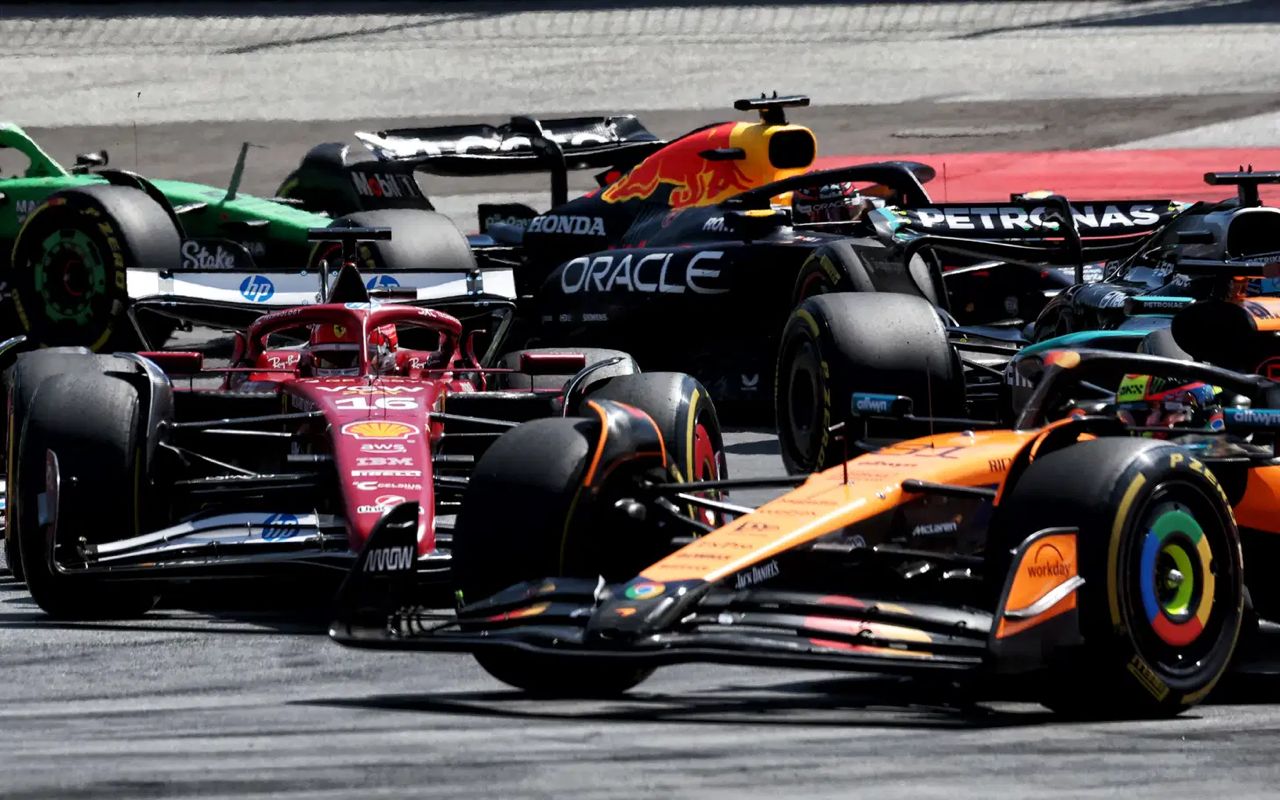
The Red Bull Ring has always been regarded as one of the most exciting venues on the Formula One calendar. Although the circuit is relatively short, it presents a unique combination of heavy braking zones, long straights, and high-speed corners that often produce incredibly close qualifying results. Even the smallest mistake can cost a driver several positions on the starting grid.
Friday’s practice sessions gave fans an early indication of which teams may be in contention for pole position. Mercedes enjoyed an encouraging start to the weekend, with championship leader Kimi Antonelli displaying impressive pace throughout both sessions. McLaren also looked competitive, while Ferrari and Red Bull continued working on setup improvements ahead of qualifying.
Several drivers also encountered reliability concerns during practice. Technical problems interrupted valuable track time for a handful of teams, forcing engineers to work late into the evening to prepare their cars for Saturday’s important sessions. Despite these setbacks, most teams remain optimistic about their chances once qualifying begins.
The final practice session earlier on Saturday serves as the last opportunity for teams to make adjustments before parc fermé conditions come into effect. Engineers typically use FP3 to evaluate race pace, optimise tyre performance, and allow drivers to build confidence before the pressure of qualifying.
Unlike race day, qualifying demands outright speed rather than long-run consistency. Teams will focus on extracting every possible tenth of a second from their cars, often fitting fresh soft tyres and running minimal fuel loads. Every lap becomes increasingly important as drivers attempt to advance through Q1 and Q2 before fighting for pole position in Q3.
Track position at the Red Bull Ring can be especially significant. Although overtaking is certainly possible thanks to the circuit’s three DRS zones, beginning the race near the front provides a considerable strategic advantage. Teams therefore place enormous importance on qualifying performance, knowing that Sunday’s race can often be influenced by Saturday’s results.
Weather conditions are also expected to play an important role throughout the weekend. High temperatures have prompted Formula One officials to issue a heat hazard warning, meaning drivers and teams must carefully manage both tyre degradation and physical demands during qualifying and the race.
Fans around the world will once again be watching closely as the championship battle continues to intensify. Every point matters as the season progresses, making today’s qualifying session one of the most anticipated events of the weekend. A strong qualifying result could provide valuable momentum heading into Sunday’s Grand Prix.
The Austrian Grand Prix has built a reputation for producing dramatic qualifying sessions, with incredibly small margins often separating the leading drivers. It is not unusual for pole position to be decided by just a few hundredths—or even thousandths—of a second, highlighting the importance of perfect execution from both drivers and teams.
Engineers will also need to make strategic decisions regarding tyre preparation, traffic management, and the timing of their final runs. Finding a clear section of track during the closing minutes of each qualifying segment can often make the difference between advancing and elimination.
As anticipation continues to build, millions of Formula One supporters will be eager to see whether Mercedes can maintain its impressive practice pace, whether Ferrari can close the gap, whether McLaren can challenge for the front row, or whether Red Bull can once again produce a standout qualifying performance at its home circuit.
With the official qualifying time now confirmed, the countdown is underway for another thrilling battle at Spielberg. The fight for pole position promises to deliver high-speed drama, strategic brilliance, and the intense competition that has made Formula One one of the world’s premier motorsport championships.
Today’s qualifying session officially begins at 16:00 local time (Spielberg, Austria), setting the stage for an exciting contest that will determine the starting order for Sunday’s 2026 Austrian Grand Prix. Fans can expect a fiercely competitive hour as the grid is decided and the battle for victory takes another important step forward.