Adjusted Full Starting Grid for the 2026 Indy 500 After Disqualifications
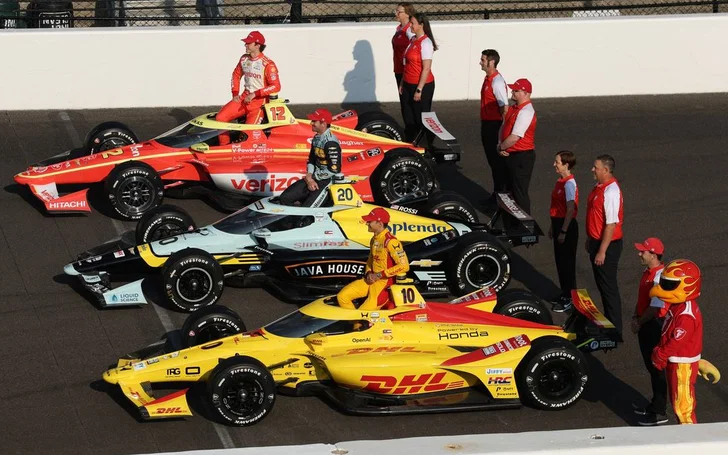
The final starting order for the 110th running of the Indianapolis 500 has undergone significant changes following post-qualifying technical inspections that resulted in two drivers being disqualified from their original grid positions. The penalties have reshaped portions of the field ahead of one of motorsport’s most prestigious events, while pole-sitter Alex Palou remains at the head of the 33-car lineup.
The drama emerged after officials completed detailed inspections following qualifying. Two entries were found to have breached technical regulations relating to the Energy Management System (EMS) covers and mounting points supplied by Dallara. IndyCar regulations require these components to remain exactly as provided by the manufacturer, and any unauthorized modifications are prohibited. Following the discovery, officials elected to remove both drivers’ qualifying results, forcing them to the rear of the field for race day.
The drivers affected were rookie Caio Collet and veteran Jack Harvey. Collet had originally delivered an impressive qualifying performance that earned him a place inside the top ten, while Harvey secured a spot further down the order. However, the technical infringements meant both drivers lost their original starting positions and were reassigned to the back row according to entrant points standings. Collet was moved to 32nd position, while Harvey dropped to 33rd and last on the grid.
Their demotions triggered a chain reaction throughout the field, with every driver originally positioned behind Collet gaining at least one place. The revised order has therefore created new opportunities for several competitors who now find themselves starting higher than initially expected.
At the very front, reigning Indianapolis 500 champion Alex Palou retains pole position after producing a superb four-lap average during qualifying. The Chip Ganassi Racing star arrives at the race as one of the clear favorites and will attempt to secure consecutive victories at Indianapolis. Palou’s qualifying effort was among the standout performances of the month and reinforced his status as the benchmark driver in the current IndyCar field.
Joining Palou on the front row are Alexander Rossi and David Malukas. Rossi, a former Indianapolis 500 winner, demonstrated strong pace throughout qualifying and will start from second position. Malukas, meanwhile, continued his impressive resurgence by claiming third place on the grid and securing a prime opportunity to challenge for victory when the green flag falls.
The second row features Felix Rosenqvist, Santino Ferrucci and Pato O’Ward. All three drivers have shown race-winning speed at Indianapolis in previous years and could emerge as major contenders over the course of the 500-mile contest. O’Ward in particular remains one of the most popular drivers in the series and will be aiming to finally capture the victory that has narrowly escaped him in recent editions of the race.
Behind them, the field remains packed with experience and proven talent. Several former race winners are spread throughout the grid, ensuring that strategy, pit stops and race management will play decisive roles. According to reports, eight previous Indianapolis 500 winners are included in this year’s lineup, combining for a total of 13 victories at the Brickyard. Their presence guarantees that Palou will face formidable opposition despite starting from pole position.
The revised top ten also includes drivers such as Kyffin Simpson and others who benefited from the penalties applied to Collet and Harvey. Every position gained can prove crucial at Indianapolis, where track position often influences fuel strategy, pit sequencing and overtaking opportunities during the opening stages of the race. The adjustments therefore carry implications far beyond simple grid placement.
Another intriguing storyline entering race day is the participation of several drivers with Formula 1 backgrounds. Former grand prix competitors are scattered throughout the field and bring valuable experience from the highest levels of international motorsport. Their presence adds further depth to what is already one of the strongest Indy 500 grids in recent memory.
The penalties handed down to Collet and Harvey also carried additional consequences. Collet lost the qualifying bonus points he had earned by advancing into the Fast 12 portion of qualifying. Those points were subsequently redistributed to other competitors, altering the championship picture slightly before the race even begins. While the points impact is relatively small over the course of a full season, every point can become important in a tightly contested title battle.
For the affected teams, the disqualifications represent a major setback after strong qualifying efforts. Starting from the back at Indianapolis creates substantial challenges, particularly given the difficulty of moving through traffic over long green-flag runs. Both drivers will now need to rely on strategy, caution periods and race attrition if they hope to recover significant positions during the event.
Despite the controversy, anticipation for the race remains exceptionally high. The Indianapolis 500 continues to attract a world-class field and enormous global interest, with fans eager to see whether Palou can convert pole position into another memorable victory. The Spaniard enters the race carrying momentum, confidence and the advantage of clean air at the front of the field, but history has repeatedly shown that success at Indianapolis is never guaranteed.
With the starting grid now officially finalized following the technical rulings, attention turns fully to race day. The reshuffled order has added another layer of intrigue to an event already packed with storylines, from championship contenders and former winners to rising stars seeking breakthrough success. When the green flag waves, the adjusted grid will set the stage for another chapter in the rich history of the Indianapolis 500.