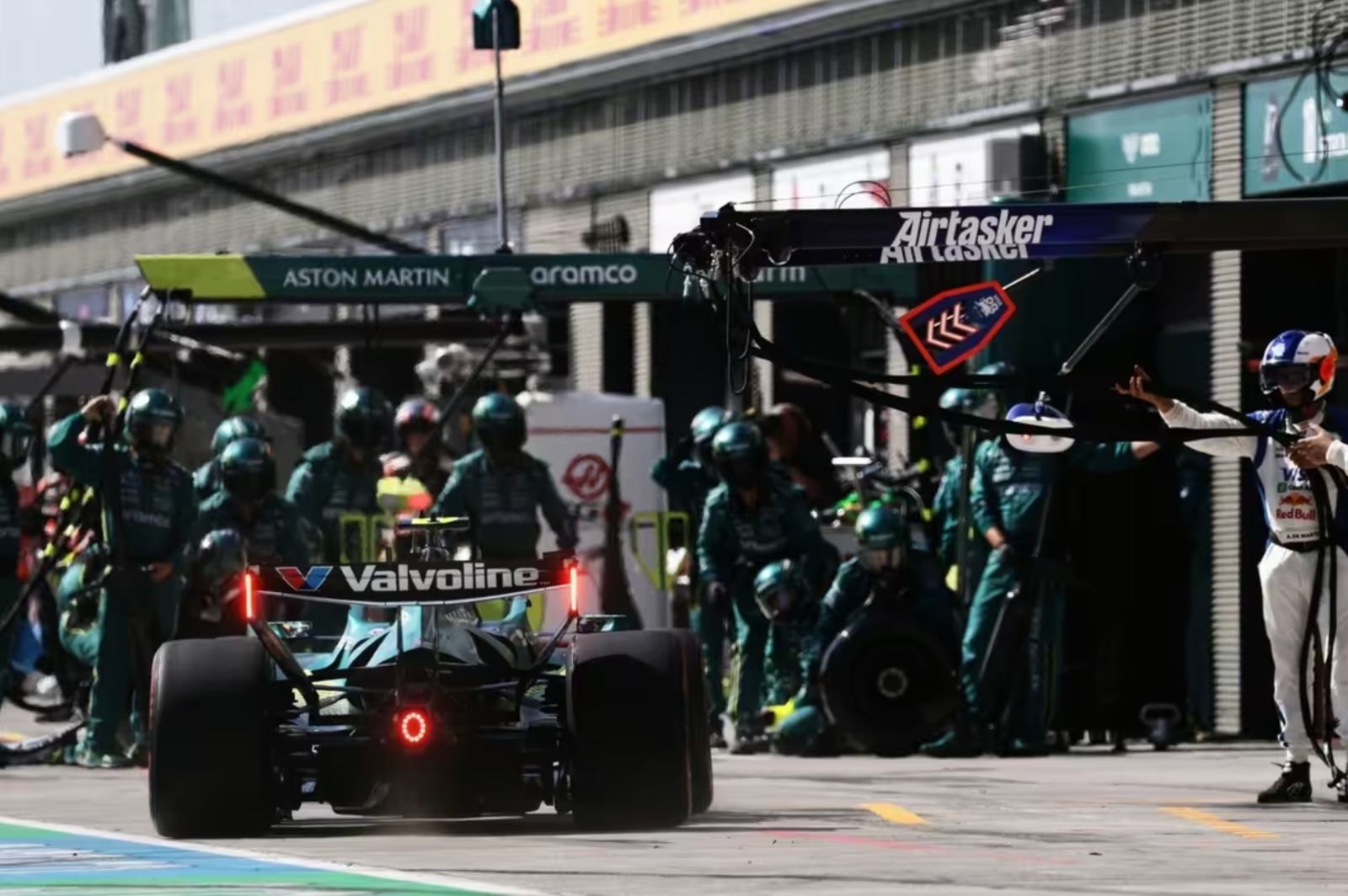
Aston Martin’s decision to temporarily replace Fernando Alonso at the Belgian Grand Prix has generated considerable discussion across the Formula 1 paddock, but the move is far less dramatic than it may initially appear. Rather than signaling an injury, suspension, or permanent change in the driver lineup, the development is part of a broader strategic and regulatory framework that teams must follow throughout the Formula 1 season.
At the center of this development is Aston Martin’s young reserve driver, Jak Crawford, who has been handed the opportunity to step into Alonso’s car during the opening practice session (FP1) of the Belgian Grand Prix weekend at Spa-Francorchamps. This means that Alonso, a two-time world champion and one of the most experienced drivers in Formula 1 history, will sit out only the first practice session before returning to his usual duties for the remainder of the race weekend.
This arrangement is not unusual in modern Formula 1. In fact, it is a requirement set out by the FIA that each team must give rookie drivers a certain number of practice opportunities during the season. These sessions are specifically designed to nurture young talent and provide them with valuable track time in current-generation Formula 1 machinery. For Aston Martin, Crawford has emerged as a key figure in fulfilling that obligation, having already participated in similar sessions earlier in the year.
Crawford’s inclusion in the Belgian Grand Prix weekend is therefore part of a deliberate development pathway rather than a reaction to unforeseen circumstances. The American driver, who has been building a strong reputation in the junior categories, is viewed as one of Aston Martin’s promising prospects for the future. By placing him in Alonso’s car for FP1, the team gains useful data while also accelerating Crawford’s growth as a potential Formula 1 driver.
From a sporting perspective, the impact on Alonso is minimal. Missing a single practice session does not significantly compromise a driver’s race preparation, especially for someone of Alonso’s experience and technical understanding. Over the course of his long career, Alonso has demonstrated an exceptional ability to adapt quickly to changing conditions, making him well-equipped to jump back into the car for the later sessions without losing competitiveness.
Additionally, Aston Martin’s decision appears to be strategically timed. Teams often choose circuits like Spa-Francorchamps for rookie sessions because of the track’s unique characteristics and the wealth of data it provides. The Belgian Grand Prix circuit is one of the longest and most technically demanding tracks on the calendar, offering a comprehensive test of a car’s aerodynamic efficiency, power unit performance, and overall balance. By running Crawford in FP1, Aston Martin can gather fresh insights while still allowing Alonso to handle the crucial competitive sessions later in the weekend.
It is also worth noting that Alonso has already fulfilled his share of mandatory rookie session obligations earlier in the season. Formula 1 regulations require teams to run inexperienced drivers in place of their race drivers across multiple practice sessions, but these requirements can be distributed strategically between both cars. In this case, Aston Martin has chosen to allocate another session from Alonso’s side of the garage, ensuring compliance with the rules while maintaining flexibility for the remainder of the season.
For Lance Stroll, Alonso’s teammate, the situation remains unchanged. Stroll has also participated in a rookie swap earlier in the year, and Aston Martin continues to balance these obligations across both drivers to minimize disruption. The team’s approach reflects careful planning, ensuring that neither driver is overly impacted while still meeting regulatory demands.
Beyond the immediate implications, Crawford’s participation highlights a broader trend in Formula 1: the increasing emphasis on developing young drivers. With the sport becoming more competitive and technologically advanced, teams are investing heavily in nurturing future talent. Practice sessions like FP1 provide invaluable experience, allowing rookies to familiarize themselves with the complexities of modern Formula 1 cars, including hybrid power units, advanced aerodynamics, and intricate data systems.
For Crawford, this opportunity represents another significant step in his career progression. Driving during a Grand Prix weekend places him in a high-pressure environment, where he must quickly adapt to the car, deliver useful feedback, and avoid costly mistakes. These sessions are closely monitored by team engineers and management, making them crucial for evaluating a driver’s readiness for a potential full-time seat in the future.
Meanwhile, Aston Martin continues to navigate a challenging 2026 season. The team has been working to improve performance under the new regulations, with ongoing upgrades aimed at closing the gap to the front-runners. Alonso has been vocal about the team’s ambitions and the importance of development, emphasizing the need for continuous progress as the season unfolds.
In this context, the decision to run Crawford in FP1 can also be seen as part of a broader effort to maximize learning opportunities. Every session provides data that can contribute to car development, and involving a fresh driver can sometimes yield different perspectives on car behavior. This can be particularly valuable as teams refine their setups and upgrade packages throughout the season.
Despite the temporary nature of the change, headlines suggesting that Alonso has been “replaced” may give a misleading impression. In reality, there is no indication that his position within the team is under threat. Alonso remains a central figure at Aston Martin, both as a driver and as a leader within the organization. His experience, feedback, and racecraft continue to play a crucial role in the team’s efforts to move up the grid.
Looking ahead, it is likely that Aston Martin will continue to utilize Crawford and possibly other junior drivers in additional practice sessions later in the season. This approach not only satisfies regulatory requirements but also strengthens the team’s long-term prospects by building a pipeline of talent.
In conclusion, the replacement of Fernando Alonso at the Belgian Grand Prix is a routine and strategic move rather than a dramatic shake-up. Jak Crawford’s participation in FP1 reflects Formula 1’s commitment to developing young drivers while allowing teams to gather valuable data. Alonso’s absence is limited to a single session, and he will return for the remainder of the weekend fully focused on delivering results. Far from signaling any instability, the decision underscores Aston Martin’s structured approach to both performance and future planning in an increasingly competitive Formula 1 landscape.