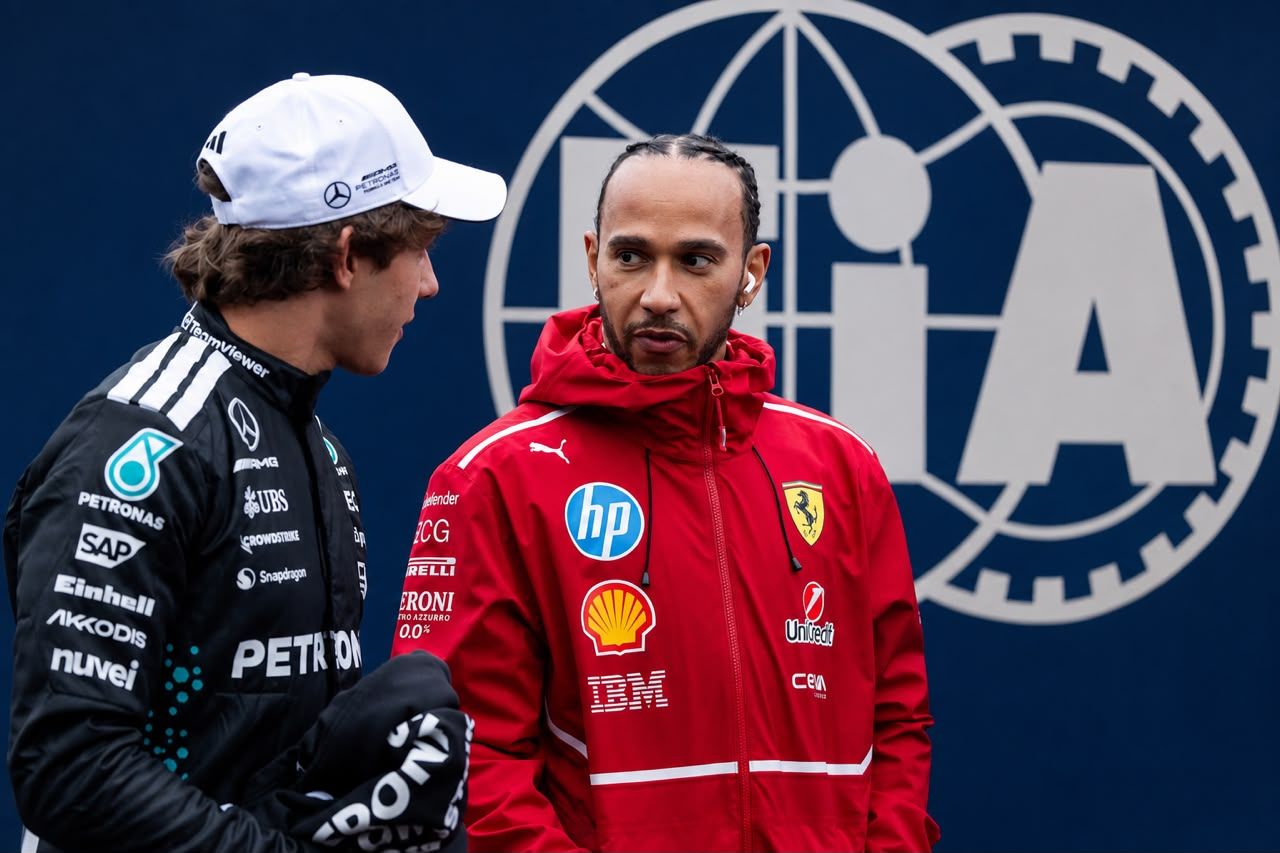
The build-up to the Austrian Grand Prix has taken an intriguing turn following a significant Ferrari decision involving Charles Leclerc and Lewis Hamilton. In a move that has sparked discussion across the Formula 1 paddock, Leclerc will not participate in a key early session of the race weekend, effectively being replaced temporarily by a younger driver, while Hamilton is set to take on a more central role during that phase.
This development is not as dramatic as a full race replacement, but it still carries weight in the context of modern Formula 1. Ferrari’s decision is part of a broader regulatory requirement that mandates teams to provide opportunities for rookie drivers during practice sessions. As a result, Leclerc will step aside for the first practice session (FP1), allowing a junior driver from Ferrari’s development program to take over his car.
The driver stepping in is Dino Beganovic, a promising young talent affiliated with the Ferrari Driver Academy. At just 21 years old, Beganovic has been steadily climbing the motorsport ladder and is currently competing in Formula 2. His inclusion in the Austrian Grand Prix weekend represents another important milestone in his development, as he gains valuable experience behind the wheel of a Formula 1 car in a competitive race environment.
For Leclerc, this temporary replacement is not due to injury, poor form, or disciplinary action, but rather a strategic and regulatory necessity. Formula 1 rules require teams to field rookie drivers in a set number of practice sessions throughout the season. Ferrari, like other teams, is fulfilling this obligation while also using the opportunity to evaluate its young prospects.
Despite the routine nature of the change, the timing adds an extra layer of intrigue. Ferrari has been under intense scrutiny in recent races, with both Leclerc and Hamilton facing pressure to deliver stronger performances. Leclerc, in particular, has endured a challenging spell, including high-profile mistakes such as crashes in recent race weekends, which have cost him valuable points and momentum.
Meanwhile, Hamilton’s situation at Ferrari continues to evolve in fascinating ways. The seven-time world champion, who made a high-profile switch to Ferrari, has been working to establish himself within the team. His recent performances have shown signs of improvement, including strong qualifying results and competitive race pace. In fact, his resurgence has added a new dynamic to Ferrari’s internal competition, as he seeks to match—or even surpass—his teammate.
With Leclerc sitting out FP1, Hamilton effectively becomes the senior driver leading Ferrari’s track program during that session. This gives him additional responsibility in terms of providing feedback on car setup, tire performance, and overall balance. Such input is crucial, especially at a circuit like the Red Bull Ring, where fine margins can make a significant difference in lap times.
The Austrian Grand Prix itself is known for its fast-paced layout and relatively short lap, which increases the importance of maximizing every minute of practice. Teams rely heavily on early-session data to fine-tune their cars for qualifying and race conditions. In this context, Hamilton’s experience becomes even more valuable, as Ferrari aims to optimize its performance across the weekend.
Beganovic’s participation also brings fresh energy and curiosity. For young drivers, these practice sessions are more than just a formality they are a rare chance to demonstrate their potential on a global stage. Strong performances can influence future career opportunities, including potential promotion to a full-time Formula 1 seat.
This is not the first time Leclerc has stepped aside for a rookie session. Ferrari has previously rotated its junior drivers into FP1 slots, using Leclerc’s car as part of its development strategy. While such decisions may appear disruptive, they are carefully planned to minimize any negative impact on the team’s overall performance.
From a broader perspective, the move reflects the evolving nature of Formula 1, where teams must balance immediate competitiveness with long-term planning. Investing in young talent is essential, especially as the sport prepares for future regulation changes and an increasingly competitive grid.
The Austrian Grand Prix weekend promises to be highly competitive, with several teams pushing for supremacy. Ferrari faces stiff competition from rivals such as Mercedes and Red Bull, both of which have shown strong form in recent races. The midfield battle is also intensifying, adding further unpredictability to the outcome.
In this environment, every decision no matter how routine can have significant consequences. Ferrari’s choice to temporarily replace Leclerc in FP1 is a calculated move that aligns with regulatory requirements while also supporting the team’s long-term goals.
For fans, the situation offers an interesting storyline to follow. It provides a glimpse into the inner workings of a top Formula 1 team and highlights the delicate balance between nurturing future stars and competing at the highest level.
As the weekend unfolds, attention will quickly shift back to Leclerc once he returns for the remaining sessions. His ability to bounce back and deliver a strong performance will be closely watched, especially given the recent challenges he has faced. At the same time, Hamilton will aim to capitalize on his increased role and continue building momentum in his Ferrari journey.
Ultimately, while the headline may suggest a dramatic replacement, the reality is more nuanced. It is a strategic, temporary adjustment that reflects both the demands of modern Formula 1 and Ferrari’s commitment to developing the next generation of drivers.