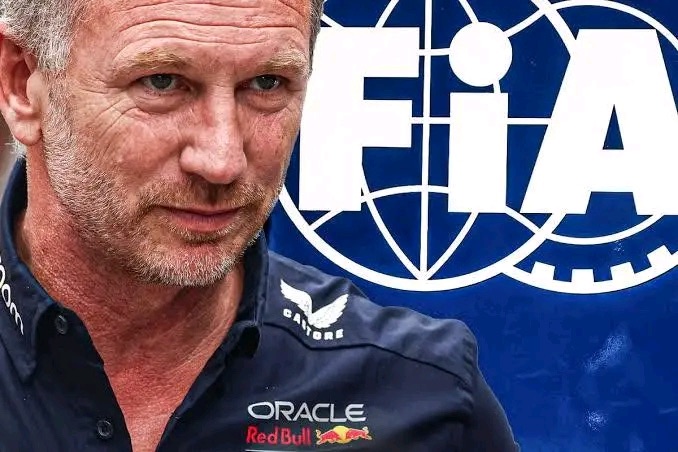
Christian Horner’s long-standing concerns over Formula 1’s engine regulations appear to have been validated after the FIA confirmed major rule adjustments for the 2027 season. The former Christian Horner had warned several years ago that the sport’s new power unit regulations risked creating cars with serious performance compromises, describing them at the time as potential “technical Frankensteins.”
Back in 2023, when development of the current generation of Formula 1 machinery was still underway, Horner expressed fears that the heavy reliance on electrical energy in the new power units would negatively affect racing quality. He believed the balance between internal combustion power and electric deployment should be closer to a 60-40 split rather than the more aggressive electrical emphasis initially planned by the FIA.
Horner argued that excessive dependence on battery energy would create problems on circuits with long straights, where drivers could run out of electrical deployment before the braking zones. This, he predicted, would force drivers into energy-saving measures such as lifting off the throttle early and coasting into corners, ultimately hurting wheel-to-wheel racing and reducing performance consistency.
At the time, his comments were met with skepticism across the paddock. One of the strongest critics was Mercedes team principal Toto Wolff, whose team was believed to be significantly advanced in the development of its own power unit project. Many within Formula 1 suspected that Red Bull’s complaints were motivated by difficulties in developing its first in-house engine through Red Bull Powertrains in partnership with Ford Motor Company.
However, those assumptions have since been challenged. Red Bull’s engine programme has proven competitive, but criticism of the regulations has continued to grow from drivers and teams alike. Four-time world champion Max Verstappen became one of the most vocal opponents of the current power delivery characteristics, repeatedly expressing frustration about how the cars behaved under the new system.
Concerns intensified during pre-season testing in Bahrain and the opening rounds of the championship in Australia, China, and Japan. Drivers complained about inconsistent power deployment and the awkward management of battery energy during races. Verstappen was joined by several rivals in criticizing the regulations, while McLaren team boss Andrea Stella also pushed for changes to be introduced.
The FIA responded by implementing minor adjustments ahead of the Miami Grand Prix, aiming to improve the balance between combustion and electrical power. Despite those efforts, many drivers still felt the changes did not go far enough, with complaints continuing after the race weekend.
Following further discussions between teams, manufacturers, and the governing body, the FIA has now confirmed more substantial revisions for 2027. The updated rules will move much closer to the 60-40 power split Horner originally advocated. Under the new plans, internal combustion engine output will increase by 50kW through higher fuel flow, while the electrical component will be reduced from 350kW to 300kW.
The decision represents a significant shift in direction from the FIA and serves as a strong indication that Horner’s early warnings were well founded. After years of debate and criticism, the sport now appears to be embracing the very balance Horner argued was necessary from the beginning.