Breaking developments at the Nürburgring have placed Max Verstappen at the center of a chaotic and emotional race weekend, as penalties, on-track incidents, and a devastating multi-car crash combined to overshadow what was expected to be a competitive outing in the Nürburgring Langstrecken-Serie (NLS).
The drama began even before the race itself, during the qualifying session for the NLS event. Verstappen, competing in a GT3 entry alongside teammate Lucas Auer, initially secured a strong grid position. However, that result was short-lived. Officials reviewed an incident involving Auer, who made contact with another car during an overtaking attempt. The collision triggered an investigation, and stewards ultimately concluded that Verstappen’s team was at fault. As a consequence, they were handed a three-place grid penalty, dropping them down the starting order and immediately complicating their race strategy.
This penalty proved significant, as it forced the team to adopt a more aggressive approach early in the race. Instead of starting from a competitive position near the front, they were pushed further back, meaning they would need to fight through traffic on one of the most demanding circuits in motorsport—the Nordschleife layout of the Nürburgring. The narrow, high-speed nature of the track leaves little room for error, and overtaking can be particularly risky, especially in endurance-style racing where multiple classes of cars share the circuit.
Despite the setback, anticipation remained high as the race got underway. Verstappen’s participation in the NLS is part of his broader preparation for endurance racing, including the prestigious 24 Hours of Nürburgring. Fans and analysts alike were eager to see how the Formula One champion would perform in such a challenging environment, especially given his growing interest in GT racing.
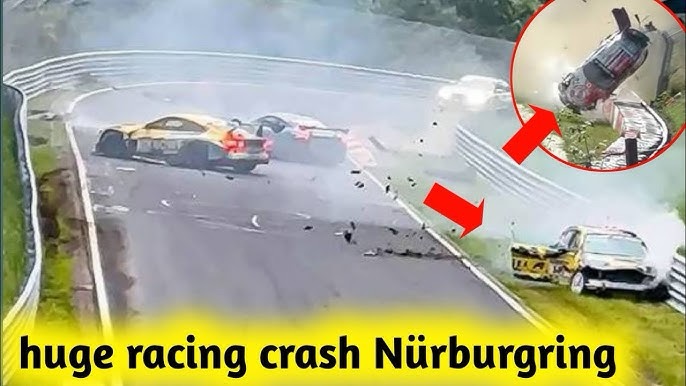
However, the race quickly took a dramatic and tragic turn. Within the early stages, a major multi-car collision occurred, involving several vehicles in a high-speed section of the circuit. Reports indicate that as many as six or seven cars were caught up in the incident, leading to immediate intervention from race officials. The severity of the crash prompted a red flag, halting the race while emergency services rushed to the scene.
The situation escalated further as details emerged about the consequences of the accident. Tragically, one driver lost his life following the crash, while several others sustained injuries, though not all were life-threatening. The race was ultimately abandoned, and the motorsport community was left in shock.
This devastating incident cast a long shadow over the entire event. What had started as a competitive race weekend quickly transformed into a somber occasion, with tributes pouring in for the deceased driver and support being extended to those injured. Motorsport, despite its advancements in safety, continues to carry inherent risks, and moments like this serve as a stark reminder of the dangers faced by drivers.
For Verstappen and his team, the combination of the grid penalty and the abrupt end to the race meant that their weekend was defined more by misfortune than performance. The penalty had already placed them on the back foot, and the red-flagged race denied them any meaningful opportunity to recover positions or demonstrate their pace. Instead, their involvement became part of a larger narrative dominated by tragedy and disruption.
Adding to the complexity of the situation is the broader context of Verstappen’s Nürburgring campaign. The Dutch driver has been actively exploring endurance racing opportunities, balancing his Formula One commitments with appearances in GT events. His participation in the NLS is seen as a stepping stone toward competing in the 24-hour race, one of the most grueling challenges in motorsport. The experience gained in these shorter races is crucial for understanding the unique demands of endurance racing, including traffic management, tire strategy, and teamwork.
Yet, weekends like this highlight how unpredictable motorsport can be. Even the most meticulously prepared teams can find their plans derailed by factors beyond their control—be it penalties, incidents, or unforeseen accidents. For Verstappen, who is accustomed to operating at the highest level in Formula One, adapting to the chaotic and multi-class nature of endurance racing presents a different kind of challenge.
The Nürburgring itself plays a significant role in this unpredictability. Known as the “Green Hell,” the Nordschleife is infamous for its length, complexity, and unforgiving layout. Spanning over 20 kilometers, it features a mix of high-speed straights, tight corners, elevation changes, and blind crests. Even experienced drivers can struggle to master it, and incidents are not uncommon, particularly in races involving large and diverse fields of cars.
In the aftermath of the race, attention has inevitably turned to safety measures and the circumstances surrounding the crash. Investigations are expected to examine factors such as track conditions, vehicle performance, and driver actions to determine what led to the incident. Such reviews are standard procedure in motorsport, aimed at improving safety and preventing similarوادث in the future.
For Verstappen, the focus will likely shift quickly to the next opportunity to get back on track. While this particular race did not go as planned, it remains part of a larger journey into endurance racing. His determination to compete in events like the Nürburgring 24 Hours suggests that setbacks like penalties and disrupted races will not deter him.
In summary, what was meant to be another step in Max Verstappen’s endurance racing development turned into a weekend marked by frustration and tragedy. A grid penalty stemming from a qualifying incident placed his team at an early disadvantage, while a catastrophic multi-car crash brought the race to a premature and heartbreaking end. The combination of these events underscores the volatile nature of motorsport, where success and adversity often go hand in hand, and where even the most anticipated races can be overshadowed by unforeseen drama.