
A dramatic and unsettling moment unfolded during qualifying for the 2026 Formula 1 Barcelona-Catalunya Grand Prix, as a heavy crash involving Ferrari’s Charles Leclerc brought the session to an abrupt halt and prompted the immediate deployment of the medical car. The incident, which occurred during the decisive Q3 phase, not only disrupted the competitive flow of qualifying but also had significant implications for both Ferrari and the overall grid order.
Leclerc had entered the final stage of qualifying with strong momentum, having shown encouraging pace throughout the earlier sessions. Ferrari appeared to be in contention for a front-row start, with both drivers demonstrating competitiveness on the demanding Barcelona circuit. However, that promise quickly turned into disappointment when Leclerc lost control of his car at high speed, leading to a violent impact with the barriers.
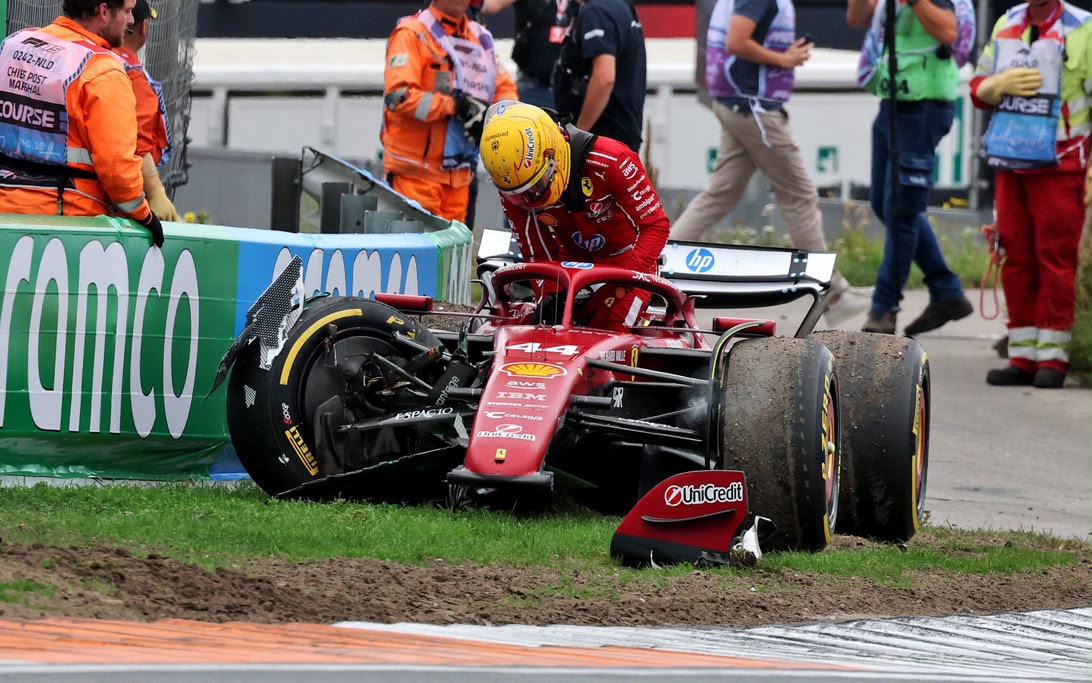
The crash occurred between Turns 4 and 5, a section of the track that requires precision, balance, and confidence due to its high-speed nature. As Leclerc pushed for a fast lap, he suffered a sudden loss of grip, sending his Ferrari sliding off the racing line and into the gravel before colliding heavily with the barriers. The impact was severe enough to cause extensive damage to the front of the car, effectively ending his qualifying session on the spot.
Given the intensity of the collision, race officials reacted instantly. A red flag was deployed to suspend the session, ensuring that marshals could safely clear debris and assess the situation. Most notably, the medical car was dispatched without delay—a clear indication of the seriousness of the incident. In Formula 1, the medical car is reserved for situations where there is a potential risk to driver safety, and its rapid deployment highlighted the force involved in the crash.
Reports later suggested that the impact exceeded 25G, a level of force that underscores just how violent the crash was. Such forces can place enormous strain on the human body, making the swift response of medical personnel essential in assessing any potential injuries.
Despite the severity of the crash, there was immediate relief when Leclerc was seen climbing out of the wreckage unaided. The Monegasque driver appeared shaken but otherwise unharmed, a testament to the advanced safety features of modern Formula 1 cars. He was subsequently taken for precautionary checks, as per standard procedure, but early indications confirmed that he had escaped serious injury.
From a sporting perspective, the consequences for Leclerc were significant. Because the crash occurred during Q3, he was unable to set a competitive lap time in the final shootout. As a result, he was classified towards the back of the top ten, a disappointing outcome given the strong pace Ferrari had demonstrated earlier in the session. What could have been a genuine challenge for pole position instead turned into a damage-limitation scenario for the race.
The red flag also had a wider impact on the session. At the time of the incident, only a handful of drivers had completed their flying laps, meaning the interruption effectively reset the final phase of qualifying. Drivers who had already posted times were forced to regroup, while others had to rethink their strategies entirely once the session resumed. This created a frantic and unpredictable conclusion to Q3, with teams scrambling to maximize their final attempts within a limited window of time.
In the aftermath, several drivers capitalized on the disrupted session. Mercedes, in particular, emerged as the primary beneficiary, with George Russell delivering a composed and decisive lap to secure pole position. His performance stood in contrast to the misfortune experienced by Leclerc, highlighting the fine margins that often define success and failure in Formula 1.
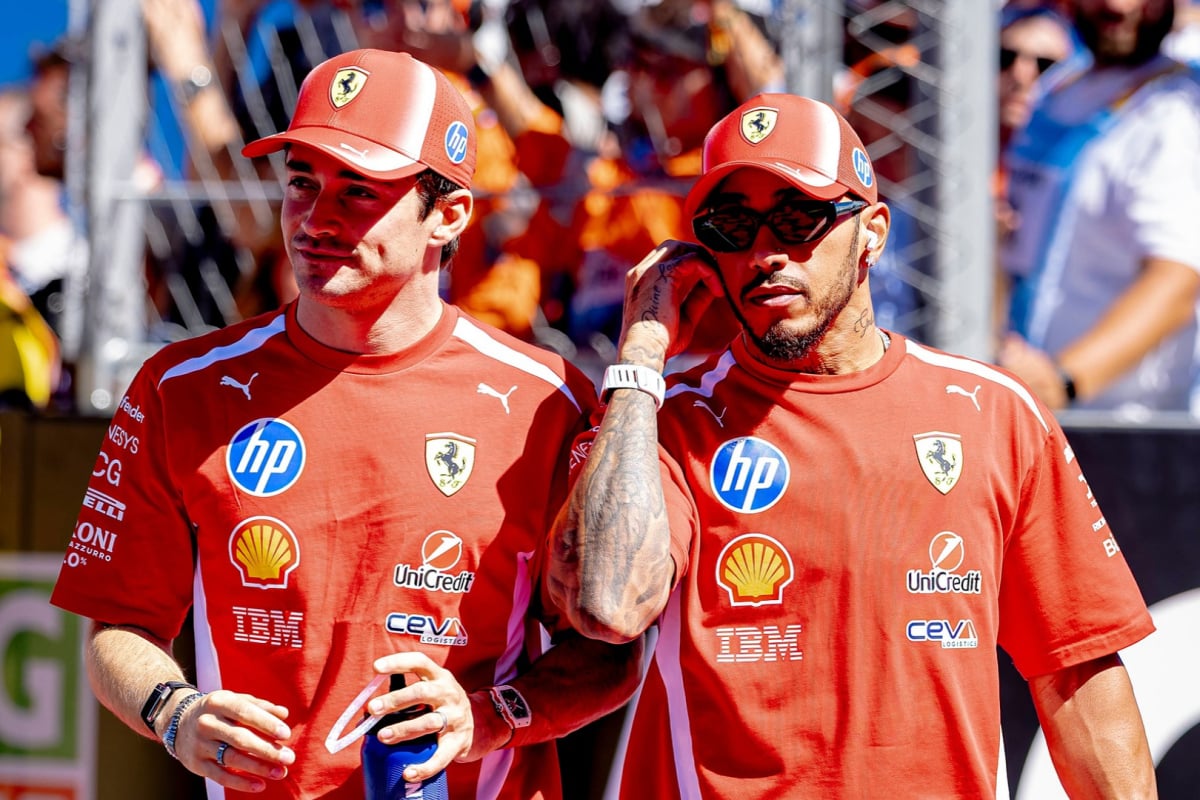
Within the Ferrari camp, the incident created a stark contrast between the two sides of the garage. While Leclerc’s qualifying ended in frustration, his teammate Lewis Hamilton managed to salvage a strong result, securing a front-row starting position. This dual outcome underscored both the potential of the Ferrari car and the unpredictability of high-stakes qualifying sessions.
Leclerc himself reportedly took responsibility for the crash, expressing disappointment and frustration at having squandered a promising opportunity. His candid reaction reflected the pressure drivers face during qualifying, where pushing to the absolute limit is often necessary to compete at the front. However, that same pursuit of perfection can sometimes lead to costly mistakes, as demonstrated in this incident.
Technically, the crash also raised questions about car balance and grip levels, particularly in high-speed corners. Barcelona is known for its combination of long straights and fast, flowing sections, which place a premium on aerodynamic efficiency and stability. Any slight imbalance or loss of traction can have immediate and dramatic consequences, especially when drivers are operating at the edge of performance.
The deployment of the medical car served as a powerful reminder of the risks inherent in Formula 1, even in an era where safety standards are higher than ever. Modern F1 cars are equipped with reinforced survival cells, advanced crash structures, and protective devices such as the halo, all of which play a crucial role in safeguarding drivers during high-impact incidents. Leclerc’s ability to walk away from such a heavy crash is a testament to these technological advancements.
Following the cleanup and safety checks, the session resumed after a short delay, allowing the remaining drivers to complete their qualifying runs. However, the psychological impact of the crash lingered, as competitors were reminded of the fine line between success and disaster in motorsport.
Looking ahead to the race, Leclerc faced a challenging task. Starting from a lower grid position than anticipated, he would need to rely on strategy, race pace, and potential opportunities to recover lost ground. Barcelona’s layout, while not the easiest for overtaking, can still offer chances through tire management and pit-stop strategy.
In conclusion, the Ferrari crash during Barcelona qualifying was one of the defining moments of the weekend. It combined high drama with serious implications for both the driver and the team, while also highlighting the critical role of safety systems in modern Formula 1. The swift deployment of the medical car underscored the severity of the incident, but the positive outcome—Leclerc emerging uninjured—provided reassurance amid the tension. Ultimately, the episode served as a vivid illustration of the risks, pressures, and unpredictability that make Formula 1 one of the most compelling sports in the world.