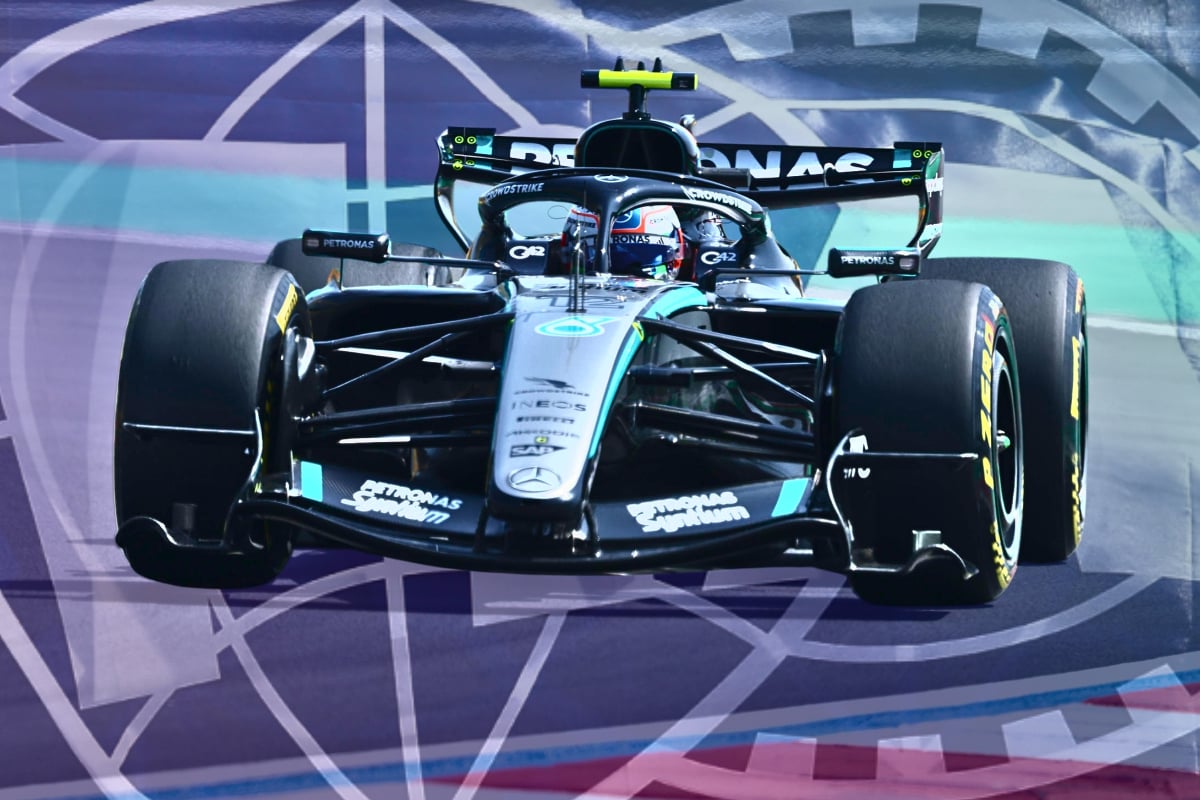
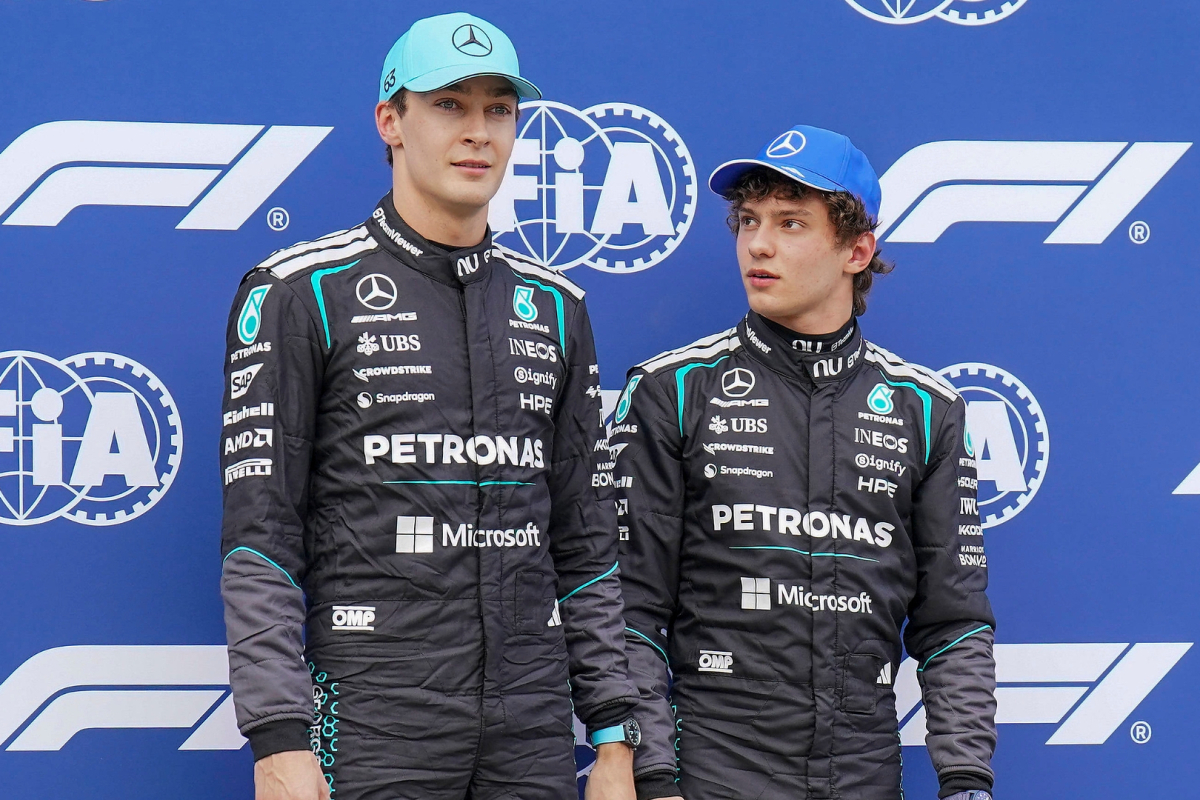
Mercedes have reportedly developed an innovative qualifying technique that is helping drivers George Russell and Kimi Antonelli extract extra performance from their Formula 1 car, but the strategy comes with a significant risk. If executed perfectly, it offers a valuable advantage over rivals by improving lap times. However, even the slightest mistake could result in disqualification from qualifying under FIA regulations.
The Brackley-based team have enjoyed an impressive start to Formula 1’s new regulatory era in 2026. Alongside Ferrari, Mercedes remain one of only two teams to have claimed victories so far this season, demonstrating that they have adapted exceptionally well to the sport’s latest technical rules. Their consistent performances have kept them firmly in the championship battle, with both George Russell and rookie sensation Kimi Antonelli playing major roles in the team’s success.
As the campaign progresses, Ferrari have gradually closed the performance gap, making the fight for victories increasingly competitive. Russell has also continued to reduce Antonelli’s lead in the drivers’ standings, setting up an intense battle both within Mercedes and against Ferrari as the championship heads toward its decisive stages.
In such a closely contested season, every fraction of a second matters. Teams are constantly searching for innovative methods to unlock additional speed while remaining within the boundaries of the FIA’s technical regulations. Mercedes appear to have found one such solution, using an advanced energy management strategy during qualifying sessions to maximize straight-line performance.
According to reports, the system can provide an improvement of approximately five hundredths of a second per lap. While that may appear insignificant to casual observers, in modern Formula 1 it can be the difference between pole position and starting several places further back on the grid. With Ferrari possessing exceptional race pace and impressive launches off the starting line, securing the best possible grid position has become even more valuable for Mercedes.
The strategy revolves around the management of electrical energy supplied by the hybrid power unit. Formula 1’s current regulations include strict limits on how electrical power from the battery may be reduced as drivers approach the timing line. At circuits such as Silverstone, teams must comply with rules governing the gradual reduction of battery deployment rather than allowing power to disappear instantly.
The FIA requires that battery output be reduced at a controlled rate, preventing teams from exploiting sudden power delivery advantages. This gradual reduction, commonly referred to as the “ramp-down” requirement, ensures fairness across the field and prevents excessive performance gains through energy deployment.
Earlier this season, Mercedes and Red Bull had already attracted the attention of Formula 1’s governing body after both teams were found to be using a loophole involving the MGU-K shutdown process. Although the approach was considered clever, the FIA stepped in and clarified the regulations, prohibiting the practice except in genuine emergency situations.
Rather than accepting the loss of that advantage, Mercedes engineers reportedly returned to the drawing board to identify another legal solution within the regulations. Their latest approach takes advantage of specific wording in the energy management rules that allows greater flexibility under carefully defined circumstances.
Instead of gradually reducing electrical output well before reaching the finish line, Mercedes reportedly discovered that their drivers could continue using the maximum 350kW of electrical power for much longer before cutting deployment at precisely the correct moment. If timed perfectly, the approach allows the car to maintain higher speed over a greater distance without violating the regulations.
Developing such a technique required extensive preparation. Reports suggest that both George Russell and Kimi Antonelli spent significant time in Mercedes’ simulator practicing the procedure before using it during qualifying for the British Grand Prix at Silverstone.
Because the timing depends on several constantly changing variables—including battery charge, energy usage throughout the lap, and overall driving conditions—the process cannot simply be repeated in exactly the same way every lap. Drivers must make continuous adjustments while driving at the limit.
Mercedes are believed to have introduced an in-car audio system that assists the drivers during qualifying. Rather than relying solely on visual information displayed on the steering wheel, the drivers reportedly receive an audio tone through their earpieces, indicating the precise moment they must lift off the throttle before the battery reaches complete depletion.
This warning is crucial because lifting off too late could have severe consequences. If the battery were to run completely empty before the driver reduced throttle input, the electrical power would stop abruptly instead of following the FIA’s required ramp-down procedure. Such an occurrence would represent a breach of the technical regulations and could lead to immediate disqualification from the qualifying results.
The margin for error is therefore incredibly small. Since battery usage differs from lap to lap, the ideal lift-off point changes continuously, meaning Russell and Antonelli must react instantly to the audio cue while driving at extremely high speeds.
Should either driver misjudge the timing by even a fraction of a second, Mercedes could lose far more than a front-row starting position. A qualifying disqualification would likely force the affected driver to start the race from the back of the grid, dramatically reducing their chances of fighting for victory.
The potential reward, however, explains why Mercedes have invested considerable effort into perfecting the technique. In modern Formula 1, where the top teams are often separated by mere hundredths of a second, even a tiny performance gain can have a major impact on championship results.
The British Grand Prix provided evidence that the system may already be delivering measurable benefits. Russell and Antonelli both produced competitive qualifying performances, with their energy deployment strategy helping maximize top speed on Silverstone’s long straights while remaining within the FIA’s regulations.
Naturally, innovations of this kind rarely remain exclusive for long. Formula 1 is a sport built around constant observation and rapid adaptation. Rival teams carefully study each other’s methods, and once a legal performance advantage becomes public knowledge, competitors quickly begin exploring ways to implement similar solutions.
With reports of Mercedes’ qualifying technique now circulating throughout the paddock, it would not be surprising to see other leading teams—including Ferrari, Red Bull, McLaren and Aston Martin—investigate whether they can adopt comparable energy management strategies in future qualifying sessions.
As always in Formula 1, success often depends on finding creative interpretations of the rules rather than breaking them outright. Mercedes appear to have demonstrated exactly that by identifying another legal method of extracting additional performance from their power unit.
Whether the FIA continues to allow this approach or decides to clarify the regulations once again remains to be seen. For now, Mercedes have seemingly gained another valuable weapon in the fight for pole positions, but it is one that demands flawless execution every single lap. One perfectly timed lift could secure the fastest lap of qualifying, while one small error could erase all of that hard work with a costly disqualification.