Formula 1 could be in for one of its most unpredictable weekends of the season as the upcoming Miami Grand Prix faces a growing threat from unsettled weather. What initially looked like a routine race weekend under the Florida sun is now shaping up to be a far more complicated affair, with meteorologists warning that rain and thunderstorms could play a major role—especially on race day.
Miami is no stranger to hot, humid, and occasionally volatile weather. The combination of intense sunshine, soaring track temperatures, and sudden afternoon storms is a hallmark of South Florida in spring. This year’s Grand Prix appears set to showcase all of those elements, creating a potentially dramatic backdrop for one of Formula 1’s most glamorous events.
For teams, drivers, and fans alike, the forecast has become one of the biggest talking points heading into the race weekend. While Friday and Saturday are expected to remain largely dry and warm, Sunday’s weather presents a far more uncertain picture. Current forecasts suggest that scattered showers and thunderstorms could develop during the afternoon—precisely when the Grand Prix is scheduled to take place.
Temperatures are likely to hover around 30 degrees Celsius throughout the weekend, ensuring that heat management will already be a major challenge. Tyre degradation, cooling systems, and driver endurance will all be pushed to their limits in the Florida heat. However, the possibility of rain adds an entirely new layer of complexity.
Even a brief shower could dramatically alter the competitive landscape. Unlike a sustained period of rain, short and sudden downpours are often the most disruptive in Formula 1. They can catch teams off guard, force rapid strategy changes, and turn a predictable one-stop race into a tactical lottery. A race that begins on dry tyres could suddenly require intermediate or even full wet tyres, only for the circuit to dry quickly enough to demand another pit stop soon after.
That kind of scenario creates opportunities—and risks—in equal measure. Teams must be prepared for multiple strategic possibilities, often making split-second decisions based on incomplete information. The margin for error becomes razor-thin, and one incorrect call can completely derail a race.
Miami’s circuit is particularly susceptible to such chaos. The Miami International Autodrome is a temporary street-style track, meaning grip levels can change rapidly. In dry conditions, the surface gradually rubbers in over the course of the weekend, offering increasing traction. But when rain falls, that grip can disappear almost instantly. Standing water can develop quickly, especially in braking zones and low-lying sections of the track.
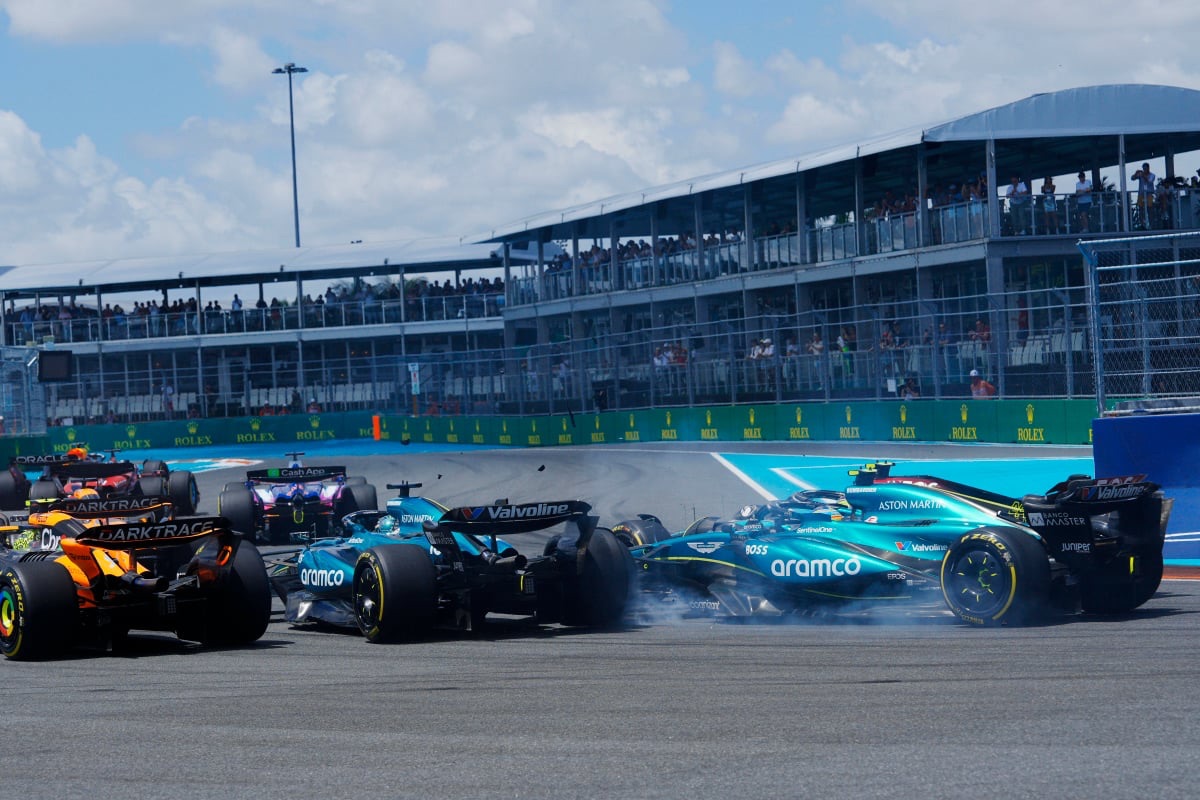
The track’s history has already shown how disruptive wet weather can be. Last year’s sprint race provided a perfect example. Rain arrived unexpectedly, creating treacherous conditions that led to delays, incidents, and strategic confusion. The session was eventually red-flagged after heavy rainfall left parts of the circuit nearly undriveable. Several drivers struggled for control, and the constantly changing conditions made tyre choices incredibly difficult.
That memory remains fresh for teams and drivers. It serves as a stark reminder that even a relatively short rain shower in Miami can create significant problems. If similar conditions were to occur during a full-length Grand Prix, the consequences could be even more dramatic.
Adding to the challenge is the sprint weekend format. With only one practice session before competitive action begins, teams have limited time to fine-tune their setups. This reduced preparation window makes adapting to changing weather conditions even more difficult. Engineers must strike a careful balance between dry-weather performance and wet-weather readiness, often without enough track time to fully validate their decisions.
A car optimized for hot, dry conditions may struggle if rain arrives. Conversely, a setup designed to handle wet conditions could compromise performance if the race remains dry. This balancing act is one of the most difficult aspects of race preparation, particularly when the forecast remains uncertain.
Tyre strategy will also be under intense scrutiny. Under normal dry conditions, Miami typically favors a one-stop strategy. The smooth track surface and predictable degradation patterns usually allow teams to manage tyre wear effectively. But rain can throw those calculations out the window.
Suddenly, teams must consider crossover points between slicks, intermediates, and wet tyres. Timing becomes everything. Pit too early, and drivers may destroy their tyres on a still-dry track. Pit too late, and they risk losing massive amounts of time—or worse, crashing.
Drivers, too, will face one of the sternest tests of their skill. Racing in mixed conditions requires exceptional car control, confidence, and instinct. Grip levels can vary corner by corner, and the ideal racing line often becomes unusable when wet due to accumulated rubber turning slippery.
Those who excel in changing conditions often gain a significant advantage. History has shown that wet or mixed-weather races can produce surprise results, with underdogs able to challenge more established frontrunners. In such circumstances, driver talent can often outweigh outright car performance.
For championship contenders, the stakes could hardly be higher. A weather-affected race introduces a degree of randomness that can either provide an opportunity to gain crucial points or result in costly setbacks. One poor strategic decision, one mistimed pit stop, or one small mistake on a damp track can have major consequences.
Fans, meanwhile, may be in for a thrilling spectacle. While teams generally prefer predictability, spectators know that uncertain weather often delivers some of Formula 1’s most memorable races. Strategy battles, dramatic overtakes, safety cars, and unexpected podium finishers all become far more likely when rain enters the equation.
That said, a fully wet race still appears unlikely at this stage. Forecast models currently suggest that any rain is more likely to come in the form of scattered showers or isolated thunderstorms rather than continuous rainfall. But in Miami, even a short-lived storm can be enough to transform the entire complexion of a race.
The key concern is timing. If rain arrives just before the start, during the opening laps, or in the middle of the race, teams could be forced into rapid tactical adjustments. A shower at the wrong moment can be far more disruptive than rain that falls before or after the event.
Humidity will also be a significant factor, regardless of whether rain materializes. High moisture levels in the air can affect engine cooling, tyre performance, and driver fatigue. Combined with temperatures near 30 degrees Celsius, the physical demands on drivers will be immense.
Ultimately, the Miami Grand Prix is shaping up to be a fascinating blend of speed, strategy, and uncertainty. The dry heat alone would already pose a substantial challenge, but the looming threat of rain adds an unpredictable twist that could reshape the race entirely.
What might have been a straightforward contest could instead become a strategic chess match, where adaptability and quick thinking prove just as important as outright pace. In Formula 1, weather has always been one of the few variables no team can control—and in Miami this weekend, it may once again become the defining factor.
If the storms stay away, fans can expect a fast, tactical race dominated by tyre management and precision. But if the skies open, even briefly, all bets will be off. And that possibility alone is enough to ensure that the Miami Grand Prix will command the full attention of the Formula 1 world.