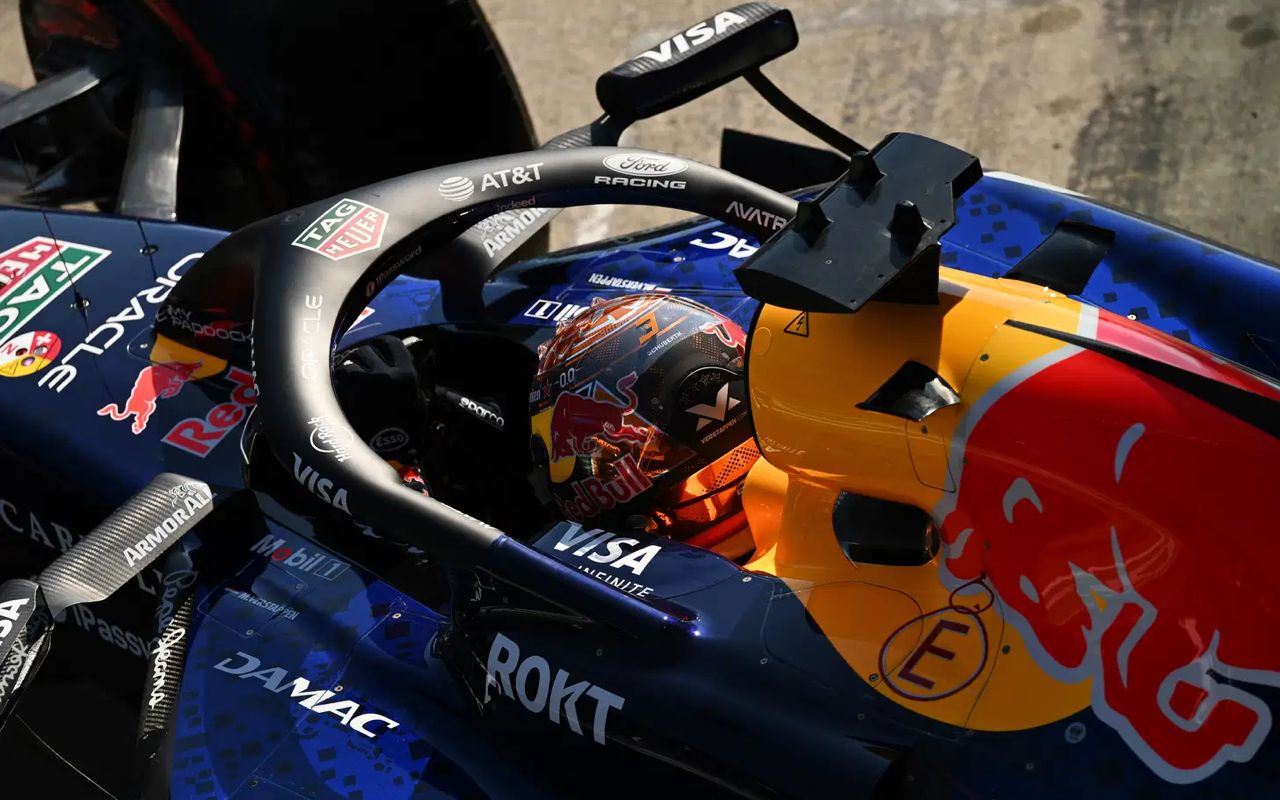

Red Bull Accept Responsibility as Max Verstappen Escapes Injury Following Dramatic Austrian Grand Prix Qualifying Crash
Red Bull Racing have publicly accepted responsibility for the incident that brought Max Verstappen’s Austrian Grand Prix qualifying session to a premature end, while also reassuring fans that the Dutch driver escaped the frightening crash without injury.
The dramatic accident occurred during the final phase of qualifying at the Red Bull Ring, where Verstappen was pushing hard in his last attempt to improve his lap time. Instead of mounting a challenge for pole position, the four-time world champion suddenly lost control of his RB22 through Turn 9 before sliding into the gravel and making heavy contact with the barriers.
Although the impact looked alarming, Verstappen climbed out of the damaged car under his own power, immediately easing fears over his physical condition. The team later confirmed that the reigning champion had not suffered any injuries in the incident.
Following an internal review of the crash, Red Bull team principal Laurent Mekies explained that the team had identified a technical issue rather than driver error as the main cause of the accident. According to Mekies, Verstappen suddenly lost crucial rear aerodynamic performance, leaving him with almost no opportunity to recover the car before it spun off the circuit.
“The most important thing is that Max is okay,” Mekies stated after qualifying. He praised the Dutchman for producing an outstanding performance throughout the session before the unfortunate incident ruined what had been an extremely competitive weekend.
Mekies admitted that Verstappen had been delivering an impressive final flying lap and looked capable of fighting near the very front of the grid until the unexpected loss of rear grip changed everything within seconds.
The Red Bull boss went a step further by taking full responsibility on behalf of the team, saying the mechanics and engineers had no intention of shifting blame onto their driver. Instead, he offered a public apology to Verstappen after the investigation pointed towards a mechanical failure affecting the rear of the car.
Early indications suggest the issue may have been connected to the RB22’s rear wing or active aerodynamic system. During the incident, Verstappen’s race engineer was heard over team radio mentioning that the rear wing would need to be checked, leading to speculation that the mechanism may not have functioned correctly while the car entered one of the fastest corners on the circuit.
While Red Bull have stopped short of revealing every technical detail behind the malfunction, Mekies confirmed that the sudden loss of rear aerodynamic efficiency left Verstappen with virtually no chance of preventing the crash.
The accident was particularly frustrating because Verstappen had looked increasingly competitive throughout qualifying. Red Bull had introduced an extensive package of upgrades for their home race in Austria, and those improvements appeared to have significantly closed the performance gap to their closest rivals.
Throughout practice and qualifying, Verstappen consistently showed pace capable of challenging the Mercedes and Ferrari drivers. Many observers believed the battle for pole position would come down to the final laps of Q3 before the crash dramatically changed the outcome.
Instead of starting from the front row, Verstappen was forced to settle for fifth position on the grid after being unable to complete his final lap.
Another talking point from qualifying involved Red Bull’s tyre strategy. During Q2, Verstappen completed only one flying lap, leaving him dangerously close to elimination. He survived the session by only a tiny margin, advancing into Q3 despite finishing just ahead of the cut-off line.
Mekies admitted afterwards that the decision carried considerable risk but insisted it had been carefully calculated.
The team deliberately saved an additional set of fresh soft tyres in the hope that the extra rubber would provide a strategic advantage during Sunday’s Grand Prix. Although the gamble nearly backfired in Q2, Red Bull believed preserving tyre options would ultimately benefit Verstappen over race distance.
Unfortunately for the Milton Keynes-based outfit, those carefully planned strategies became largely irrelevant after the technical issue ended Verstappen’s final qualifying run.
The incident also came at an unfortunate time for Red Bull, who had hoped their latest upgrade package would demonstrate clear progress following several challenging races earlier in the season.
Despite the disappointing conclusion to qualifying, Verstappen remained encouraged by the overall pace shown by the upgraded RB22. He acknowledged that the new components appeared to improve the car’s competitiveness, even though the crash prevented the team from fully showcasing its potential.
The Dutchman indicated that Red Bull are still learning how to maximise the performance of the latest upgrades but believes the early signs are positive. According to Verstappen, the increased speed seen throughout qualifying suggests the development programme is moving in the right direction.
Attention now shifts to Sunday’s Austrian Grand Prix, where Verstappen faces the challenge of recovering from fifth on the grid.
Although missing out on pole position represents a significant setback, the Red Bull driver has built a reputation throughout his Formula One career for producing aggressive recovery drives and capitalising on race-day opportunities.
The combination of fresh tyres, upgraded machinery and a competitive race package could still allow Verstappen to fight towards the podium if the car performs as expected over a full race distance.
Red Bull will undoubtedly spend the remaining hours before the Grand Prix conducting a thorough inspection of the RB22 to ensure the technical issue responsible for the qualifying crash has been completely resolved.
The team’s swift acceptance of responsibility has also been welcomed by many observers, as Red Bull chose transparency rather than attempting to attribute the accident to driver error. By publicly apologising to Verstappen, the team acknowledged that the failure originated within the car and not behind the steering wheel.
For Verstappen, the most encouraging outcome remains the fact that he escaped the frightening accident unharmed. While the damaged car cost him a realistic opportunity to challenge for pole position at Red Bull’s home circuit, his health was never seriously affected, allowing him to quickly turn his focus towards Sunday’s race.
As Formula One prepares for another highly anticipated Austrian Grand Prix, Verstappen and Red Bull will now hope that the pace shown before the crash can be translated into a strong recovery performance. If the upgraded RB22 delivers as expected and reliability issues stay away, the reigning world champion could still emerge as one of the biggest threats despite beginning the race from the third row of the grid.