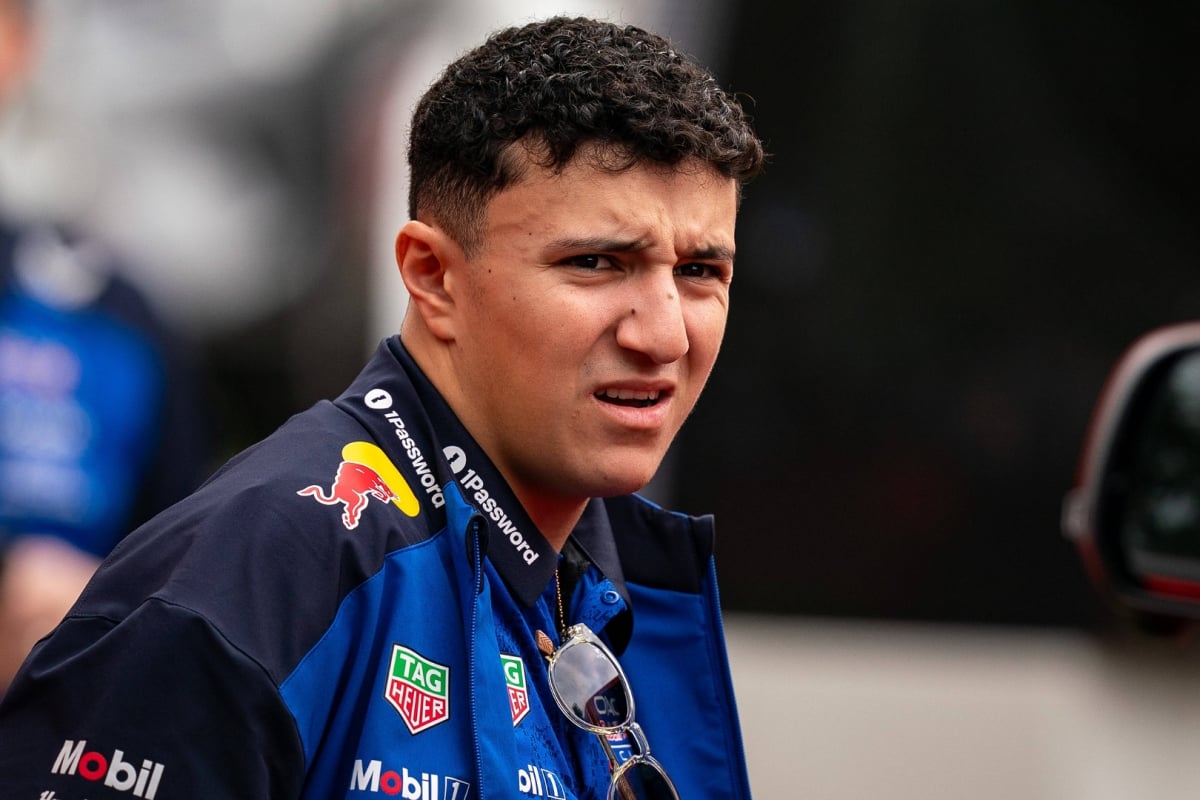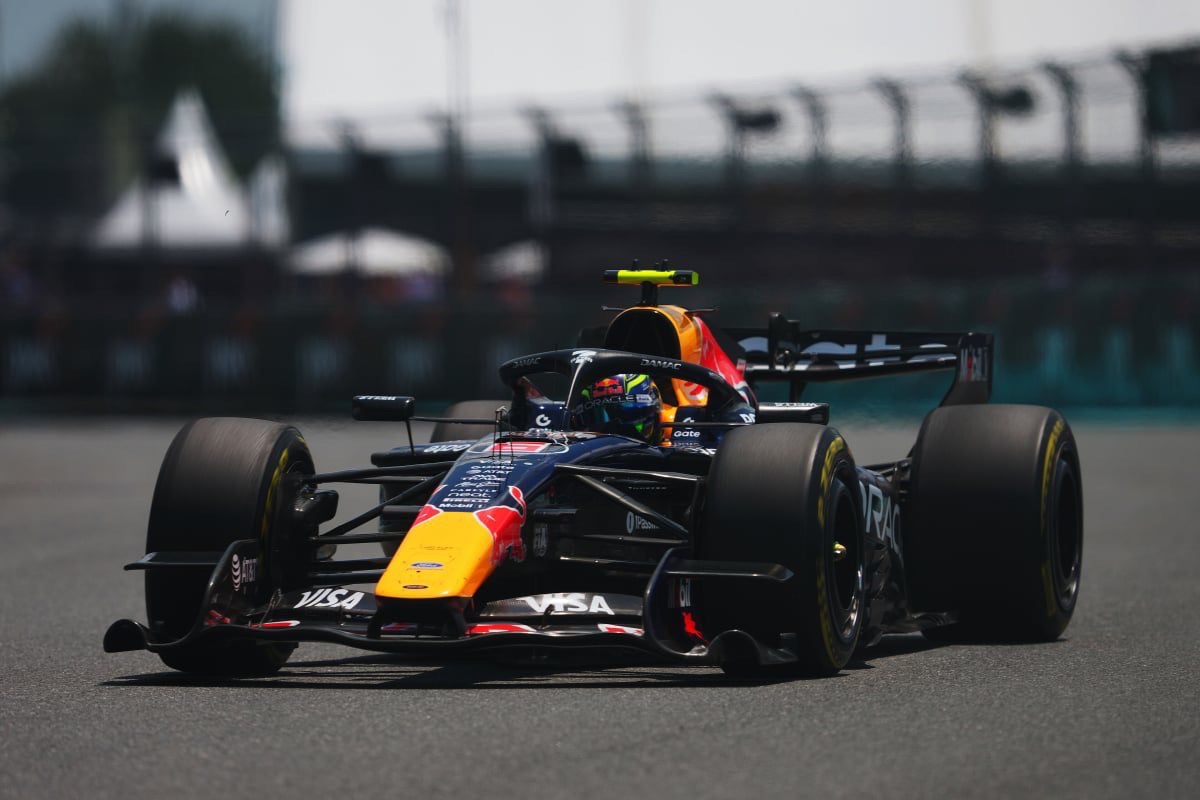
Fresh controversy has erupted at the Miami Grand Prix, with Red Bull once again finding itself under intense FIA scrutiny. This time, the spotlight is on rising star Isack Hadjar, who is facing the very real possibility of disqualification from the qualifying results after a technical irregularity was discovered on his car during post-session inspections.
Hadjar had initially delivered an impressive performance in qualifying, securing ninth place on the grid for Sunday’s race. For the young Red Bull driver, it was another strong showing in what has already been a breakthrough season. Starting inside the top ten at a demanding circuit like Miami would have provided an excellent opportunity to score valuable championship points and further strengthen his growing reputation in Formula 1.
However, the celebrations in the Red Bull garage were short-lived.
During the FIA’s routine post-qualifying scrutineering process, officials identified a potential breach of the technical regulations on Hadjar’s car. Specifically, the floor assembly on his Red Bull was found to extend beyond the maximum permitted dimensions outlined in the sport’s rulebook. According to the FIA’s technical delegate, the left-hand and right-hand sides of the floorboard were each protruding by approximately two millimetres outside the designated reference volume.
While two millimetres may seem insignificant to the casual observer, Formula 1 operates on extraordinarily fine tolerances. In a sport where aerodynamic efficiency, performance, and compliance are measured to microscopic precision, even the smallest deviation can constitute a serious technical infringement. The regulations are deliberately strict, and teams are expected to comply fully with every specification, no matter how marginal the discrepancy may appear.
As a result, the matter has been formally referred to the race stewards for further investigation. Under Formula 1’s technical regulations, such infractions are typically treated with zero tolerance. Because this is a technical, rather than sporting, violation, the usual consequence is disqualification from the session in which the breach occurred.
If the stewards uphold the FIA’s findings—as is widely expected—Hadjar will be excluded from the qualifying classification. That would mean the loss of his ninth-place starting position, a significant setback for both the driver and the team. Instead of lining up on the fifth row, he would likely be forced to start the Miami Grand Prix from the pit lane, dramatically complicating his race prospects.
The timing is particularly unfortunate for Red Bull. The team arrived in Miami with a substantial package of upgrades aimed at improving the competitiveness of its 2026 challenger. Those updates appeared to be working, especially on Max Verstappen’s side of the garage. The reigning world champion produced one of his strongest qualifying performances of the season, securing second place on the grid and putting himself in an excellent position to challenge for victory.
That contrast makes Hadjar’s situation all the more frustrating. While Verstappen successfully extracted the pace from Red Bull’s upgraded machinery, Hadjar was still adapting to the revised car setup and the unique challenges of the Miami circuit. Despite those difficulties, he still managed to reach Q3 and place within the top ten—a commendable effort for the rookie.
Before news of the investigation broke, Hadjar had already admitted that he struggled to find consistency throughout the session. He cited difficulties in the opening sector, particularly Turn 1, where even a small error can compromise the entire lap. Once that initial rhythm is lost, tyre temperatures can quickly rise, further affecting grip and balance for the remainder of the circuit.
Those handling issues, combined with Miami’s notoriously low-grip surface, made qualifying especially challenging. Hadjar was unable to fully capitalize on the pace available in the upgraded Red Bull package, ultimately finishing more than eight tenths of a second behind Verstappen. Nevertheless, his place in Q3 suggested there was still plenty of promise in his performance.
Unfortunately, Formula 1 is unforgiving when it comes to technical compliance.
The FIA’s post-session checks are designed to ensure absolute fairness across the grid. Every car must meet the same stringent standards, and there is little room for interpretation when a component falls outside the legal limits. Intent is generally irrelevant; whether the infringement resulted from design, setup, wear, or manufacturing variance, the responsibility ultimately lies with the team.
For Red Bull, this incident serves as a reminder of the risks associated with pushing the boundaries of engineering innovation. Teams constantly seek marginal gains, especially when introducing major upgrade packages. But that relentless pursuit of performance occasionally brings them dangerously close to the edge of legality.
In Hadjar’s case, the alleged issue involves one of the most aerodynamically sensitive parts of the car. The floor plays a critical role in generating downforce under the current regulations, and even tiny dimensional changes can influence airflow and overall performance. That is precisely why the FIA monitors this area so closely.
Should the disqualification be confirmed, it would represent a painful blow to Hadjar’s weekend. Starting from the pit lane at a circuit where overtaking can be difficult would significantly reduce his chances of scoring points. It would also place additional pressure on the young driver to fight through the field while managing tyre strategy and avoiding incidents.
For Red Bull, the setback would be limited to one side of the garage, as Verstappen’s car was not implicated in the same issue. Still, losing a top-ten starting position undermines the team’s broader efforts and robs them of an opportunity to maximize their points haul.
The incident also adds another layer of drama to what has already been an eventful Miami Grand Prix weekend. With weather concerns forcing organizers to move the race start forward by three hours, teams and drivers are already dealing with an unusual set of circumstances. The threat of thunderstorms looms over race day, adding unpredictability to an already tense atmosphere.
Meanwhile, the front of the grid promises a fascinating battle. Mercedes sensation Kimi Antonelli has claimed pole position once again, continuing his remarkable rise in Formula 1. Verstappen will start alongside him, while Ferrari and McLaren remain firmly in contention just behind. With changing weather conditions and multiple strategic variables at play, the race is shaping up to be one of the most intriguing of the season.
Yet for Hadjar, all attention now turns to the stewards’ decision.
A confirmed disqualification would undoubtedly be disappointing, but it would also offer an important lesson in the unforgiving realities of Formula 1. At this level, success depends not only on speed and talent but also on absolute technical precision. Every component, every measurement, and every detail matters.
For a young driver still establishing himself at the pinnacle of motorsport, setbacks like this are part of the learning process. Hadjar has already shown considerable pace, resilience, and maturity this season. If he is forced to start from the pit lane, it will present another opportunity to demonstrate his racecraft and determination under difficult circumstances.
As the Miami Grand Prix approaches, Red Bull will be hoping for clarity—and perhaps some leniency—but history suggests the FIA rarely wavers in cases of technical non-compliance.
If the ruling goes against them, Hadjar’s task will become immeasurably harder. But in Formula 1, adversity often creates the stage for remarkable performances. Whether from the fifth row or the pit lane, all eyes will be on the Red Bull youngster as he looks to respond to one of the biggest challenges of his young career.