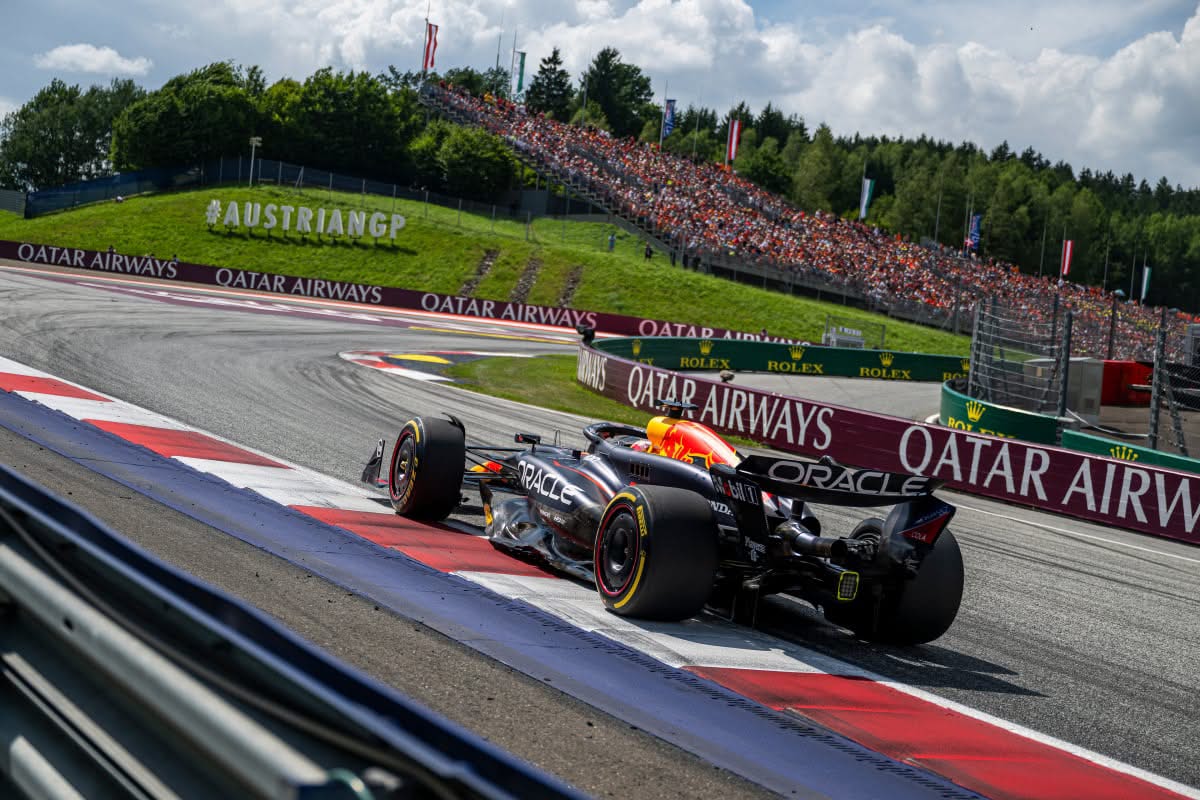

Red Bull Racing has taken a decisive step ahead of its home race in Austria by introducing what is being described as one of its most significant upgrade packages of the 2026 Formula 1 season. The development arrives at a critical point in the championship, with mounting pressure on both the team and its lead driver, Max Verstappen, to close the performance gap to rivals and reassert competitiveness.
The Austrian Grand Prix, held at the Red Bull Ring in Spielberg, is not just another race on the calendar—it is a symbolic and strategic battleground for the Milton Keynes-based outfit. Bringing a major upgrade to this venue underscores the urgency within the team to address persistent weaknesses in the RB22 car. While upgrades are common throughout a Formula 1 season, this particular package carries more weight than usual due to Red Bull’s inconsistent performances so far in 2026 and the rapid progress made by competitors like Mercedes and Ferrari.
Reports indicate that this is Red Bull’s second major upgrade of the season, following an earlier package introduced in Miami. That earlier update included substantial aerodynamic revisions, such as redesigned sidepods and innovative rear-wing concepts. However, despite those efforts, the team has continued to struggle with several key performance areas. These include mid-speed balance, high-speed efficiency, tyre management, and overall car weight—issues that have prevented them from consistently challenging for race wins.
The Austrian upgrade is therefore not just about incremental gains; it represents an attempt to redefine the trajectory of Red Bull’s season. Team principal Laurent Mekies has already tempered expectations, making it clear that the new components are not a “magic fix” but rather part of a broader development strategy aimed at gradually reducing the performance deficit. At present, Red Bull is believed to be lacking between four to five tenths of a second per lap compared to the leading teams—a gap that is significant in modern Formula 1.
One of the key focuses of the upgrade is weight reduction. The RB22 has reportedly been running above the minimum weight limit for much of the season, which has negatively impacted performance. Achieving the minimum weight threshold could unlock better efficiency and improve overall lap times. However, weight alone is not the only concern. The car’s handling characteristics—particularly its narrow operating window and sensitivity to setup changes—have made it difficult for drivers to extract consistent performance across different circuits.
Max Verstappen, a four-time world champion, has been central to Red Bull’s efforts this season. Despite his exceptional driving ability, he has often found himself unable to compensate for the car’s shortcomings. The Dutch driver has openly acknowledgedthat the team is “just too slow” in comparison to its rivals and has pointed out several areas where improvements are urgently needed. His performances have still kept Red Bull in contention to some extent, but the burden on him has been immense.
The Austrian Grand Prix provides an ideal testing ground for the new upgrade package. The Red Bull Ring is a short, high-speed circuit with long straights and heavy braking zones, making it particularly sensitive to car balance, traction, and efficiency. Any improvements—or lack thereof—will be immediately visible. This means the upgrade cannot hide behind track-specific characteristics; it must deliver genuine performance gains.
Another important aspect of this development is how it performs across both Red Bull drivers. While Verstappen has consistently been able to extract more from the car, the team’s second driver has struggled to match his pace. This disparity has limited Red Bull’s strategic flexibility during races. If the upgrade can improve the car’s overall drivability and widen its operating window, it could allow both drivers to compete more effectively, strengthening the team’s overall performance.
However, there are risks involved. Formula 1 development is rarely straightforward, and upgrades can sometimes introduce new problems even as they solve existing ones. For example, increasing downforce might improve cornering speed but could also make the car more sensitive to setup changes or reduce straight-line efficiency. Red Bull has experienced such trade-offs before, and there is a possibility that the Austrian package could follow a similar pattern.
The timing of this upgrade is also crucial in the context of the broader championship battle. Ferrari has recently demonstrated the impact a successful upgrade can have, with a strong performance in Barcelona translating into a race victory. Mercedes, meanwhile, continues to show consistent pace and remains a benchmark for Red Bull. In this environment, falling behind in the development race could have long-term consequences for Red Bull’s title aspirations.
For Verstappen, the stakes are particularly high. His future with the team has been the subject of ongoing speculation, with performance-related clauses in his contract potentially allowing him to consider other options if Red Bull fails to remain competitive. This adds an additional layer of pressure on the team to deliver meaningful improvements not just for immediate results, but also to secure their star driver’s long-term commitment.
Ultimately, the Austrian Grand Prix will serve as a defining moment for Red Bull’s 2026 campaign. The upgrade package represents more than just new parts; it is a statement of intent and a test of the team’s ability to respond to adversity. Success would not necessarily mean an outright victory, but rather clear evidence that the RB22 is moving in the right direction becoming more competitive, more consistent, and more adaptable across different track conditions.
If the upgrade delivers, it could mark the beginning of a resurgence for Red Bull, providing a foundation for further development in the races to come. If it falls short, however, the team may find itself facing an increasingly difficult season, with reliance on individual brilliance rather than technical superiority.
In summary, Red Bull’s Austrian Grand Prix upgrade is a pivotal moment in their 2026 season. It embodies both hope and pressure: hope that the team can close the gap to its rivals, and pressure to prove that their development path is capable of restoring them to the front of the grid. The outcome at Spielberg will offer the clearest indication yet of whether Red Bull can turn its season around or whether it will continue to play catch-up in an increasingly competitive Formula 1 landscape.