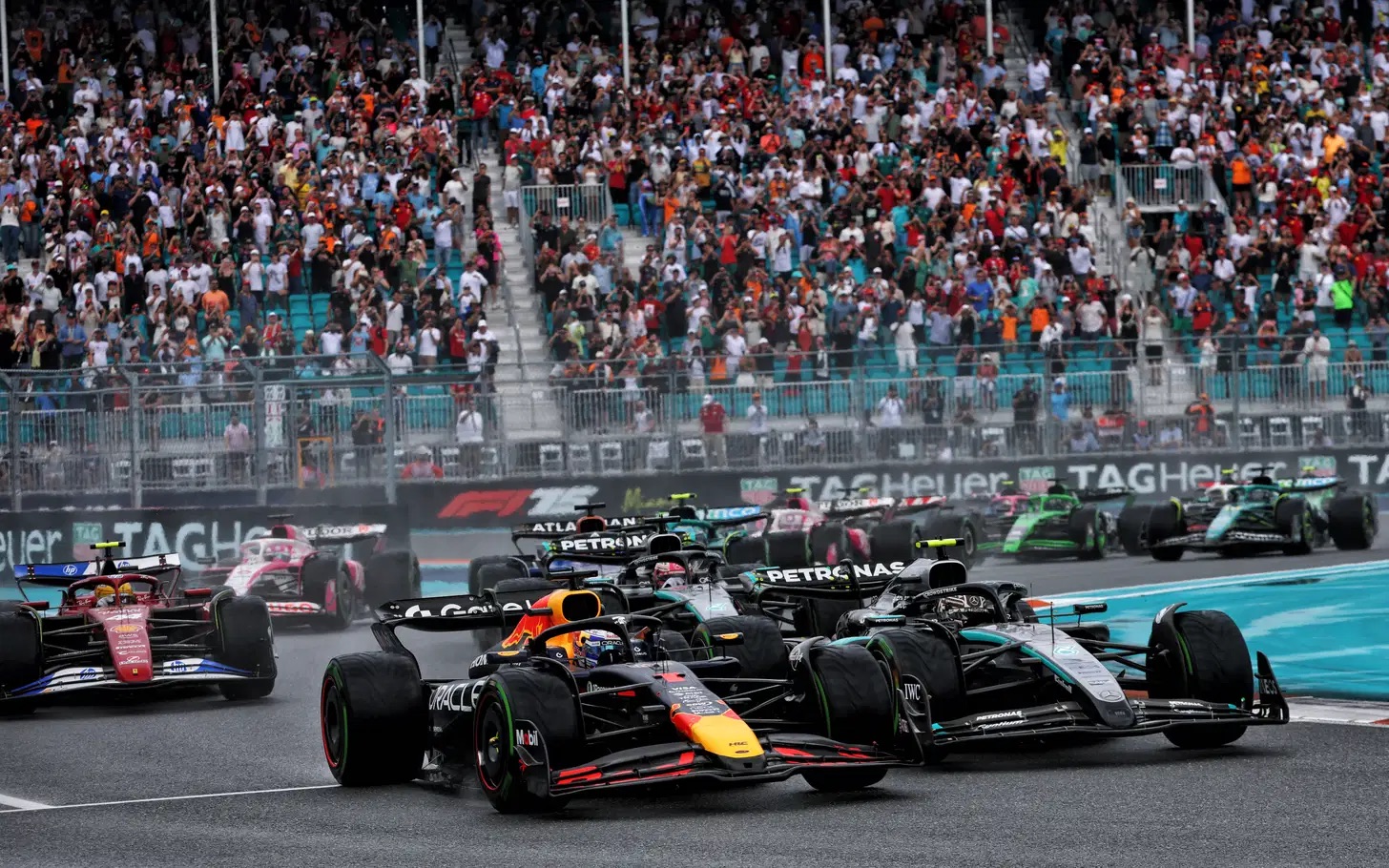
US officials have issued an urgent weather advisory ahead of the Formula 1 Miami Grand Prix weekend, with extreme heat and the threat of thunderstorms set to play a major role in how events unfold. What was expected to be a straightforward sprint weekend in Florida has quickly become a far more complicated challenge for teams, drivers, organisers, and the thousands of fans expected at the Miami International Autodrome.
The primary concern for Saturday is the intense heat. Temperatures are forecast to climb into the mid-30s Celsius, but the combination of humidity and direct sunlight will make it feel much hotter. In some parts of the circuit, the “real feel” temperature could approach 40 degrees Celsius. Those are demanding conditions for anyone, but especially for fans spending long hours outdoors and for drivers preparing to compete in one of the most physically taxing races on the calendar.
Authorities and weather experts have warned spectators to take the heat seriously. Fans have been advised to remain well hydrated throughout the weekend, seek shade whenever possible, and be alert for signs of heat-related illnesses. Dehydration, heat exhaustion, heat cramps, and even heat stroke are genuine risks in such conditions. Miami’s climate is no stranger to these extremes, but prolonged exposure at a major sporting event can quickly become dangerous if precautions are ignored.
For the drivers, the conditions will be equally punishing. Modern Formula 1 cockpits are already incredibly hot environments, and the oppressive Florida humidity only adds to the strain. Drivers can lose significant amounts of body fluid during a race, and the physical effort required to wrestle these 2026 cars around the circuit will be immense. Managing hydration, energy levels, and tyre performance will therefore be absolutely critical, particularly during Saturday’s sprint race and qualifying sessions.
Saturday itself is expected to remain mostly dry, which should allow the sprint race and qualifying to proceed without major weather interruptions. The sprint race is scheduled for midday local time, when temperatures will already be hovering around 32 degrees Celsius. By the time qualifying begins later in the afternoon, conditions are expected to be even more intense, with track temperatures soaring and a stiff breeze adding another variable for drivers trying to find consistency under braking and through Miami’s high-speed sections.
That heat will also have a significant effect on tyre management. Even over the shorter sprint distance, teams will need to carefully monitor degradation. The Miami circuit is already known for placing considerable stress on tyres, and elevated track temperatures will only accelerate wear. This could make strategy more influential than usual, even in the sprint format, where outright pace often takes precedence over long-term tyre preservation.
While Saturday’s forecast appears manageable, attention is increasingly turning toward Sunday, when the weather could become far more disruptive. Meteorologists are predicting a substantial chance of rain and thunderstorms during the Grand Prix itself. Current forecasts indicate that the likelihood of rain at the scheduled start is above 50 percent, with that probability rising as the afternoon progresses.
Thunderstorms present a particularly serious challenge because of local safety regulations in the United States. If lightning is detected within a certain radius of the circuit, racing activity may have to be suspended immediately. This is not simply a precautionary measure; it is a legal and operational requirement. One major reason is that the medical helicopter, an essential component of Formula 1’s safety infrastructure, cannot operate safely during lightning activity. Without air medical support available, on-track action cannot continue.
In such a scenario, the race could be red-flagged, with cars returning to the pit lane while teams and personnel take shelter. Spectators would also likely be directed to safe indoor or covered areas, including the nearby Hard Rock Stadium. Fortunately, Formula 1 and the FIA have extensive contingency plans in place, drawing on lessons learned from previous weather-related disruptions both in Miami and elsewhere on the calendar.
FIA officials have already confirmed that they are closely monitoring the evolving forecast. Meetings have reportedly taken place throughout the weekend to prepare for all eventualities, including possible delays, temporary suspensions, or even adjustments to the event schedule should severe weather materialise.
Wet conditions would introduce another fascinating competitive element. The 2026 Formula 1 cars have yet to be extensively tested in truly wet race conditions, meaning teams may face a steep learning curve if rain arrives. New regulations, revised aerodynamic concepts, and altered power delivery systems could behave very differently in low-grip situations. That uncertainty could dramatically influence both strategy and driver confidence.
Several drivers have already acknowledged the challenge. Miami’s flat layout is known for retaining standing water, which can significantly reduce visibility and grip. In heavy rain, aquaplaning becomes a real risk. Add in the new generation of cars, and the possibility of an unpredictable, chaotic race increases considerably. A wet Miami Grand Prix could quickly become one of the season’s most demanding and strategically complex events.
The FIA also has special procedures for thunderstorm interruptions at U.S. races. If a red flag is required because of lightning, teams may be permitted to move cars into their garages and carry out limited work while the stoppage is in effect. This differs from standard red-flag procedures at many other venues and is designed to accommodate local safety requirements.
For fans, this combination of heat and storm risk means preparation will be essential. Sunscreen, hats, lightweight clothing, and constant hydration will be crucial during the hot periods. At the same time, attendees should remain aware of changing weather conditions and be ready to seek shelter quickly if thunderstorms develop.
Ultimately, the weather may prove to be one of the defining storylines of the entire Miami Grand Prix weekend. Saturday is likely to test endurance and tyre management under blistering heat, while Sunday could deliver an entirely different challenge if storms arrive. In Formula 1, unpredictability often creates the most memorable races, and Miami appears poised to offer exactly that.
Whether the race unfolds under blazing sunshine or dramatic storm clouds, one thing is certain: the weather will have a major say in the outcome. Teams, drivers, and fans alike will need to stay adaptable, because in Miami this weekend, Mother Nature may be the toughest competitor of all.