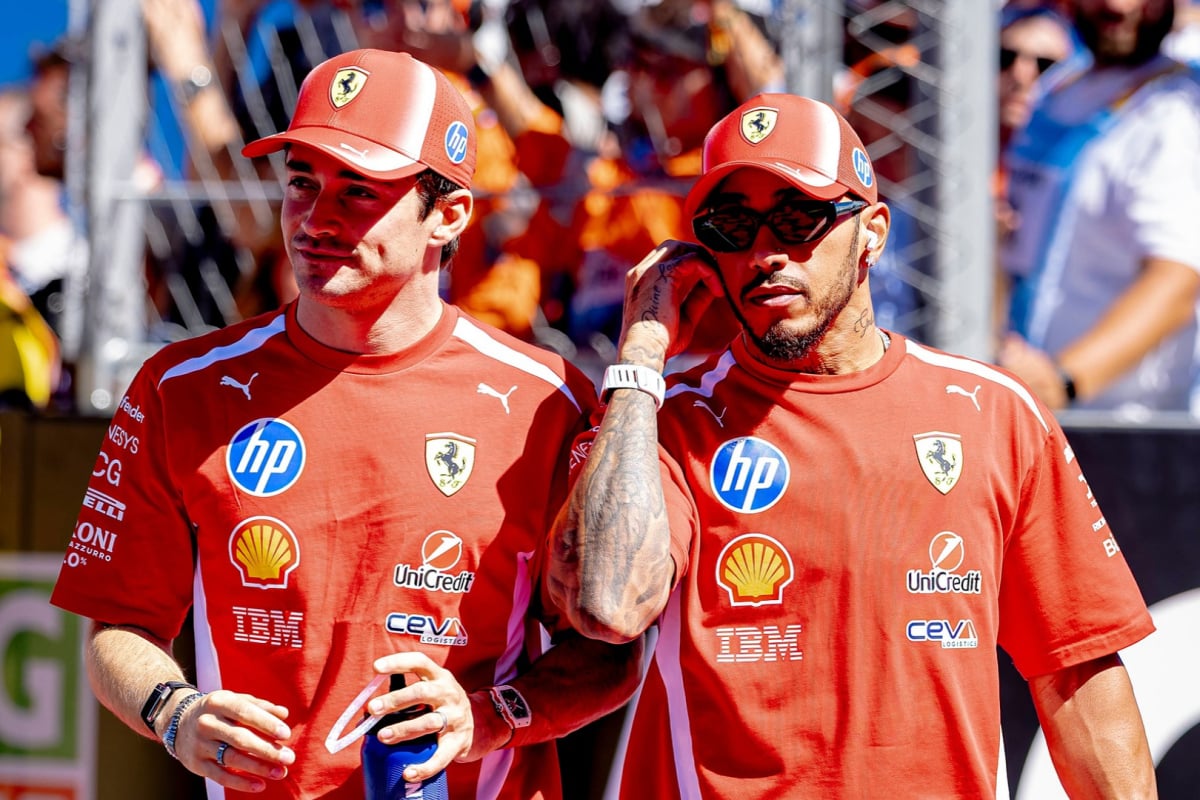
Christian Horner Hails Red Bull’s Engine Achievement After FIA Recognition
Former Red Bull team principal Christian Horner has expressed his admiration for the remarkable progress made by the team’s power unit division after the FIA recognized Red Bull as having the strongest internal combustion engine at the beginning of the 2026 Formula 1 season. The achievement marks a major milestone for the Milton Keynes outfit, which entered the new era of Formula 1 regulations with its own in-house engine project for the first time.
The 2026 campaign has introduced sweeping technical changes across Formula 1, with new power unit regulations encouraging manufacturers to develop more efficient and sustainable engines. For Red Bull, this season represents a historic chapter, as the team is no longer relying on an external engine supplier but instead competing with a power unit designed and produced by its own engineering department.
Despite widespread doubts before the season began, Red Bull has managed to surprise much of the Formula 1 paddock. According to an FIA assessment carried out under the Additional Development and Upgrade Opportunities (ADUO) system, Red Bull’s combustion engine currently leads the field in performance. The evaluation is particularly significant because it compares the team’s work against some of the sport’s most experienced engine manufacturers, including Ferrari, Mercedes, Honda, and Audi.
The recognition has generated widespread praise throughout the Formula 1 community. Horner, who stepped down from his position as Red Bull team principal a year earlier, admitted that he was deeply impressed by what the company had accomplished in such a short period.
Reflecting on the transformation of Red Bull’s engine operation, Horner recalled how different the factory looked only a few years ago. He noted that the facility once produced entirely different products before being converted into one of Formula 1’s most ambitious engine development centres.
Speaking about the progress, Horner explained that it was difficult to imagine such rapid success when the project first began. Developing a competitive Formula 1 engine is one of the most challenging tasks in motorsport, requiring enormous investment, advanced technology, and years of engineering expertise. Yet Red Bull has managed to establish itself as a benchmark almost immediately.
He praised the engineers, technicians, and specialists responsible for designing the power unit, describing their work as extraordinary considering the scale of the challenge they faced. According to Horner, receiving recognition from the FIA as the leading combustion engine manufacturer during the team’s debut season is an achievement that deserves significant respect throughout the paddock.
However, the positive verdict also comes with an unexpected consequence. Under the FIA’s ADUO regulations, manufacturers judged to have the strongest combustion engine are not permitted to introduce performance upgrades in that area during the remainder of the season. The rule is intended to help maintain competitive balance by giving rival manufacturers greater opportunities to improve.
As a result, Red Bull will need to complete the rest of the 2026 campaign using its existing combustion engine specification, while competitors who were assessed as being behind are allowed additional development opportunities. This creates an intriguing strategic battle as the season progresses, with Ferrari, Mercedes, Honda, and Audi all expected to continue refining their power units in an effort to close the gap.
Although the restriction may appear to be a disadvantage, Horner viewed the situation positively. In his opinion, the fact that Red Bull has been placed in such a position is itself evidence of the outstanding work completed by the engineering department. Being prevented from upgrading the engine means the FIA believes the current package already represents the benchmark in Formula 1.
Horner was also eager to acknowledge the contributions made by Red Bull’s technical partners. He emphasized that the success of the project was not solely the work of the engine factory but the result of close collaboration between several organizations.
Special recognition was given to ExxonMobil, whose fuel and lubricant technology has played a key role in maximizing the efficiency and reliability of the power unit. Modern Formula 1 engines rely heavily on advanced fuel formulations, making partnerships with energy companies increasingly important under the current technical regulations.
Ford Motor Company also received praise from Horner. The American automotive giant has been closely involved in Red Bull’s power unit programme, contributing engineering expertise and technical resources during the development process. Horner stressed that the achievement reflected the combined efforts of everyone involved rather than the work of a single organization.
According to him, many observers underestimated the complexity of creating a completely new Formula 1 engine operation capable of immediately competing with manufacturers that possess decades of experience. Ferrari and Mercedes have been building Formula 1 power units for generations, while Honda has accumulated extensive knowledge through multiple championship-winning programmes. Audi also entered the championship with enormous technical resources and expectations.
Against that level of competition, Red Bull’s success has exceeded even the most optimistic predictions. Horner admitted that very few people believed the team could outperform such established manufacturers in its first season as an engine producer. The FIA’s assessment has therefore become a powerful statement regarding the quality of Red Bull’s engineering capabilities.
The achievement also strengthens confidence within the team as the championship continues. Strong engine performance provides an excellent foundation for the remainder of the season, especially under the demanding 2026 regulations, where efficiency, energy recovery, and overall power unit performance play a larger role than ever before.
While rivals will undoubtedly attempt to reduce the performance gap through future upgrades, Red Bull begins the next phase of the championship knowing that its engine package has already received official recognition as the benchmark. That status adds further prestige to the project and demonstrates how quickly the company has adapted to one of Formula 1’s biggest technical challenges.
Beyond the immediate competitive implications, the accomplishment also reinforces Red Bull’s long-term ambitions. Successfully producing a championship-calibre engine internally gives the organization greater independence and control over its future development strategy. It also validates the enormous financial and technical investment made in establishing Red Bull Powertrains.
As the 2026 Formula 1 season continues with races including Belgium, Hungary, the Netherlands, Italy, Spain, Azerbaijan, Singapore, the United States, Mexico, Brazil, Las Vegas, Qatar, and Abu Dhabi still to come, attention will remain focused on whether Red Bull can maintain its advantage despite being unable to introduce combustion engine upgrades.
For now, however, Horner believes the recognition speaks for itself. In his view, transforming a brand-new engine programme into one that has already surpassed Ferrari, Mercedes, Honda, and Audi is an accomplishment that few believed was possible. The former team boss considers it one of Red Bull’s most impressive engineering achievements and a testament to the dedication, innovation, and teamwork that have driven the project from concept to championship contender.