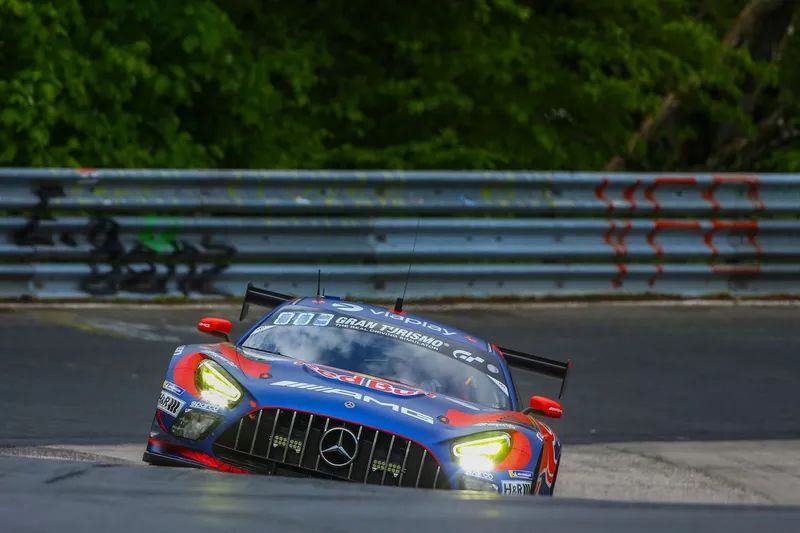

Max Verstappen’s highly anticipated appearance at the 2026 Nürburgring 24 Hours was more than just a guest appearance from a Formula 1 superstar — it became a powerful demonstration of how adaptable, aggressive, and complete he is as a racing driver. Although the Dutchman and his Verstappen Racing Mercedes-AMG GT3 ultimately failed to secure victory due to a heartbreaking mechanical issue, the event still reinforced why Verstappen is widely regarded as one of the finest talents in world motorsport today.
From the moment Verstappen arrived at the legendary Nordschleife circuit, expectations were already enormous. The Nürburgring 24 Hours is considered one of the toughest endurance races in the world, combining brutal weather conditions, dangerous high-speed corners, traffic management, and relentless physical and mental pressure. Success there requires more than raw speed — drivers must demonstrate patience, intelligence, adaptability, and consistency over an entire day of racing.
Despite this being his debut in the iconic endurance event, Verstappen looked completely at home from the very beginning. His team, Verstappen Racing, entered the race with a Mercedes-AMG GT3 shared between Verstappen, Daniel Juncadella, Jules Gounon, and Lucas Auer. Even before the race officially began, the team showed clear signs of competitiveness by qualifying fourth on the grid against some of the best GT and endurance specialists in the world.
What followed during the race itself was an exhibition of controlled aggression and racecraft from the reigning Formula 1 champion. Verstappen entered the race after the opening stint and immediately began making progress through the field. Motorsport observers noted how calm and calculated he remained while navigating slower traffic around the terrifying Nordschleife layout, widely regarded as one of the most dangerous circuits ever built.
The Dutch driver quickly transformed his team from contenders into genuine race favorites. Starting from 10th position during his stint cycle, Verstappen methodically carved his way through the field with decisive overtakes and relentless pace. One of the defining moments of his race came when he overtook Porsche driver Ayhancan Güven during changing weather conditions, seizing control of the race while rain began falling across sections of the circuit.
His speed was not simply impressive by Formula 1 standards — it stood out even against elite endurance racing specialists who have spent years mastering GT machinery and Nürburgring-specific conditions. Reports from the race repeatedly described Verstappen’s performance as a “masterclass,” with analysts highlighting how quickly he adapted to the unique demands of endurance racing.
Perhaps the most remarkable aspect of Verstappen’s performance was how naturally he handled mixed weather conditions and heavy traffic. Unlike Formula 1, where drivers typically race among cars of similar pace, endurance racing forces competitors to constantly navigate slower classes while maintaining maximum speed. This creates endless opportunities for mistakes. Verstappen, however, appeared completely comfortable managing the chaos, balancing aggression with precision in a way that surprised even experienced endurance observers.
The race itself was unpredictable from the opening hours. Multiple incidents, rain showers, oil spills, and changing grip levels constantly reshuffled the order. Yet Verstappen’s Mercedes remained consistently near the front throughout the event. While his teammates also contributed strongly, Verstappen’s stints often became the turning points that placed the car back into race-winning contention.
As darkness fell over the Nordschleife, Verstappen continued to shine. His overnight driving became one of the major talking points of the event, with many commentators suggesting he was operating at a level beyond most of the field. Red Bull’s own race recap emphasized his “overnight heroics” and immediate impact in the event.
By the final stages of the race, Verstappen Racing had emerged as the clear favorite for victory. The #3 Mercedes-AMG GT3 led for significant portions of the race and looked set to deliver a dream debut win. Several reports indicated the team had built a comfortable advantage over rivals through both pace and strategic execution.
However, endurance racing is often unforgiving, and disaster struck with just over three hours remaining. A driveshaft failure suddenly destroyed Verstappen’s hopes of claiming victory in his first Nürburgring 24 Hours appearance. The issue occurred shortly after Verstappen handed the car back to teammate Daniel Juncadella. What had appeared to be a near-certain triumph instantly became heartbreak for the team.
Even though the final result did not reflect the team’s dominance, the reaction from the motorsport world was overwhelmingly positive. Drivers, analysts, and fans widely agreed that Verstappen had proven himself far more than just a Formula 1 champion experimenting in another category. Instead, he demonstrated the complete package required to succeed in endurance racing at the highest level.
One major reason his performance attracted so much attention was because Nürburgring success cannot simply be achieved through natural speed alone. The Nordschleife demands total commitment and years of experience to truly master. Many world-class drivers struggle to adapt quickly there. Verstappen, however, looked immediately capable of fighting for victory against established endurance stars.
The race also strengthened Verstappen’s growing reputation as a driver capable of excelling across multiple disciplines. Over recent years, he has repeatedly expressed interest in endurance racing, GT competitions, and iconic events like the 24 Hours of Le Mans and Daytona. His Nürburgring performance now adds serious credibility to those ambitions.
Importantly, Verstappen’s participation also elevated the profile of the Nürburgring 24 Hours itself. The event attracted enormous global attention thanks to his presence, contributing to record fan attendance and sold-out crowds. Reports described the atmosphere as unprecedented, showing how powerful Verstappen’s influence has become beyond Formula 1.
There were even moments during the race where Verstappen appeared almost untouchable. Social media reactions and motorsport discussions praised the precision of his overtakes, his consistency under pressure, and his confidence in dangerous conditions. Some analysts argued that his Nürburgring display further confirmed his status as the most complete racing driver currently active in world motorsport.
Although mechanical failure denied him victory, the broader conclusion remained obvious: Verstappen was extraordinary throughout the event. His pace, adaptability, strategic awareness, and ability to handle pressure all stood out at one of motorsport’s most intimidating venues.
In many ways, the Nürburgring 24 Hours may mark the beginning of a new chapter in Verstappen’s career. While Formula 1 remains his primary focus, his performance in endurance racing has shown that he possesses the skillset required to dominate far beyond grand prix racing. The disappointment of losing victory so late in the race may even motivate him to return stronger in the future.
Ultimately, despite not standing on the top step of the podium, Max Verstappen left the Nürburgring as one of the undeniable stars of the event. His debut proved that his talent transcends Formula 1 and that, given another opportunity, he could very well become a future Nürburgring 24 Hours winner.