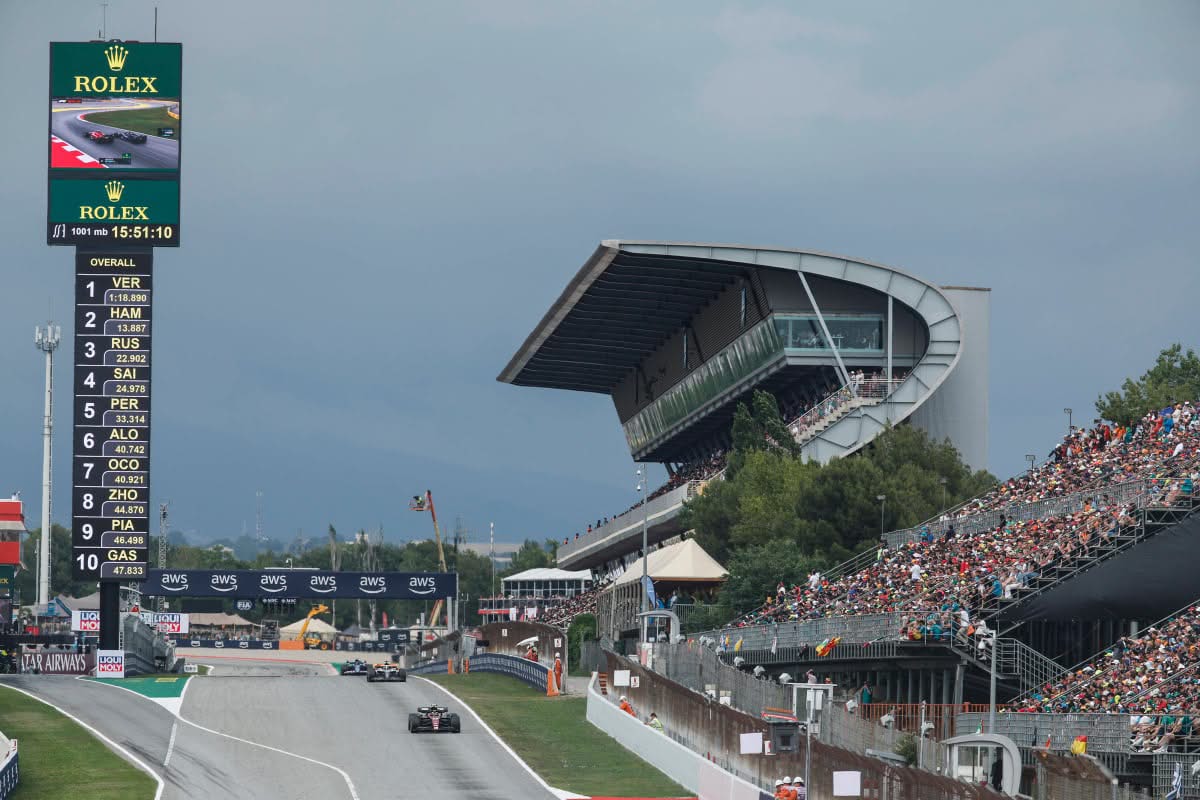

The excitement surrounding the 2026 Formula 1 season continues to build as teams and drivers head into another crucial race weekend, this time at the iconic Circuit de Barcelona-Catalunya. As fans eagerly anticipate the action, one of the most important sessions of the weekend—qualifying—has drawn significant attention, with its official start time now confirmed.
Qualifying for the 2026 Barcelona-Catalunya Grand Prix is scheduled to take place on Saturday, June 13, and it will begin at 4:00 PM local time (CEST). This session plays a decisive role in shaping the starting grid for Sunday’s race, making it one of the most intense and strategically critical periods of the entire weekend.
For fans across the globe, the timing will vary depending on their location. Viewers in the United Kingdom can tune in at 3:00 PM BST, while those watching from the United States will see the action begin at 10:00 AM Eastern Time. In Nigeria, the session will air at approximately 3:00 PM WAT, making it conveniently accessible for local audiences eager to follow the drama live.
The qualifying session itself is divided into three segments—Q1, Q2, and Q3—each designed to progressively eliminate drivers until only the fastest remain. In Q1, all 20 drivers take to the track, battling to set competitive lap times within a limited window. At the end of this phase, the five slowest drivers are eliminated, leaving 15 to advance to Q2. The intensity ramps up further in Q2, where another five drivers are knocked out, narrowing the field to the top 10 contenders. Finally, Q3 becomes a high-stakes showdown, with the remaining drivers fighting for pole position and the advantage of starting at the front of the grid on race day.
This structured knockout format ensures that every lap counts, and even the smallest mistake can cost a driver valuable positions. Teams must carefully balance aggression and precision, managing tire usage, track conditions, and timing to perfection. With Barcelona’s track characteristics—featuring a mix of high-speed corners and technical sections—drivers must demonstrate both skill and consistency to secure a strong grid slot.
The Circuit de Barcelona-Catalunya has long been a staple of Formula 1, known for its demanding layout and its role as a benchmark for car performance. The track’s combination of sweeping turns and slower corners tests aerodynamic efficiency, tire management, and overall balance. As a result, qualifying here often provides a clear indication of which teams have the strongest packages heading into the race.
Heading into this weekend, the championship battle is already heating up. Recent races have seen standout performances from emerging talents and established stars alike, adding further intrigue to the qualifying session. With points at a premium and competition fierce, every driver will be pushing to extract maximum performance from their car.
Weather conditions are also expected to play a role in how qualifying unfolds. Forecasts suggest warm and sunny conditions in Barcelona, with temperatures around the high twenties in degrees Celsius. Such conditions typically lead to optimal track grip, but they can also increase tire degradation, forcing teams to make careful strategic decisions about when to send their drivers out on track.
Another key factor to consider is track evolution. As more cars run during the session, the racing line tends to improve, allowing for faster lap times as the surface becomes more rubbered in. This means timing is everything—drivers who go out too early may miss the best conditions, while those who wait too long risk running out of time to set a competitive lap.
Fans can watch the qualifying session through various broadcasting platforms, depending on their region. Formula 1’s official streaming service, F1 TV, offers comprehensive coverage, including onboard cameras, live timing, and expert analysis. In addition, traditional broadcasters such as Sky Sports in the UK and other regional partners will provide live coverage, ensuring that viewers around the world don’t miss a moment of the action.
Beyond just determining the starting grid, qualifying often delivers some of the most dramatic moments of the weekend. Drivers push their cars to the absolute limit, sometimes producing breathtaking laps that showcase their skill and bravery. At the same time, unexpected results can shake up the order, with underdog teams occasionally outperforming expectations and challenging the established hierarchy.
For teams, qualifying is not just about speed—it is also a test of coordination and decision-making. Engineers and strategists must analyze real-time data, monitor competitors, and make split-second calls on tire choices and run plans. A well-executed strategy can make the difference between securing pole position and being stuck further down the grid.
As the 2026 season progresses, every qualifying session becomes increasingly significant in the context of the championship. With points awarded only on race day, starting position can heavily influence a driver’s chances of success. A strong qualifying performance can set the stage for a podium finish, while a poor showing may force a driver into a challenging recovery drive.
In summary, the qualifying session for the 2026 Barcelona-Catalunya Grand Prix is set to begin at 4:00 PM local time on Saturday, June 13, marking a crucial moment in the race weekend. With high stakes, intense competition, and the ever-present unpredictability of motorsport, fans can expect an action-packed hour that will shape the outcome of Sunday’s race. Whether you are watching from Europe, Africa, or beyond, this is one session you won’t want to miss.