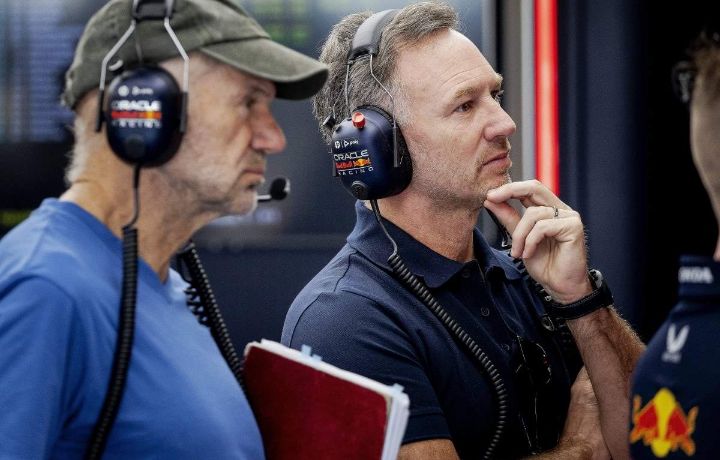

Adrian Newey has been advised to exercise patience as he embarks on what is expected to be a long-term and highly strategic effort to transform Aston Martin into a genuine Formula 1 title contender. Although the arrival of one of the sport’s most celebrated and accomplished designers has naturally generated excitement and elevated expectations, many within the Formula 1 community believe that success at the highest level cannot be rushed. Instead, they stress that meaningful and sustainable progress will take time before Aston Martin can consistently compete at the front of the grid.
The team’s owner, Lawrence Stroll, made a significant statement of intent by securing Newey’s services. This move was widely interpreted as a clear indication of Aston Martin’s ambition to challenge for world championships in the coming years. Stroll has already invested heavily in the team, overseeing the development of cutting-edge facilities, expanding technical resources, and assembling a strong workforce. In this context, Newey’s arrival is viewed as a critical piece in completing the puzzle bringing with him not only unmatched technical expertise but also a proven track record of designing championship-winning cars.
However, despite these advancements, experienced observers have cautioned against expecting immediate results. Formula 1 is an exceptionally complex and competitive environment, where success depends on far more than the brilliance of a single individual. Even someone of Newey’s caliber must work within a broader system that includes engineers, aerodynamicists, strategists, and operational staff. For a team to become a consistent frontrunner, it must develop a cohesive technical structure, establish efficient communication across departments, and ensure that every element of car design and race execution operates in harmony.
Furthermore, the process of integrating new ideas and philosophies into an existing team structure is not instantaneous. It requires time for adjustments, experimentation, and refinement. Newey’s influence will likely be felt gradually, as concepts are introduced, tested, and optimized over multiple development cycles. This is why those close to the situation have encouraged Stroll and Aston Martin’s leadership to grant Newey and his team the necessary freedom and time to implement their vision without the burden of unrealistic short-term expectations.
That said, patience in Formula 1 is rarely limitless. While there is an understanding that building a championship-winning team is a long-term project, there is also recognition that progress must be visible. Industry insiders suggest that Aston Martin’s management will eventually expect tangible signs of improvement, whether in terms of performance gains, consistency, or competitiveness against rival teams. Although no strict deadline has been publicly defined, it is widely believed that the team will need to demonstrate steady advancement to justify continued confidence in the current approach.
If such progress fails to materialize within a reasonable timeframe, it is possible that the team’s leadership could reassess its strategy. This does not necessarily imply immediate or drastic changes, but rather a willingness to adapt and ensure that the long-term objectives remain achievable. In Formula 1, where the margins between success and failure are extremely fine, even well-planned projects must deliver results to maintain momentum and support.
At the same time, attention within the paddock has also turned to another prominent figure in the sport Christian Horner and the remarkable journey that led him to become one of the most successful team principals in Formula 1 history. Interestingly, it has been revealed that one of Horner’s rivals played an unexpected role in helping him secure his initial leadership position at Red Bull.
Horner’s appointment as team principal in 2005 came as a surprise to many. At just 31 years old, he was one of the youngest individuals ever to take on such a role in Formula 1. His relative lack of experience at the highest level led to skepticism among some observers, who questioned whether he possessed the necessary skills to lead a team in such a demanding and high-pressure environment.
Despite these doubts, Horner quickly proved his critics wrong. Through strong leadership, clear communication, and a keen understanding of team dynamics, he established himself as a highly capable and respected figure within the sport. Under his guidance, Red Bull evolved from a relatively new and unproven entrant into a dominant force in Formula 1. The team achieved remarkable success, securing multiple constructors’ championships and drivers’ titles while nurturing the careers of several world-class drivers.
Horner’s story serves as a powerful example of how bold decisions and unconventional appointments can yield extraordinary results when given the opportunity to succeed. His rise to prominence highlights the importance of vision, trust, and long-term commitment—qualities that are equally relevant to Aston Martin’s current situation with Adrian Newey.
Both narratives Newey’s ongoing project at Aston Martin and Horner’s career trajectory underscore a fundamental truth about Formula 1: success is rarely instantaneous. It is the result of careful planning, sustained effort, and the willingness to remain committed even when immediate results are not forthcoming. Teams that achieve greatness are those that combine talent with patience, allowing their strategies to mature and their capabilities to fully develop over time.
As Aston Martin continues its journey toward becoming a championship contender, the lessons from Horner’s experience at Red Bull may prove particularly valuable. With the right balance of ambition and patience, the team has the potential to achieve its goals. However, this will depend on its ability to maintain focus, support its key personnel, and navigate the inevitable challenges that come with competing at the highest level of motorsport.
In conclusion, while Adrian Newey’s arrival represents a significant milestone in Aston Martin’s ambitions, it is only one step in a much larger process. The road to Formula 1 success is long and complex, requiring not only technical excellence but also strategic patience and organizational strength. If given the time and support needed, Newey could play a pivotal role in reshaping the team’s future just as Christian Horner once did at Red Bull, transforming potential into sustained dominance.