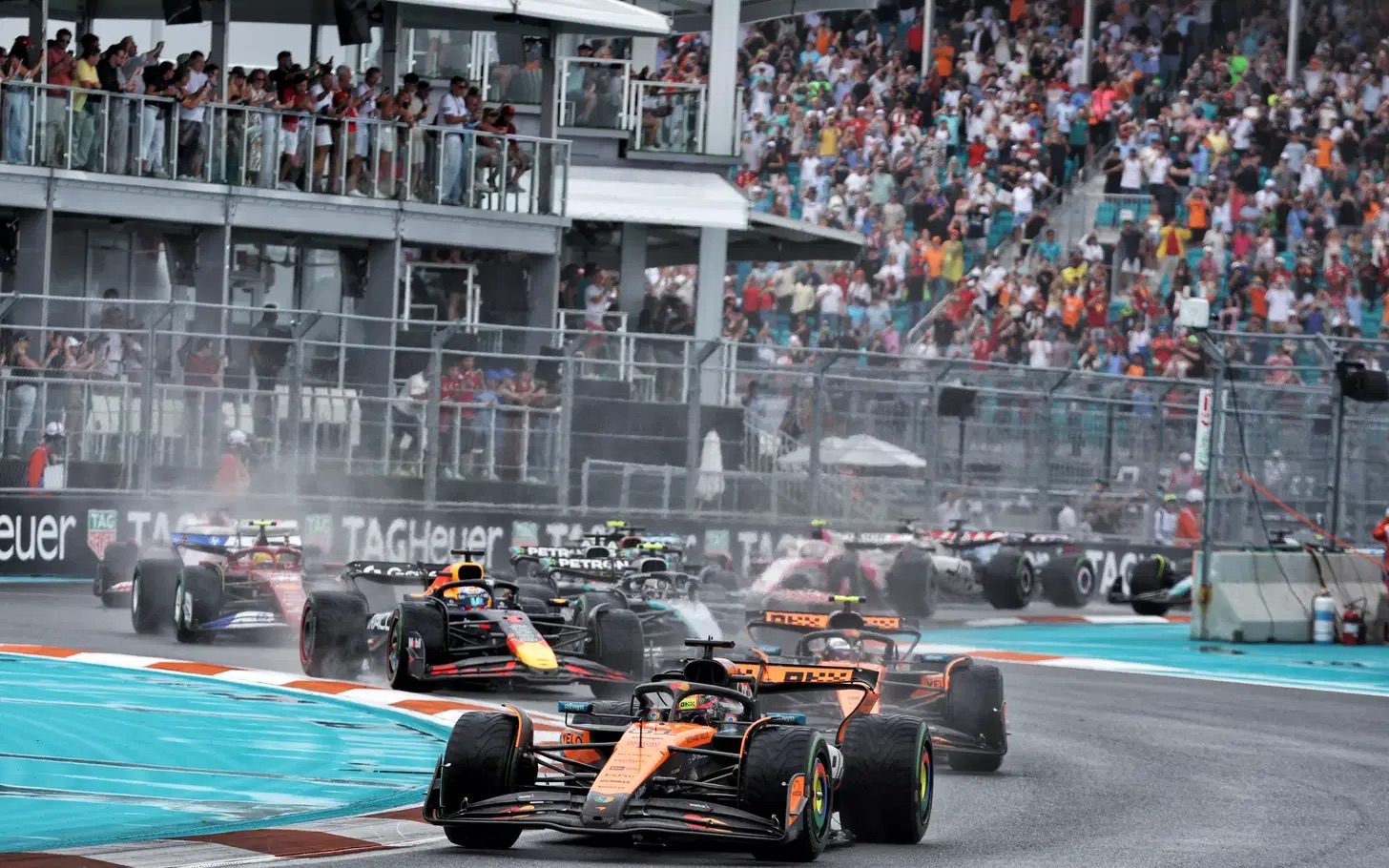
The FIA has officially revised the start time for the 2026 Miami Grand Prix due to an escalating threat of severe weather, including thunderstorms expected later in the day.
Originally scheduled to begin at 16:00 local time on Sunday, May 3, the 57-lap race will now start significantly earlier at 13:00 local time. This adjustment effectively moves the race forward by three hours, allowing organizers to maximize the chances of completing the event before the worst of the weather conditions arrive. For viewers in the United Kingdom, the new start time translates to 18:00 BST.
The decision was made after extensive discussions involving the FIA, Formula One management, and the event promoters in Miami. In a joint statement, the parties involved emphasized that the schedule change was necessary due to forecasts predicting increasingly intense rainstorms during the afternoon—conditions that would have coincided with the originally planned race start.
According to the statement, the primary goal behind bringing the race forward is to minimize disruption while ensuring that the Grand Prix can proceed under the safest and most manageable conditions possible. Safety remains the top priority—not only for the drivers on track, but also for team personnel, trackside staff, and the thousands of fans expected to attend the event.
Although Miami has previously demonstrated an ability to recover quickly from heavy rainfall—most notably during the 2025 Sprint race, where track conditions improved rapidly after a storm—the situation this year appears more challenging. Weather forecasts indicate a continuous deterioration throughout Sunday, making it unlikely that delays would be followed by improved conditions later in the day.
Even with the earlier start time, the race is still subject to strict safety protocols, particularly the widely enforced “lightning rule” used across major motorsport events in the United States, including NASCAR and IndyCar competitions. Under this rule, if lightning is detected within an eight-mile radius of the circuit, racing activities must be suspended immediately.
Once a lightning strike is recorded within that radius, a mandatory 30-minute delay is triggered. If another lightning strike occurs at any point during that 30-minute window—even if only a second remains—the countdown resets, requiring a full uninterrupted 30-minute period without lightning before the race can resume. This rule can significantly impact scheduling and potentially lead to extended delays if storm activity persists.
This is not the first time in recent years that Formula One has had to alter its schedule due to adverse weather. A notable example occurred during the 2024 São Paulo Grand Prix, where heavy rain forced organizers to make substantial changes, including moving qualifying to Sunday morning and advancing the race start by 90 minutes.
With unpredictable weather continuing to pose challenges for motorsport events worldwide, such proactive decisions highlight the sport’s increasing focus on safety and adaptability in the face of changing conditions.