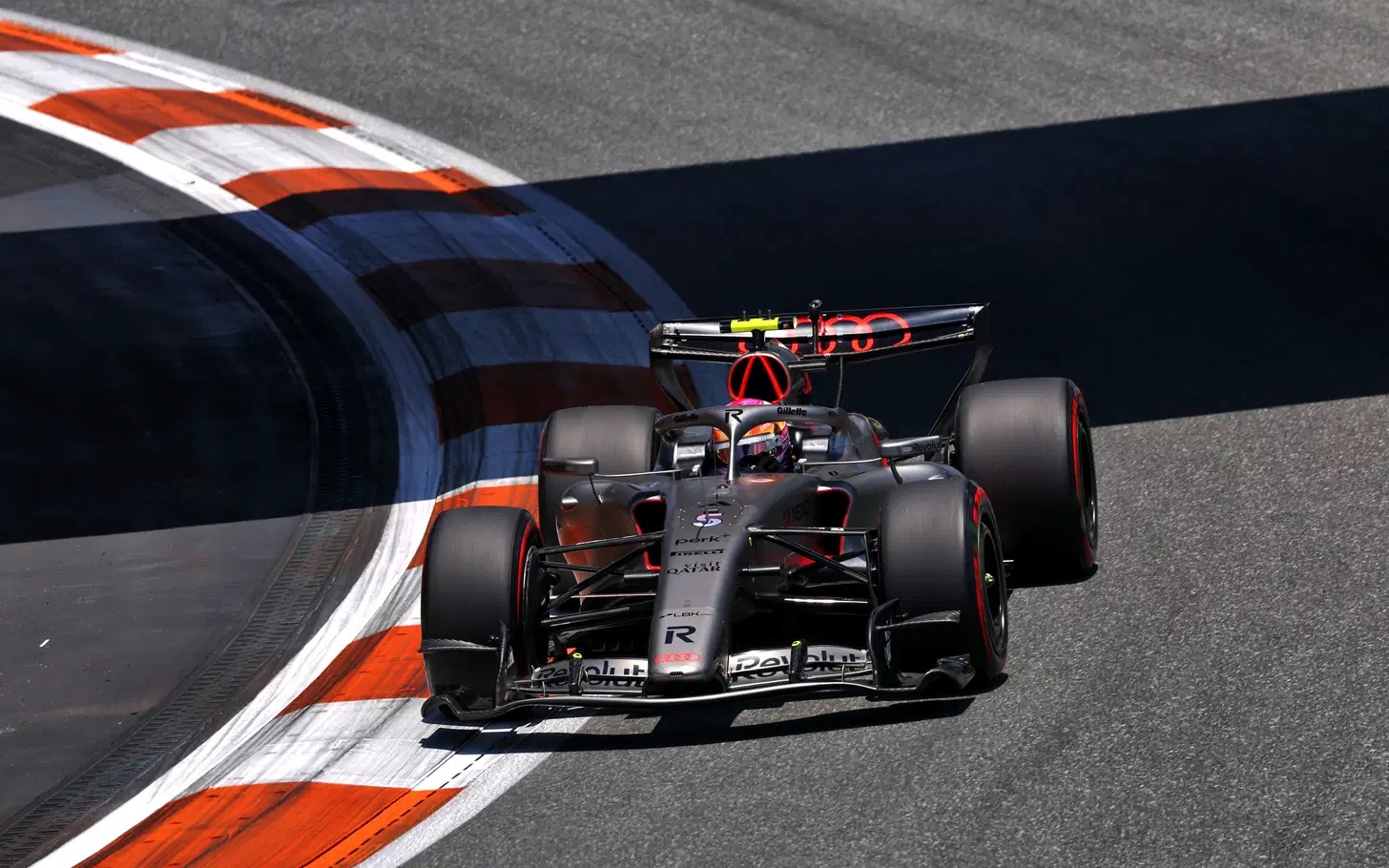
The 2026 Miami Grand Prix Sprint delivered plenty of excitement on track, but the drama did not end when the chequered flag fell. Instead, the FIA’s post-race investigations brought fresh controversy, as Audi rookie Gabriel Bortoleto was officially disqualified from the Sprint classification following a technical infringement. The decision significantly altered the final results and added yet another twist to an already eventful Saturday in Miami.
Bortoleto had crossed the line in 11th place after a solid and disciplined Sprint performance. Although he narrowly missed out on scoring points, it was still a respectable result for the young Brazilian, who continues to build experience in his rookie Formula 1 campaign. He had kept his car out of trouble, managed the tricky conditions well, and appeared to have delivered a clean race for Audi.
However, Formula 1 results are only truly final once all post-race checks are complete—and in this case, those checks uncovered a critical issue.
During routine technical inspections after the Sprint, FIA scrutineers identified that Bortoleto’s car had breached the regulations concerning engine intake air pressure. Under the technical rules, the pressure within the engine intake system must remain below a strict maximum threshold of 4.8 bar absolute at all times. This regulation exists to ensure fairness, prevent performance gains outside the rules, and maintain parity among teams operating under the sport’s tightly controlled power unit framework.
According to the FIA, measurements were taken using two FIA-approved sensors positioned in FIA-approved locations downstream of the charge air cooling system. These sensors recorded values that exceeded the permitted limit. Since the breach involved a clear technical non-compliance, the matter was referred to the stewards for review.
Audi representatives were summoned to explain the situation, but in cases of technical infringements, intent is largely irrelevant. Formula 1’s technical regulations are based on strict liability. If a car is found to be outside the prescribed limits, the standard penalty is usually automatic. After reviewing the evidence and hearing from the team, the stewards confirmed that Bortoleto’s car did not comply with the regulations.
The consequence was severe but entirely consistent with FIA precedent: disqualification from the Sprint classification.
That ruling removed Bortoleto entirely from the final Sprint results. His 11th-place finish was erased from the official record, and every driver who had finished behind him was promoted by one position. While the disqualification did not directly affect the points-paying top eight, it nevertheless reshaped the lower order and had important implications for team statistics, race records, and overall momentum heading into the rest of the weekend.
For Audi, the decision represented a significant setback. The team has shown flashes of promise throughout the 2026 season, and Bortoleto’s performance in Miami had been another encouraging sign. Even though he had not scored points, finishing just outside the top ten would have been a useful confidence boost for both driver and team. Instead, the result was wiped away due to a technical oversight.
It also compounded what has been a difficult and frustrating weekend for the German manufacturer. Audi had already faced challenges with competitiveness and reliability, and losing a completed Sprint result only added to their troubles. In a tightly packed midfield, every finishing position matters—not just for morale, but for data gathering, strategic evaluation, and the ongoing constructors’ championship battle.
For Bortoleto personally, the disqualification was particularly disappointing. The Brazilian has impressed many observers this season with his maturity, composure, and ability to adapt quickly to Formula 1. Miami had seemed another step forward in his development. While the infringement was not caused by driver error, he nonetheless loses the statistical reward for a race well executed.
The incident also serves as a reminder of Formula 1’s uncompromising technical standards. Unlike sporting infringements—such as track limits or unsafe releases—technical violations leave little room for interpretation. A car either complies or it does not. Once a breach is confirmed, the FIA has virtually no discretion in applying the penalty.
That strict approach is essential for preserving the integrity of the competition. Teams operate within an incredibly complex regulatory framework, and even the smallest deviation can potentially confer a performance advantage. By enforcing the rules consistently, the FIA ensures that all competitors are held to the same standard.
Miami has already been a weekend filled with steward interventions. Earlier, Alexander Albon lost his Sprint qualifying position after a delayed track-limits ruling, while Kimi Antonelli later received a five-second penalty for a separate Sprint infringement. Bortoleto’s disqualification added another chapter to a weekend in which the officials have been kept exceptionally busy.
The revised Sprint classification therefore reflected several post-session adjustments. McLaren still celebrated a dominant one-two finish, with Lando Norris leading home Oscar Piastri. Charles Leclerc retained third place for Ferrari, while the remainder of the top eight also stayed intact. Bortoleto’s exclusion only affected the order outside the points, but it nonetheless changed the official finishing record.
For Audi, attention now shifts to damage limitation. The team will undoubtedly conduct a thorough internal review to understand exactly how the pressure breach occurred and to ensure that it does not happen again. In modern Formula 1, such issues can stem from calibration errors, software anomalies, or component tolerances—but regardless of the cause, the responsibility rests entirely with the team.
As for Bortoleto, he will be eager to put the disappointment behind him quickly. Rookie drivers in Formula 1 must develop resilience as well as speed, and setbacks like this are an inevitable part of the learning process. Fortunately for him, the disqualification reflects a technical issue rather than any failing on his part behind the wheel.
Ultimately, the Miami Sprint will be remembered not only for McLaren’s impressive victory but also for the post-race drama that followed. Bortoleto’s disqualification underscores how, in Formula 1, success depends on far more than simply driving fast. Engineering precision, regulatory compliance, and operational excellence are every bit as important.
In a sport measured in thousandths of a second and governed by meticulous regulations, there is no margin for error. Audi and Bortoleto learned that lesson the hard way in Miami. What had looked like a respectable finish was ultimately nullified, turning a promising afternoon into a frustrating setback. And once again, Formula 1 proved that the story is rarely over when the race itself ends.