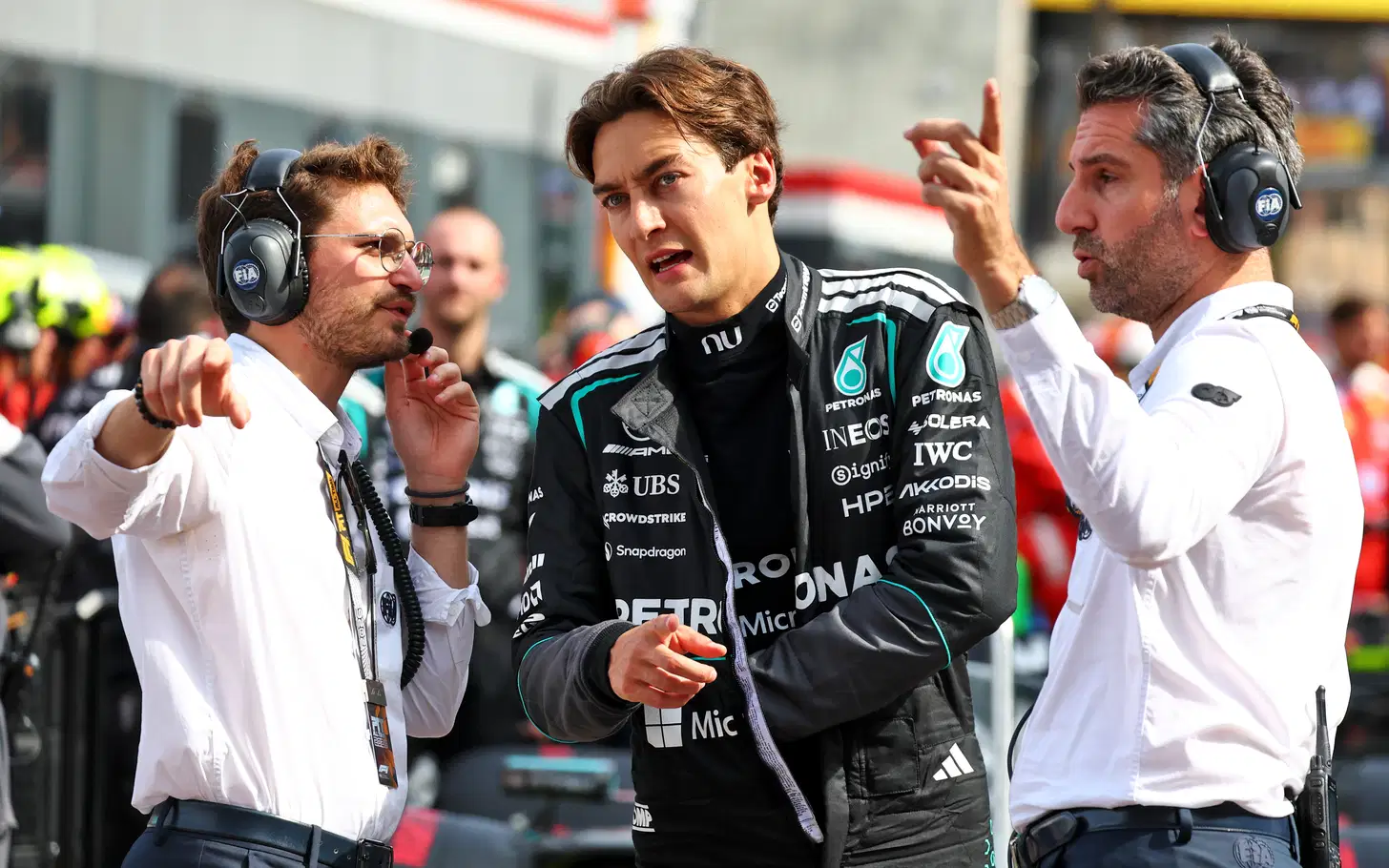
George Russell endured a frustrating and chaotic Monaco Grand Prix after a costly sequence of penalties destroyed what had initially looked like a promising race for the Mercedes driver. The British racer later pointed toward a technical issue within the team’s systems as the root cause of the punishment that ultimately ruined his afternoon in Monte Carlo.
The Monaco Grand Prix once again proved to be one of the most demanding and unforgiving races on the Formula 1 calendar. Drivers were pushed to the limit on the narrow streets of the principality, where even the smallest mistake can have major consequences. For Russell, what started as a difficult but manageable race quickly spiraled into a disaster after a pit-lane speeding infringement triggered a chain of events that severely damaged his race result and championship ambitions.
Russell had qualified further down the order than he would have hoped, beginning the race from sixth position. Ahead of him were several strong competitors including his Mercedes team-mate Kimi Antonelli, Ferrari stars, and Red Bull drivers. Monaco’s tight circuit made overtaking extremely difficult, meaning strategy and pit-stop execution were expected to play a huge role throughout the event.
In the early stages of the race, Russell found himself trapped behind Isack Hadjar’s Red Bull machine. Despite having solid pace, he struggled to find an opportunity to pass on track due to Monaco’s narrow layout. Mercedes therefore attempted to gain an advantage through strategy, opting to bring Russell into the pits earlier than some of his rivals in an attempt to undercut Hadjar and gain track position once the pit cycle was complete.
Initially, the plan appeared to work. Russell managed to move ahead after the stops, giving Mercedes hope that he could climb further into the points-paying positions. However, the situation dramatically changed when officials determined that Russell had exceeded the pit-lane speed limit during his stop. Pit-lane speeding is treated seriously in Formula 1 because of the safety risks it creates for mechanics and officials working in the crowded lane area.
The FIA quickly handed Russell a five-second time penalty for the infringement. Unfortunately for the Mercedes driver, the punishment did not end there. During the confusion of the race and a series of incidents elsewhere on the circuit, Russell failed to serve the initial penalty correctly. That mistake led stewards to escalate the punishment significantly, eventually issuing him with a drive-through penalty that completely destroyed any chance of recovering a strong result.
After the race, Russell explained that the original speeding violation may have been caused by a software-related problem. According to the Mercedes driver, there appeared to be an issue affecting the system that controls or monitors pit-lane speed limitation. While he accepted responsibility as the driver, he strongly suggested that a technical malfunction contributed to the incident rather than pure driver error alone.
Russell expressed frustration about the severity of the punishment, especially given the complicated nature of the race. Monaco featured multiple investigations, penalties, safety car periods, and even a red flag interruption, creating confusion for several teams and drivers throughout the afternoon. A number of competitors were penalized for different offences during the race, including Lewis Hamilton and Pierre Gasly, highlighting how difficult conditions had become.
The drive-through penalty proved especially damaging because of Monaco’s layout. Losing time in Monaco is far more costly than at many other circuits due to the difficulty of overtaking. Once Russell served the harsher punishment later in the race, he dropped well outside the points-paying positions and could not recover before the chequered flag.
The result marked another painful setback in Russell’s 2026 title campaign. Entering Monaco, he was already under pressure after recent disappointments, including a retirement in Canada that had allowed his rivals to extend their championship advantage. Monaco was supposed to be an opportunity to regain momentum, but instead it became another frustrating chapter in an increasingly difficult championship battle.
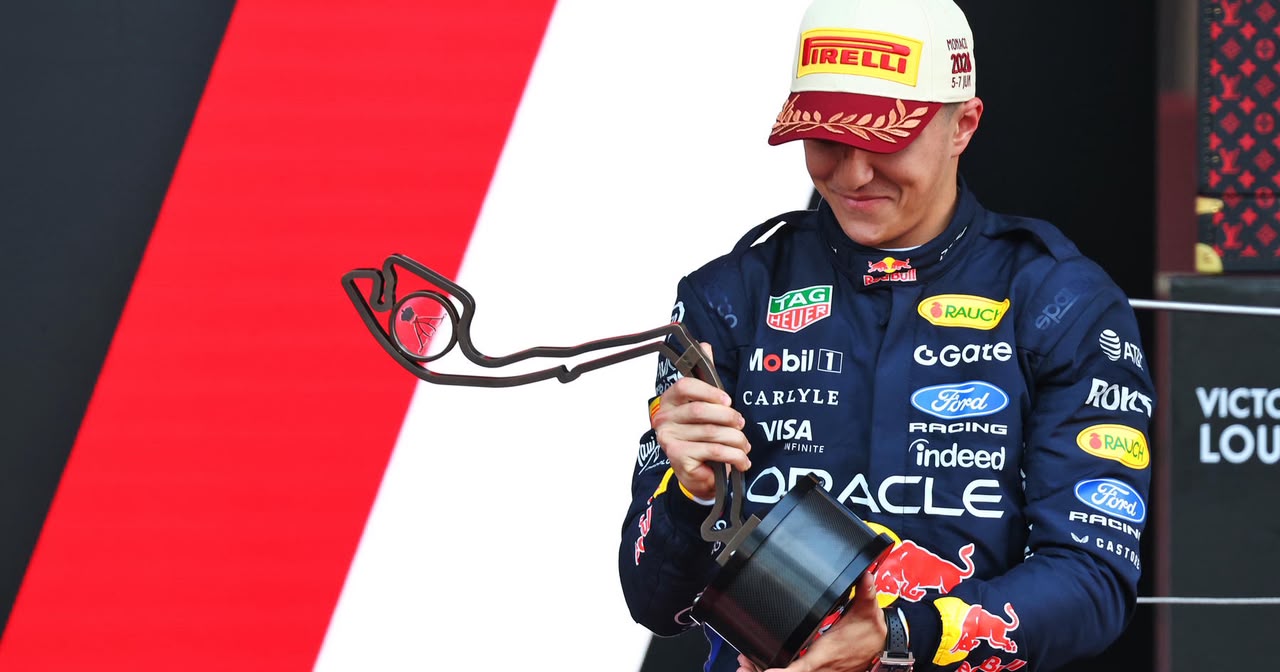
Meanwhile, Mercedes team-mate Kimi Antonelli enjoyed a far more successful weekend. The young Italian sensation claimed pole position and eventually secured victory in Monaco, strengthening his position at the top of the drivers’ standings. Antonelli’s success only intensified the contrast between the two Mercedes drivers on a day when Russell badly needed points.
The Monaco Grand Prix itself was filled with drama from start to finish. Several drivers faced investigations or penalties for pit-lane offences, safety car violations, and incidents during the numerous interruptions. The demanding nature of the circuit once again showed why Monaco remains one of Formula 1’s most unpredictable and punishing races despite its historic prestige.
Russell’s frustration was understandable because he had shown strong determination throughout the season despite multiple setbacks. Earlier in the year, he had spoken confidently about his ability to challenge for the world championship, insisting that he believed he could compete with anyone on the grid. However, reliability issues, strategic misfortune, and penalties have repeatedly interrupted his campaign.
The Monaco disappointment also reopened discussions about the strictness of FIA penalties and how technical problems are handled in Formula 1. Drivers rely heavily on electronic systems and software during races, particularly in the pit lane where speed limiters are essential for compliance with regulations. If Russell’s explanation regarding a software issue proves accurate, questions may emerge regarding how responsibility should be divided between the driver and the team’s technical systems.
Nevertheless, Formula 1 regulations remain clear that drivers are ultimately responsible for staying within the speed limit, regardless of the cause. The FIA therefore showed little flexibility once the infringement was detected. Russell’s failure to correctly serve the original time penalty then compounded the situation further, leading to the more severe drive-through punishment.
Mercedes will now likely conduct a detailed internal investigation to fully understand what happened. The team has already experienced pit-lane issues during the Monaco weekend, including a separate fine earlier in practice when Russell marginally exceeded the speed limit by just 0.3 km/h. Although that earlier incident resulted only in a financial penalty for the team, it may now appear significant given the race-day controversy that followed.
For Russell personally, the focus will quickly shift toward recovery in the next round of the championship. With a long season still ahead, the British driver knows there remains time to fight back. However, the growing gap to Antonelli and other title contenders means that mistakes and lost points are becoming increasingly costly.
Monaco once again demonstrated how quickly fortunes can change in Formula 1. A race that briefly seemed to offer Russell a chance to climb forward instead became one of his most painful weekends of the season. Between the initial speeding offence, the confusion over serving the penalty, and the eventual drive-through punishment, the Mercedes driver left Monte Carlo frustrated and disappointed.
As the championship battle continues, Russell and Mercedes will hope that the technical issues and strategic errors that ruined their Monaco Grand Prix can be corrected before the next race weekend. Otherwise, their hopes of mounting a serious title challenge may continue slipping away.