
Kimi Antonelli Breaks Silence After Dramatic Dutch Grand Prix as Mercedes Faces Growing McLaren Threat
Kimi Antonelli has opened up about his dramatic experience at the 2026 Dutch Grand Prix, admitting that although he was disappointed to lose the lead and finish second, the result ultimately represented the best Mercedes could achieve at Zandvoort.
The young Italian entered the weekend as the Formula 1 championship leader and had high expectations after a strong opening part of the season. However, the Dutch Grand Prix delivered a complicated weekend for Antonelli, with mistakes during qualifying, a difficult battle for pace and a late-race challenge from Lando Norris combining to prevent the Mercedes driver from securing another victory.
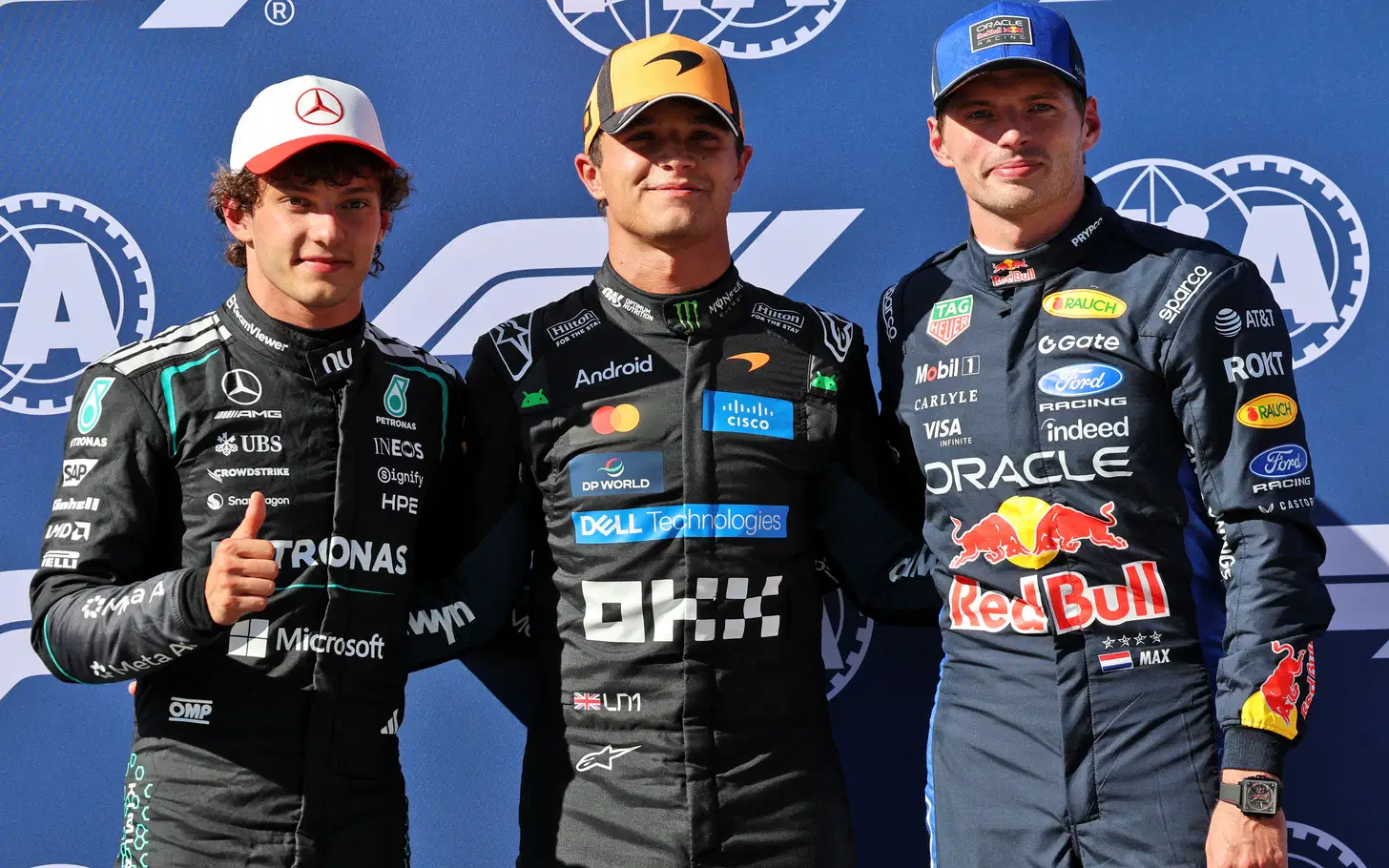
Despite those setbacks, Antonelli still walked away from the final race at Zandvoort with a valuable second-place finish and another podium. George Russell completed the Mercedes double podium in third, while McLaren’s Norris claimed another important victory. The result also allowed Antonelli to maintain a significant advantage at the top of the Drivers’ Championship.
Antonelli admits disappointment after losing the lead
Antonelli’s disappointment was understandable because he spent a large portion of the race at the front.
The Mercedes driver started the Grand Prix from third on the grid, behind Norris and his teammate Russell. However, the dramatic opening stages immediately changed the complexion of the race.
Max Verstappen crashed at his home Grand Prix on the opening lap, bringing out the red flag. Following the restart, Antonelli produced an excellent launch and made an aggressive move into Turn 1, allowing him to jump ahead of Norris and take control of the race.
For much of the race, it appeared that Antonelli could potentially challenge for another victory. He managed to maintain his position at the front while Norris remained within striking distance.
However, as the race entered its final stages, the balance began to shift.
Norris found more pace from his McLaren and eventually managed to regain the lead. Once ahead, the British driver established enough of an advantage to secure his second consecutive Grand Prix victory.
For Antonelli, watching the victory slip away after leading for so many laps was understandably frustrating.
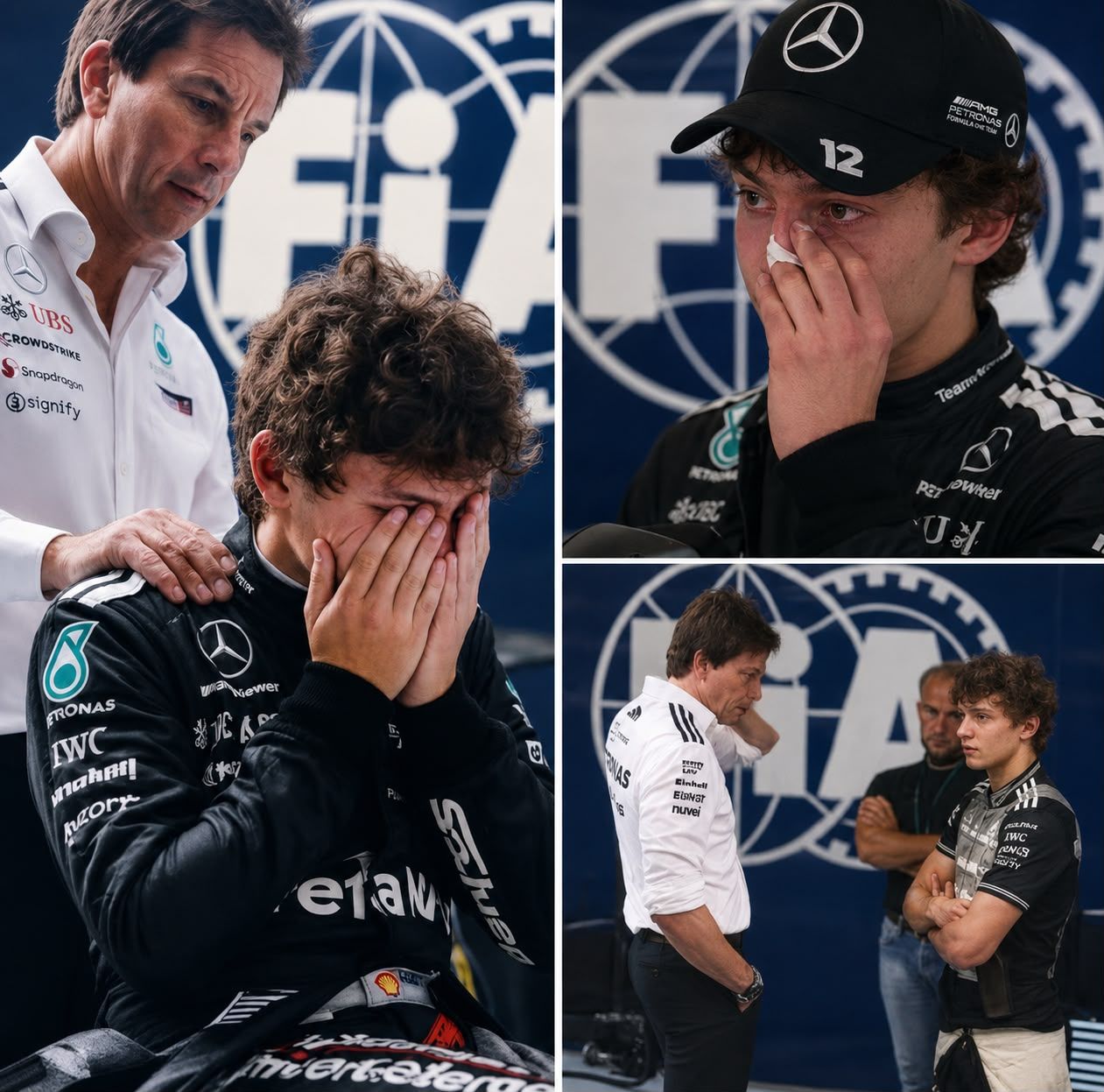
The 19-year-old admitted after the race that he was disappointed not to convert his time at the front into a win. Nevertheless, he also recognised that Mercedes did not have enough performance to hold Norris back until the chequered flag.
Second place was ultimately the maximum
Although second place may initially have felt like a disappointing result for Antonelli, his assessment after the race was remarkably mature.
Rather than focusing solely on the lost victory, the Mercedes driver acknowledged that his team had extracted almost everything possible from the car.
Antonelli’s comments reflected the reality of the race. Mercedes had enough pace to challenge McLaren for portions of the event, but Norris appeared stronger when it mattered most.
The Italian therefore accepted that second place was effectively the maximum available to Mercedes.
That attitude could become increasingly important as the championship enters its decisive phase. Antonelli cannot afford to allow individual disappointments to affect his wider campaign, especially with McLaren appearing to have made significant progress.
The Dutch Grand Prix demonstrated that Mercedes remains highly competitive, but it also highlighted the fact that its advantage over its rivals can no longer be taken for granted.
Mercedes secures a double podium
One of the biggest positives from the weekend was Mercedes’ double podium.
Antonelli finished second while Russell crossed the line in third, giving the German-based manufacturer an important haul of championship points.
Mercedes’ result was particularly valuable because the team was under pressure from McLaren throughout the weekend. Although Norris took the victory, Mercedes placed both of its cars immediately behind him.
The result also demonstrated that the Silver Arrows remain a serious force in the 2026 championship.
Mercedes currently leads the Constructors’ Championship, and the team’s ability to place both cars on the podium could prove crucial in the battle against McLaren and Ferrari.
For Antonelli personally, the second-place finish was even more important because it allowed him to protect his championship lead.
Team orders create another dramatic moment
The closing stages of the Dutch Grand Prix produced another important moment involving Antonelli and Russell.
As the race approached its conclusion, Mercedes instructed Russell to allow Antonelli through.
The decision was influenced by tyre strategy. Antonelli was running on fresher soft tyres after Mercedes benefited from a Virtual Safety Car, while Russell was trying to defend his position and manage the threat from the Ferraris behind.
Mercedes ultimately prioritised Antonelli’s championship position, and Russell followed the team’s instructions.
That decision ensured Antonelli finished second while Russell remained third.
Although team orders can sometimes create controversy, Mercedes’ decision was understandable given the championship situation. Every point is increasingly important as the season progresses, and Antonelli remains the team’s strongest contender for the Drivers’ Championship.
The double podium therefore represented a successful team outcome despite Norris taking the victory.
Antonelli admits Mercedes may no longer have the fastest car
Perhaps the most significant part of Antonelli’s post-race comments concerned Mercedes’ overall competitiveness.
The young driver acknowledged that Mercedes may no longer possess the fastest car in Formula 1.
That admission is significant because the team enjoyed a strong run earlier in the season, with Antonelli establishing himself as the championship leader and Mercedes frequently appearing capable of fighting at the front.
However, McLaren’s recent development has changed the competitive picture.
Norris’ victory at Zandvoort was his second consecutive win, and his pace during the latter stages of the race showed that McLaren’s recent upgrades have significantly improved its performance.
Antonelli’s comments suggest that Mercedes understands the scale of the challenge.
The team cannot simply rely on its existing performance level. McLaren is improving, Ferrari remains capable of producing strong results and other teams are also developing their cars.
The championship leader’s warning could therefore serve as an important message to Mercedes’ engineers as the team prepares for the remaining races.
The championship remains in Antonelli’s hands
Despite losing the Dutch Grand Prix victory, Antonelli remains in a strong position in the Drivers’ Championship.
The result at Zandvoort gave him another major points haul, and his advantage over his closest rivals remains substantial. Reports following the race put his championship lead at 59 points.
That cushion gives the Italian some breathing room, but it does not mean the championship battle is over.
Norris’ recent resurgence is particularly important. The McLaren driver has now won consecutive races and is demonstrating that he can consistently challenge Mercedes.
The situation means Antonelli will need to remain focused during every remaining race.
A few poor results could quickly reduce his advantage, particularly if Norris continues collecting maximum points.
Monza could present another challenge
Antonelli’s next major challenge will come at the Italian Grand Prix at Monza.
The race is particularly significant because it is effectively his home Grand Prix, given his Italian nationality and the enormous support he receives from fans in the country.
However, the event could begin with a major disadvantage.
According to the Sports Man report, Antonelli is expected to receive a grid penalty of at least 10 positions because of an engine change. If that penalty is confirmed, it could make his task considerably more difficult at Monza.
Starting further down the grid would force Antonelli to recover positions during the race, making qualifying and race strategy even more important.
It would also provide his championship rivals with an opportunity to reduce his points advantage.
A valuable lesson from Zandvoort
Ultimately, the Dutch Grand Prix may prove to be an important learning experience for Antonelli.
The weekend exposed some weaknesses, but it also demonstrated his ability to recover from setbacks and still produce a strong result.
Earlier in the weekend, Antonelli had already described the Zandvoort experience as a “wake-up call” after making mistakes in qualifying for both the sprint and the main race. He damaged his car after going off track during sprint qualifying and later admitted that he had made a costly error during Q3.
Despite those problems, he recovered to finish fourth in the sprint and second in the main Grand Prix.
That ability to recover could be one of the most important qualities in his championship campaign.
Formula 1 is a sport in which momentum can change rapidly. A driver who reacts badly to setbacks can quickly lose ground, while one who learns from mistakes can emerge stronger.
Antonelli appears determined to take the latter approach.
Mercedes faces a crucial period
The Dutch Grand Prix has also provided Mercedes with a clear indication of what lies ahead.
The team remains at the top of the Constructors’ Championship, while Antonelli leads the Drivers’ standings. However, McLaren’s recent improvement means Mercedes can no longer assume that it will have the strongest car at every circuit.
Norris’ victory has added another layer of pressure to the title fight.
Mercedes will now need to maximise development while carefully managing its resources. With cost-cap restrictions limiting how quickly teams can introduce major upgrades, every technical decision becomes increasingly important.
Antonelli’s comments therefore go beyond his own disappointment. They reflect a wider understanding within Mercedes that the competitive landscape has changed.
Antonelli’s message is clear
Kimi Antonelli may have left Zandvoort without the victory he wanted, but his championship campaign remains firmly on track.
The Italian led a significant portion of the Dutch Grand Prix, fought hard against Norris and ultimately accepted second place as the maximum Mercedes could realistically achieve.
He also benefited from strong teamwork, with Russell completing the podium and following team instructions when Antonelli needed to move ahead.
More importantly, Antonelli has recognised that McLaren is becoming an increasingly serious threat.
The Dutch Grand Prix therefore delivered both encouragement and warning signs for the Mercedes driver. His championship lead remains healthy, but the competition is getting stronger.
With Monza approaching and a possible grid penalty waiting for him, Antonelli could face one of his toughest weekends of the season.
For now, however, the young Italian remains firmly in control of his championship destiny. His response to the disappointment at Zandvoort suggests that he understands the bigger picture: winning the world championship is not about winning every race, but about consistently collecting points, learning from mistakes and remaining composed when rivals are at their strongest.
The Dutch Grand Prix may have ended with Norris celebrating another victory, but Antonelli’s second-place finish ensured that the championship leader still walked away with plenty to celebrate — and an important lesson about the growing threat from McLaren.