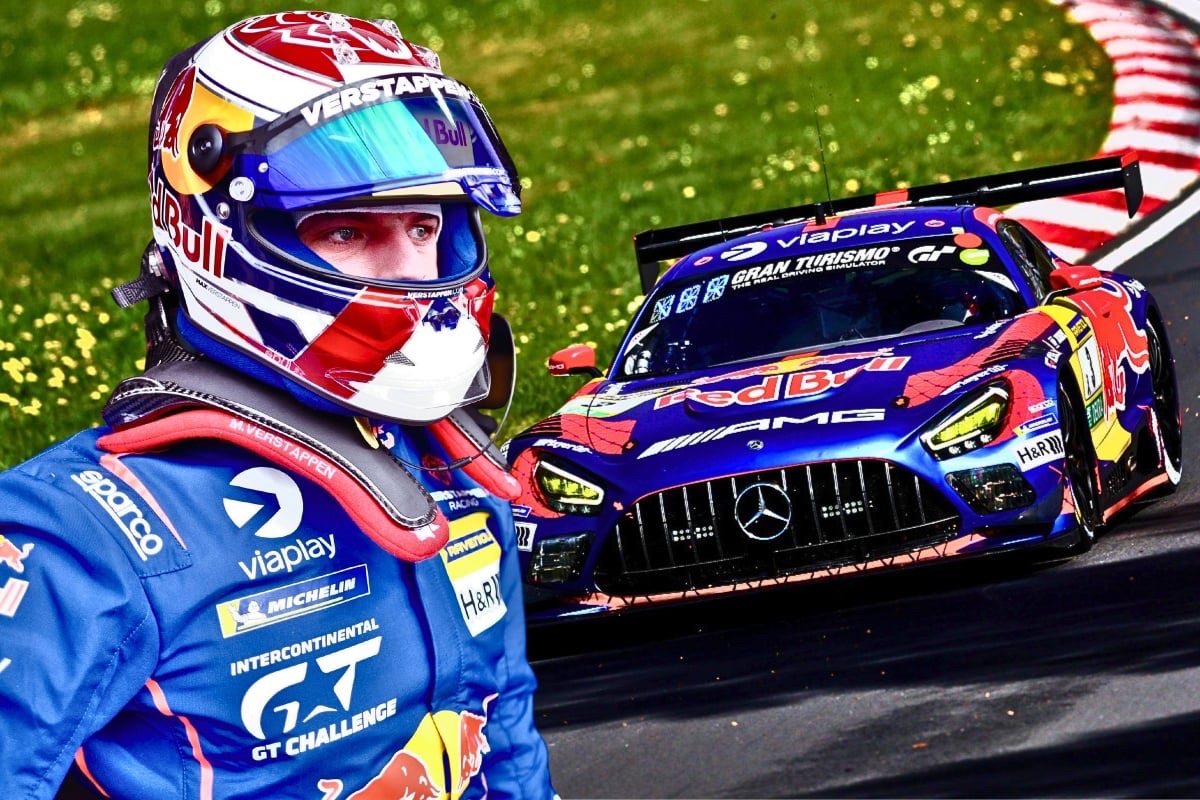
Max Verstappen was notably absent from the decisive Top Qualifying session at the Nürburgring 24h Qualifiers—but not by accident. The four-time Formula 1 world champion has revealed that the call came from within his own camp, with his team opting to keep him out of the high-stakes shootout on the legendary Nürburgring Nordschleife.
Verstappen’s weekend at the Nürburgring was anything but quiet. Juggling commitments across both the NLS4 and NLS5 rounds of the Nürburgring Endurance Series, he was heavily involved in practice sessions, qualifying runs, and race preparations. However, the schedule was disrupted when the NLS4 race was cancelled following a tragic حادث that claimed the life of Finnish driver Juha Miettinen on Saturday. The paddock was left shaken, but racing resumed on Sunday with the NLS5 event going ahead as planned.
For the NLS5 race, Verstappen started from fifth position on the grid. That spot, however, was not earned by him directly in Top Qualifying. Instead, it was his teammate Lucas Auer who took on qualifying duties and secured the strong starting place for their shared entry. The decision raised eyebrows at first, especially given Verstappen’s reputation for delivering under pressure, but the reasoning soon became clear.
Speaking after the race, Verstappen explained that his team had deliberately prevented him from taking part in the Top Qualifying session. According to the Dutch star, the move was strategic rather than restrictive. “They wouldn’t let me get in the car, and I was fine with that,” he said, indicating there was no friction over the call.
The logic behind the decision appears to be rooted in race strategy and technical regulations. In endurance racing, particularly at the Nürburgring, teams must carefully consider the implications of securing pole position. While starting at the front might seem advantageous, it can sometimes trigger Balance of Performance (BoP) adjustments from race organizers. These measures are designed to level the playing field but can result in added weight or reduced power for leading cars—potentially compromising their competitiveness over a 24-hour race.
By holding Verstappen back from Top Qualifying, the team may have been aiming to avoid drawing unnecessary attention to their car’s pace, thereby reducing the risk of unfavorable BoP changes ahead of the main event. Verstappen himself hinted at this, noting that starting from pole is not always ideal in endurance racing conditions.
Despite missing out on the qualifying spotlight, Verstappen still played a central role in the NLS5 race. Once the action got underway, he quickly found himself in contention at the front, engaging in a fierce battle with Christopher Haase. Their rivalry had already been brewing since earlier rounds, including a tense encounter during the NLS2 race back in March, and the latest duel added another chapter to their growing on-track competition.
However, Verstappen’s charge toward victory was ultimately derailed. Roughly forty minutes into his second stint, he was forced to bring the car into the pits with damage, ending any realistic hopes of a podium finish. The setback proved costly, and the No. 3 Mercedes-AMG GT3 entry slipped down the order, eventually finishing a disappointing 39th.
While the result was far from ideal, the weekend still offered a bright moment for the team. Rising talent Thierry Vermeulen—son of Verstappen’s manager Raymond Vermeulen—delivered an impressive performance by securing pole position for the NLS5 race. His achievement was a highlight in an otherwise challenging weekend and underscored the depth of talent within the team’s ranks.
Verstappen was quick to praise the young driver’s effort, expressing his enjoyment at watching the session unfold from the sidelines. He described it as “really cool” to see the team execute their plan successfully while also giving Vermeulen a chance to shine.
In the end, Verstappen’s absence from Top Qualifying was less about restriction and more about calculated decision-making. In endurance racing, where success is determined over hours rather than minutes, strategy often outweighs outright speed. And while the final result didn’t go in their favor this time, the team’s approach highlights the complexity and nuance of competing at one of the world’s most demanding circuits.