Fresh concerns have emerged ahead of the 2026 British Grand Prix at Silverstone Circuit, with growing calls for the FIA to act swiftly to prevent one of Formula 1’s most iconic races from losing its edge.
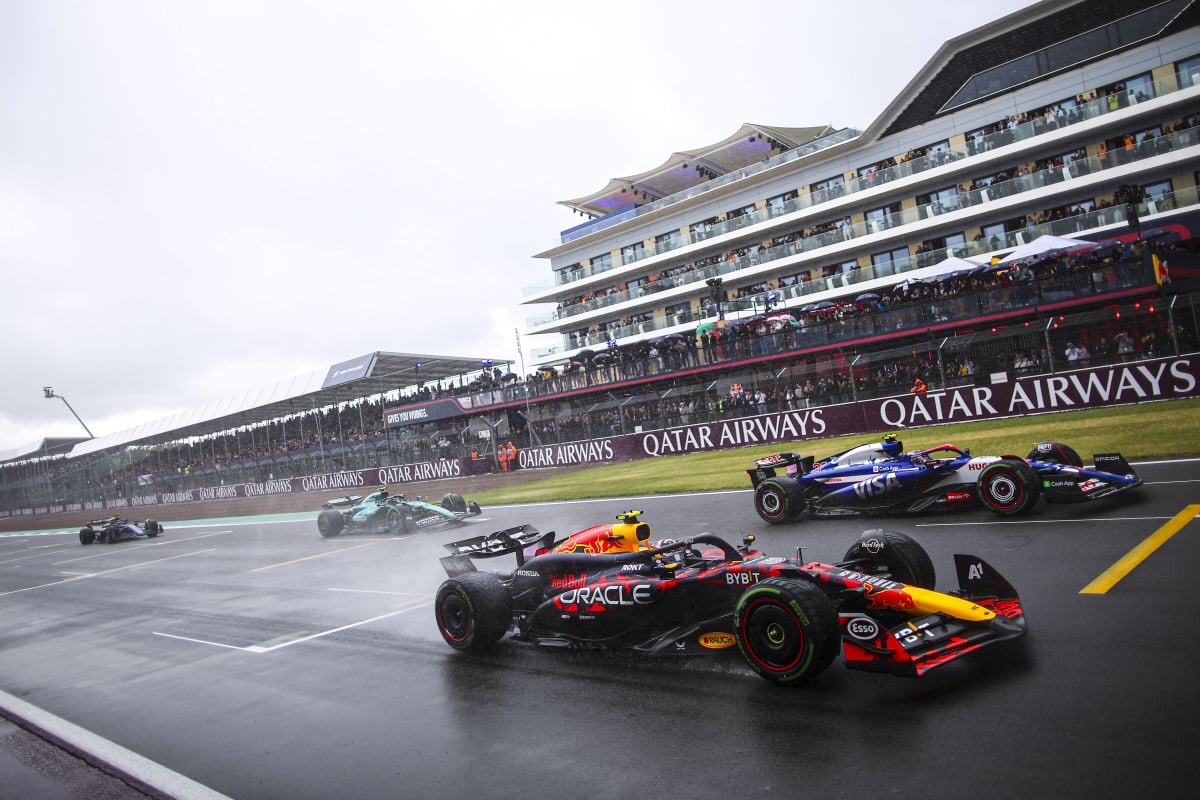
For decades, Silverstone has stood as a symbol of high-speed excellence in Formula 1. Legendary corners such as Copse, Stowe, and the breathtaking Maggotts-Becketts-Chapel sequence have defined the circuit’s identity, demanding precision, bravery, and total commitment from drivers. These sections, often taken at full throttle, have delivered some of the sport’s most memorable moments. Now, however, that legacy is under serious threat.
The root of the issue lies in the sweeping regulation changes introduced for the 2026 season. With a much heavier reliance on hybrid technology, the new power units place far greater emphasis on electrical energy. Battery power has effectively tripled, marking a significant step forward in efficiency—but not without consequences for on-track action.
Drivers are now forced into a delicate balancing act, carefully managing how and when they deploy their energy throughout a lap. Rather than attacking every corner flat out, they must conserve power using techniques like lift-and-coast and “superclipping,” where energy deployment is strategically reduced. While these methods are technically effective, they risk stripping away the raw intensity that has long defined racing at Silverstone.
The concern is clear: corners that once demanded fearless, flat-out driving may now require restraint. Instead of pushing to the absolute limit through Maggotts and Becketts, drivers could find themselves lifting off the throttle—transforming one of Formula 1’s most electrifying sequences into something far less dramatic.
This growing problem was reportedly a key topic during a recent high-level meeting involving team principals, Formula 1 executives, and the FIA. Energy management challenges dominated the discussions, highlighting the scale of the issue as teams grapple with the demands of the new regulations.
Adding his voice to the debate, Sky Sports F1 commentator David Croft has issued a stark warning. Speaking on the Sky Sports F1 Show, Croft stressed that Silverstone could become the tipping point if changes are not made in time.
He raised concerns over whether the current battery systems allow drivers to race—and qualify—at full intensity. Without sufficient energy capacity, even the fastest sections of the track could lose their defining characteristics. For a circuit built on speed and commitment, that would represent a significant blow.
Croft also floated a controversial but potentially effective solution. He suggested that Formula 1 could reduce its reliance on electrical power and shift more focus back to the internal combustion engine. While this might result in slower lap times—potentially by a couple of seconds—it could restore the ability for drivers to push flat out, delivering the kind of racing fans crave.
The idea taps into a broader tension within the sport. Formula 1 is striving to evolve, embracing sustainability and cutting-edge technology. Yet at the same time, it must preserve the thrill and spectacle that have made it globally beloved. Finding that balance is proving increasingly difficult.
With the British Grand Prix set for July 3–5, and lights out at 3:00 PM on race day, the clock is ticking. Silverstone is more than just another race—it is a cornerstone of Formula 1 history. Any dilution of its spectacle would not go unnoticed.
As anticipation builds, all eyes are now on the FIA and whether decisive action will be taken. The fear is not just about slower lap times—it’s about losing the very essence of what makes Silverstone special. If no solution is found, the 2026 race could mark a turning point, where one of Formula 1’s greatest stages is forced to trade its legendary intensity for energy efficiency.