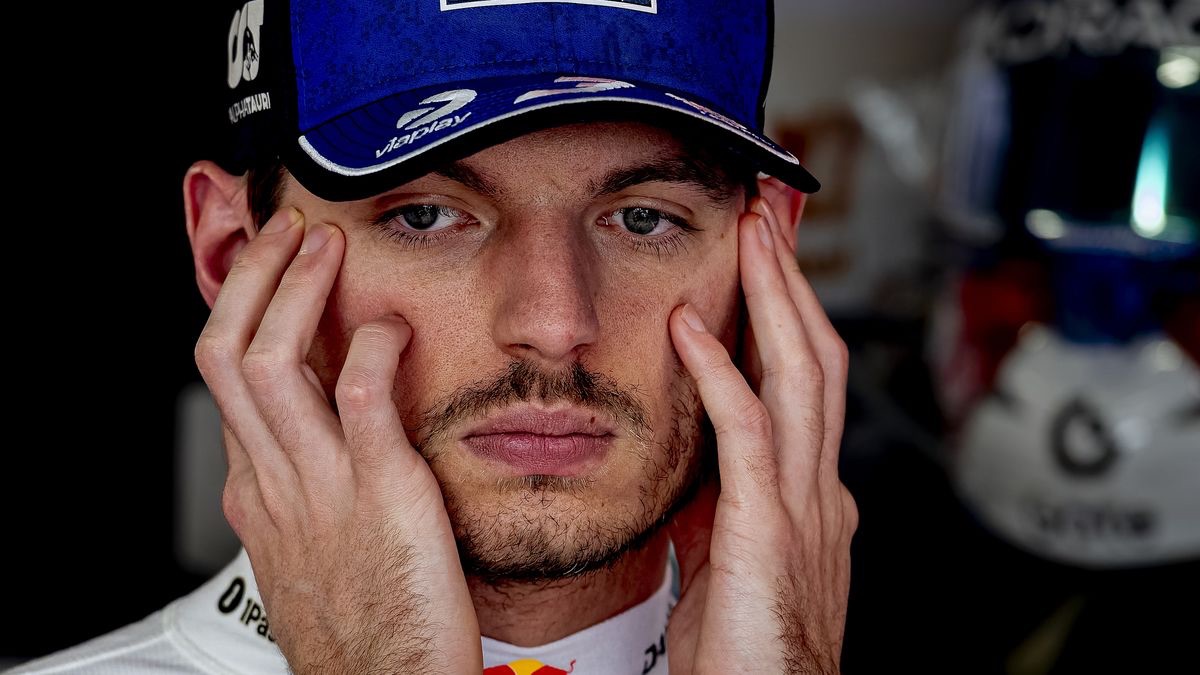
Max Verstappen has been dealt another setback in what is already shaping up to be a difficult 2026 Formula 1 season, after FIA moved to outlaw a controversial engine-related tactic that his Red Bull Racing outfit had been using during qualifying sessions.
The issue came to light following the Japanese Grand Prix, where the FIA identified that multiple teams — including Red Bull and Mercedes-AMG Petronas — had been exploiting a grey area in the regulations surrounding energy deployment from the hybrid power unit.
At the center of the controversy is the MGU-K, a key component of the hybrid system that recovers and deploys electrical energy to boost performance. According to existing rules, electrical power deployment along straights must gradually taper off rather than remain at maximum output throughout. However, another regulation allows teams to shut down the MGU-K in the event of a technical fault, primarily as a safeguard against damage.
Teams cleverly combined these two rules to their advantage. Instead of gradually reducing electrical deployment, they allowed the MGU-K to run at full power all the way from the exit of the final corner to the finish line — maximizing speed at a crucial point in a qualifying lap. Immediately afterward, they would deactivate the system, presenting it as a precautionary shutdown due to a supposed issue.
While such a maneuver would be highly impractical during a race — because regulations impose a mandatory 60-second delay before the system can be restarted — it proved highly effective in qualifying conditions. Drivers could simply slow down after crossing the line and return to the pits without significant consequence.
This unusual pattern did not go unnoticed. Both Verstappen and championship leader Kimi Antonelli were observed driving unusually slowly after their qualifying laps in Suzuka, raising suspicions. Meanwhile, Alex Albon experienced a genuine issue during practice in his Williams Racing car after attempting a similar approach, briefly stopping on track.
The tactic was first suspected during the season-opening round in Melbourne, where the long straight from the final corner to the finish line made it particularly advantageous. It was less effective at circuits like China, where that section is shorter, but teams still found ways to deploy it at Suzuka due to the slow final chicane leading onto the straight.
Concerns over both fairness and safety reportedly prompted Ferrari to raise the matter with the FIA. In response, the governing body issued a technical directive clarifying that shutting down the MGU-K in this manner would only be acceptable in genuine emergency situations, effectively banning its strategic use in qualifying.
This marks the second time this season that the FIA has intervened to close off a loophole exploited by leading teams. Earlier in the year, both Red Bull and Mercedes had discovered a way to manipulate engine performance through the interpretation of compression ratio regulations.
The rules stipulated that the compression ratio — the measure of how much the air-fuel mixture is compressed before ignition — must not exceed 16:1, with measurements taken at ambient temperature. However, engineers found a way to design engines that operated within this limit under test conditions but exceeded it significantly — up to 18:1 — when the engine reached normal operating temperatures. This effectively delivered a power boost estimated at around 15 horsepower.
The FIA responded by amending the regulation, stating that compression ratio measurements must now be taken at 130°C, which reflects real operating conditions. This rule change is set to be enforced from the Monaco Grand Prix in June.
For Verstappen, these regulatory clampdowns come at a particularly challenging time. The reigning champion has endured a frustrating start to the campaign and currently sits ninth in the standings with just 12 points — a significant 60-point gap behind early leader Antonelli. His best finish so far has been a modest sixth place at the Australian Grand Prix.
With momentum slipping and rivals gaining ground, the latest FIA intervention removes yet another performance advantage from Red Bull’s arsenal. As the championship battle intensifies, the team will need to adapt quickly to the tightened regulations if they hope to get Verstappen’s title challenge back on track.
Attention now turns to the next round of the season, the Miami Grand Prix, scheduled for early May. It presents an opportunity for Verstappen and Red Bull to regroup — but with the FIA closely monitoring technical innovations, the margin for creative interpretation of the rules is becoming increasingly narrow.