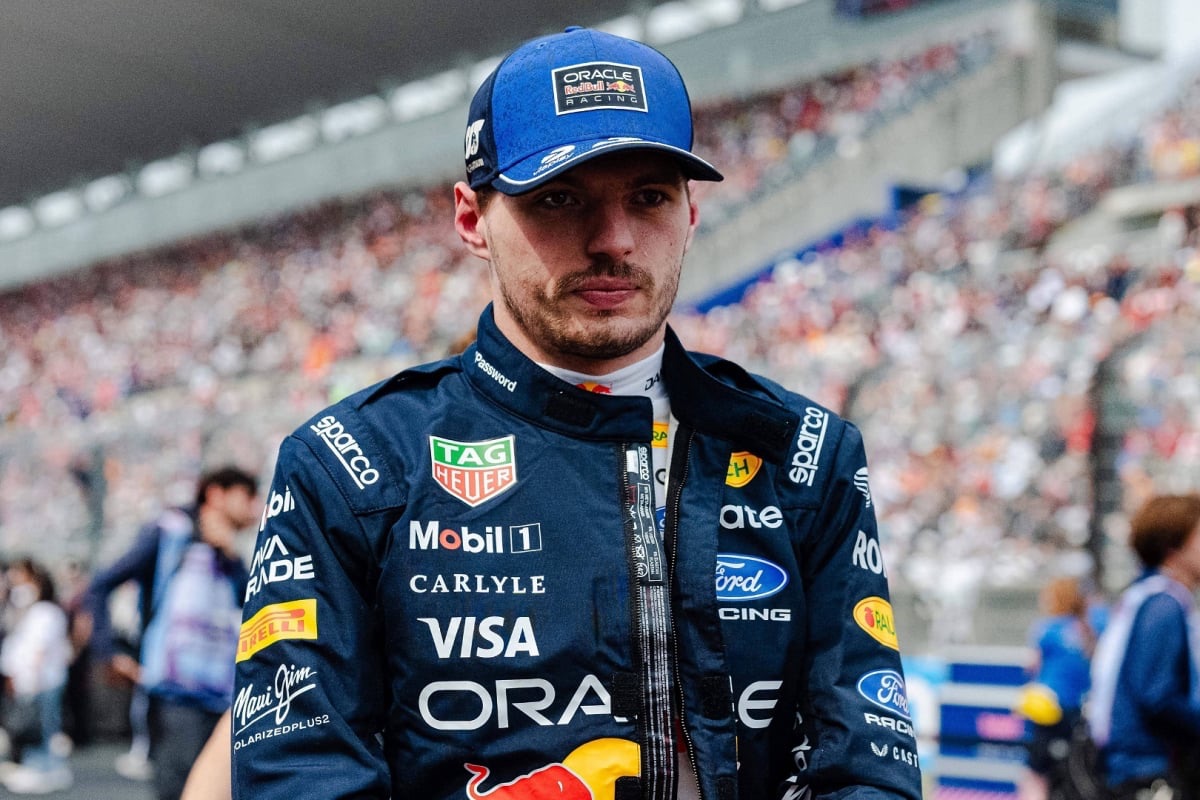
Speculation is continuing to build around the future of Max Verstappen and whether the reigning champion could part ways with Red Bull Racing before the 2027 season. Despite being tied to a contract that runs until 2028, recent performance struggles and dissatisfaction with Formula 1’s new regulations have raised serious questions about his long-term commitment to the team.
Over the past two years, Verstappen has repeatedly been linked with a potential move away from Red Bull. Mercedes notably showed strong interest in securing his services during both 2024 and 2025, signaling that top teams remain eager to capitalize on any opportunity to sign the Dutch driver. Now, in 2026, those rumors have intensified due to Red Bull’s dip in competitiveness, with the team finding itself closer to the midfield than the front of the grid.
Reports suggest that Verstappen is even contemplating stepping away from Formula 1 altogether at the end of the current season. If that were to happen, it would not only shake up the sport but also leave Red Bull with a massive gap to fill—both in terms of performance and leadership. Replacing a driver of Verstappen’s caliber is no easy task, but a few names have emerged as potential successors.
One of the most logical options is Carlos Sainz. The Spanish driver’s career has taken several turns since his early days in Red Bull’s junior program. After leaving their sister team in 2017, Sainz went on to race for multiple teams, with his most notable stint coming at Ferrari between 2021 and 2024. During that period, he secured four Grand Prix victories and consistently delivered strong performances, proving himself as one of the most reliable drivers on the grid.
Despite his success, Ferrari opted to replace him with Lewis Hamilton for the 2025 season, prioritizing the commercial and competitive appeal of a seven-time world champion. That decision forced Sainz to move to Williams, where he initially enjoyed a promising campaign in 2025. He managed to secure multiple podium finishes and helped the team achieve a respectable fifth-place finish in the constructors’ standings.
However, the momentum did not carry into 2026. Williams has struggled to remain competitive, often finding it difficult to score points. This downturn could prompt Sainz to consider his options once his contract expires. A return to the Red Bull family—this time as a lead driver—could be an attractive proposition, especially if the team rebuilds itself into a front-running contender. At 31, Sainz still has several strong years ahead and could provide both experience and consistency.
Another intriguing possibility is Hamilton himself. While his move to Ferrari was one of the biggest stories in recent F1 history, his long-term future with the Italian team is far from guaranteed. Hamilton has been outperformed by his teammate Charles Leclerc in three of the last four seasons, including a significant points deficit in 2025. Although his form has shown some improvement in 2026, he still trails Leclerc in the standings.
Ferrari may soon begin evaluating whether they can achieve similar results with a younger or more cost-effective driver. If that happens, Hamilton could find himself exploring new opportunities by 2027. A move to Red Bull would be a dramatic twist, pairing one of the most successful drivers in F1 history with a team looking to reestablish dominance.
The situation ultimately hinges on Verstappen’s decision. If he chooses to stay, Red Bull retains one of the sport’s most formidable talents. But if he departs—whether to another team or out of Formula 1 entirely—the team will need to act decisively. Sainz offers a dependable and proven option, while Hamilton represents a high-profile, albeit more complex, alternative.
Either way, Red Bull’s next move could shape the competitive landscape of Formula 1 for years to come.