Red Bull motorsport advisor Helmut Marko has disclosed that he once vetoed Max Verstappen’s plan to drive a modern Formula 1 car around the Nürburgring Nordschleife, calling it an unacceptable risk even for a driver of Verstappen’s caliber.
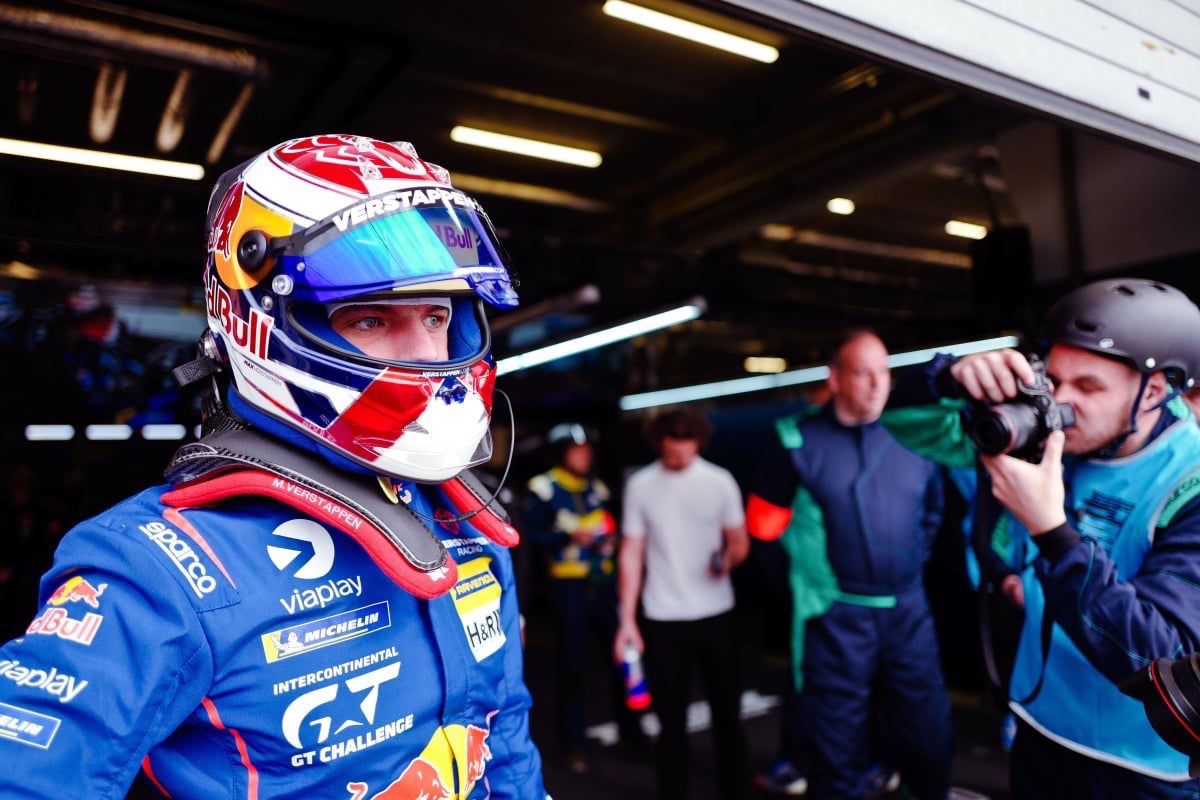
The revelation comes as Verstappen prepares to return to the legendary German circuit this weekend for the Nürburgring 24 Hours, where he will race a Mercedes-AMG GT3 Evo alongside Jules Gounon, Dani Juncadella and Lucas Auer. But Marko’s comments highlight how close the four-time F1 champion came to tackling the 25km “Green Hell” in very different machinery.
Known worldwide for its narrow sections, high-speed crests, blind corners and minimal run-off, the Nordschleife earned its “Green Hell” nickname for a reason. It remains one of the most technically demanding and dangerous circuits in motorsport, a place where even small mistakes are punished severely. Modern F1 has not raced there since 1976, when Niki Lauda’s near-fatal crash led to its removal from the calendar on safety grounds.
Marko said Verstappen’s fascination with the circuit goes back years. At the time, the Dutchman wasn’t interested in a casual run in a GT car. He wanted to complete a demonstration lap in a Red Bull F1 car, a prospect that immediately set off alarm bells inside the team.
“Max has always been drawn to the Nordschleife,” Marko explained. “But when he talked about doing it in a current Formula 1 car, we had to step in. The risk was simply too high.”
The decision reflects Red Bull’s balancing act between encouraging Verstappen’s passion for racing and protecting its biggest asset. While the team has allowed him to compete in other disciplines, including GT and sim racing, an F1 demo on the Nordschleife would have involved speeds well over 300 km/h on public-road sections with barriers and trees inches away in places. One mechanical issue or moment of oversteer could have had catastrophic consequences.
Marko’s intervention wasn’t the first time Red Bull has curbed Verstappen’s appetite for risk. The team has previously limited his participation in activities outside F1, but the Nordschleife case stands out because of the circuit’s reputation. Even drivers who regularly compete there in endurance and touring cars describe it as a track that demands total respect.
Verstappen himself has never hidden his love for the Nordschleife. He first tested there in March during Nürburgring Langstrecken-Serie rounds, winning on debut before a post-race technical infringement stripped the result. His pace in that outing confirmed he could adapt quickly to the circuit’s rhythm, and his performance in Thursday’s 24 Hours qualifying, where he placed third overall, further silenced any doubts.
The contrast between GT and F1 machinery explains Marko’s caution. A GT3 car like the one Verstappen is driving this weekend produces around 550 hp and runs on ABS and traction control. A modern F1 car produces over 1000 hp with ERS, generates far more downforce, and has no electronic driver aids. On a circuit like the Nordschleife, that difference translates to significantly higher cornering speeds, less time to react, and far less margin for error.
Marko’s comments also serve as a reminder of how much the sport has changed since the Nordschleife’s F1 heyday. In the 1970s, drivers routinely tackled the circuit in F1 cars, but safety standards were minimal compared to today. Now, with driver safety and brand protection paramount, teams are far less willing to sanction high-risk promotional runs.
For Verstappen, the ban appears to be water under the bridge. His focus this weekend is on endurance racing, where he will manage traffic, night stints and unpredictable Eifel weather over 24 hours. But Marko’s admission gives fans a glimpse into the behind-the-scenes decisions that shape what the world’s most aggressive driver is and isn’t allowed to do.
Whether Verstappen ever gets his chance in an F1 car on the Nordschleife remains to be seen. For now, Marko’s “no” has kept one of motorsport’s most tantalizing “what ifs” firmly in the realm of fantasy.