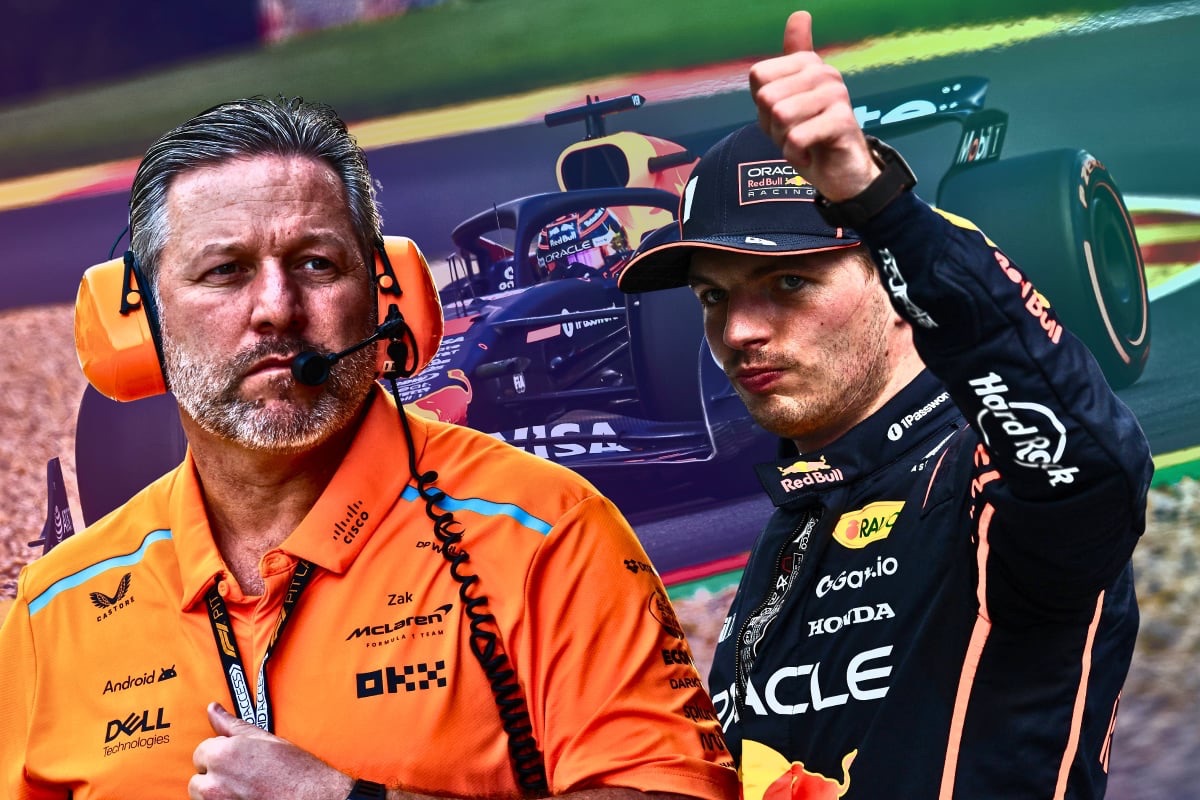
McLaren Racing CEO Zak Brown has renewed his criticism of the close relationship between Red Bull Racing and their sister outfit Racing Bulls, calling the current arrangement “unhealthy” for Formula 1 and warning that it could threaten the sport’s competitive fairness.
Brown has long been one of the strongest voices against the so-called “A/B team” structure in F1, where one organization owns and operates two separate teams on the grid. Red Bull first entered Formula 1 in 2005 and quickly expanded by purchasing the Faenza-based Minardi team, which was rebranded as Toro Rosso for the 2006 season. Over the years, that second team has gone through several identity changes, becoming AlphaTauri, then VCARB, and now Racing Bulls for the 2025 campaign.
Throughout that period, the second team has served as a development platform for Red Bull’s young driver program, helping nurture future stars before they were promoted to the senior team. Drivers such as Sebastian Vettel, Max Verstappen, Daniel Ricciardo, and Isack Hadjar all passed through the junior setup before earning opportunities at the top team.
However, while the model has clearly produced elite talent, Brown believes it creates too much room for sporting conflicts and unfair competitive advantages. Speaking to Sky Sports F1, he argued that teams under shared ownership should not exist in a championship that prides itself on independent competition.
“I’ve been saying for 10 years, I don’t like co-ownership,” Brown explained. “I don’t like A/B teams. I think it runs a high risk of compromising the sporting integrity of the sport.”
One of Brown’s main examples came from the 2024 Singapore Grand Prix, where Ricciardo—then driving for Red Bull’s sister team—set the fastest lap of the race. At the time, that bonus point denied McLaren’s Lando Norris an extra championship point and indirectly helped Verstappen in the title battle.
Although Formula 1 has since removed the fastest lap bonus point system, Brown believes the incident highlighted the dangers of linked teams influencing championship outcomes.
“We’ve seen fastest laps from one team,” Brown said. “Daniel Ricciardo took a point away from McLaren to help Max and Red Bull.”
Brown also raised concerns over what he described as the easier transfer of intellectual property, staff, and technical resources between Red Bull and Racing Bulls. According to him, such movement can create a competitive imbalance, especially under F1’s strict cost cap regulations.
He pointed out that rival teams often face long waiting periods when hiring key personnel from competitors, while connected teams may benefit from smoother internal transitions.
“We’ve seen IP transfer from one team to another. We’ve seen staff move from one team to another overnight where I have to wait until 2028,” Brown said. “So they get a sporting advantage there.”
He further suggested that such arrangements may also create financial benefits that are difficult to measure under the cost cap, as support can come without direct payment.
“Sometimes that comes with some remuneration. They’re not going to have to write a cheque. So that’s a cost cap advantage,” he added.
To explain his concern, Brown compared the situation to football, specifically the Premier League, where two clubs under the same ownership competing in decisive matches would raise obvious questions about fairness.
“Can you imagine in the Premier League, two teams being owned by the same people?” he asked. “The final game of the year, one team loses and gets relegated, the other team wins and they don’t even need the win. How fair is that for sport?”
Brown concluded by insisting that Formula 1 should move away from such ownership structures rather than allowing them to continue or expand.
“I think co-ownership and A/B teams are not a healthy place for us to be as a sport,” he said. “It’s being managed now, but we’ve seen incidents and we need to do away with it, not increase it.”
Despite the controversy, Racing Bulls has undeniably been one of the most successful driver academies in modern F1. Beyond the famous examples of Vettel and Verstappen, several talented drivers have emerged from the system and built strong careers elsewhere.
Carlos Sainz Jr. is perhaps the best example. He partnered Verstappen at Toro Rosso in 2015 and early 2016 but never received a chance at the senior Red Bull team. Recognizing that Verstappen’s place was secure, Sainz moved on to Renault before later racing for McLaren, Ferrari, and Williams Racing.
Today, Sainz is widely regarded as one of the most reliable and respected drivers on the grid, and many believe Red Bull may regret never giving him a full opportunity in the main team.
Similarly, Alex Albon had a brief spell at Red Bull after impressing at Toro Rosso, but struggled under pressure and was eventually replaced. He later rebuilt his reputation at Williams.
Pierre Gasly followed a similar path. After being promoted to Red Bull in 2019 and later demoted back to AlphaTauri, he eventually left for Alpine in 2023, realizing another chance alongside Verstappen was unlikely.
For Brown, these stories highlight both the strength and the complications of Red Bull’s system—one that continues to produce talent, but also raises major questions about how fair Formula 1 should be.