
Mercedes team principal Toto Wolff has reportedly taken the unusual step of consulting legal experts following the fallout from the controversial Monaco Grand Prix penalty saga, a development that underscores the growing tension within Formula 1 after a series of disputed stewarding decisions. The situation, which centers around the dramatic reinstatement of Pierre Gasly to a podium position, has left several teams—most notably Mercedes—questioning the fairness and consistency of race governance.
The controversy stems from a sequence of events during and after the Monaco Grand Prix, where multiple drivers were penalized for allegedly exceeding the pit lane speed limit. Among those affected was Mercedes driver George Russell, whose race was significantly compromised by a chain of penalties. Initially handed a five-second time penalty for speeding in the pit lane, Russell’s situation worsened when Mercedes failed to serve the penalty correctly during his pit stop. This mistake triggered a much harsher drive-through penalty, effectively ending his chances of finishing in the points.
At the time, the penalties appeared straightforward, with data indicating that several drivers had marginally exceeded the 60 km/h speed limit. However, the situation took a dramatic turn after the race when Alpine successfully challenged the penalties imposed on Pierre Gasly. Through a formal “Right of Review” request, Alpine presented new evidence showing that the pit lane timing system had been flawed. Specifically, the distance used to calculate speed between timing loops had been incorrectly measured, leading to false readings that suggested drivers were speeding when, in reality, they were not.
As a result of this discovery, the FIA stewards overturned Gasly’s penalties and reinstated him to third place, restoring his podium finish. While this decision was celebrated by Alpine, it sparked frustration and confusion among rival teams, particularly Mercedes. The reason for this discontent lies in the fact that, unlike Gasly, other drivers—including Russell—had already served their penalties during the race. Under current Formula 1 regulations, there is no provision to reverse or “undo” a penalty once it has been served, even if it is later proven to have been based on incorrect data.
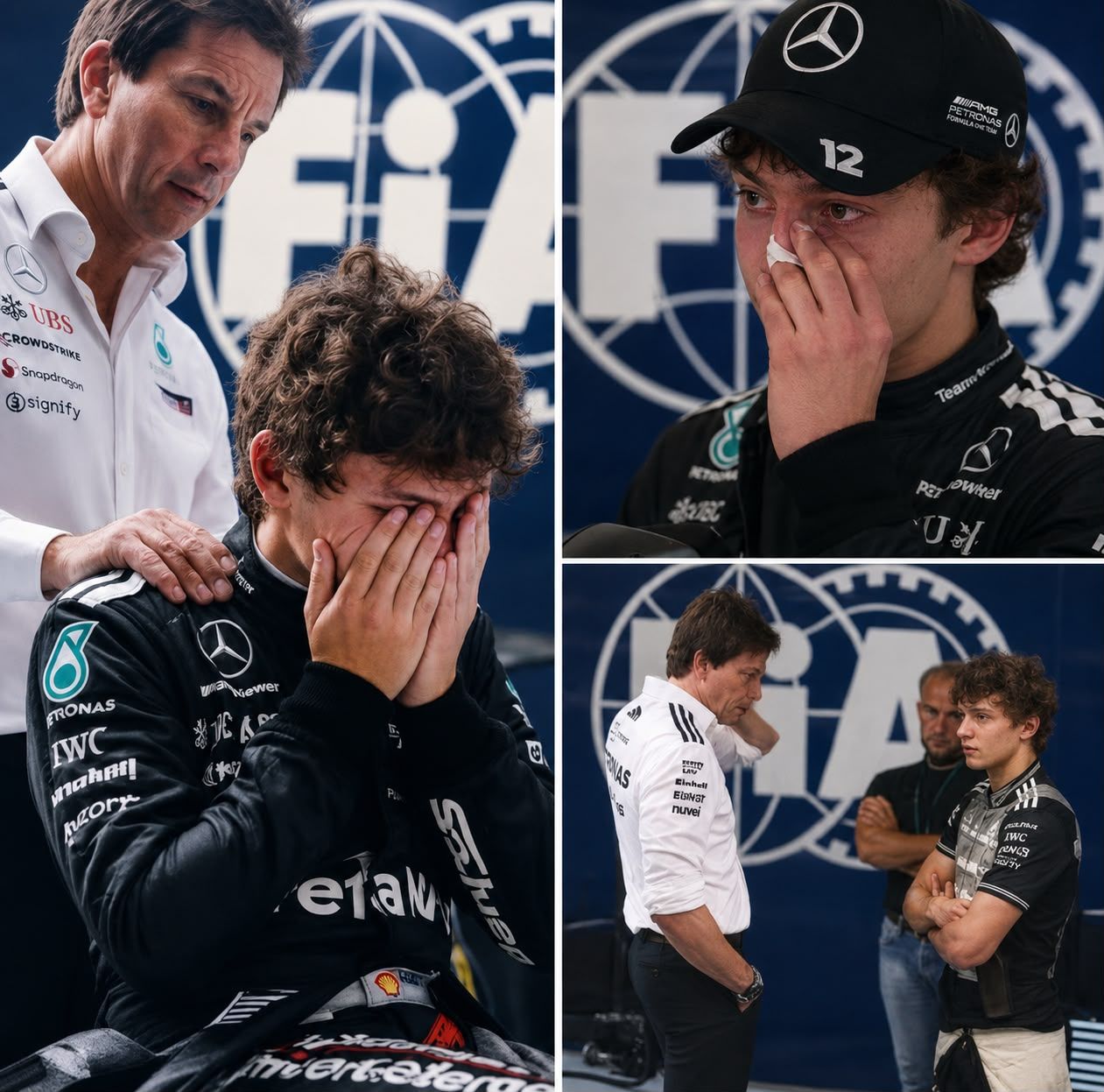
For Toto Wolff and the Mercedes team, this created a deeply frustrating scenario. Russell’s race had been effectively ruined by a penalty that, in hindsight, may never have been justified. Worse still, the subsequent drive-through penalty—triggered by the incorrect handling of the original sanction—amplified the damage, costing the driver valuable championship points.
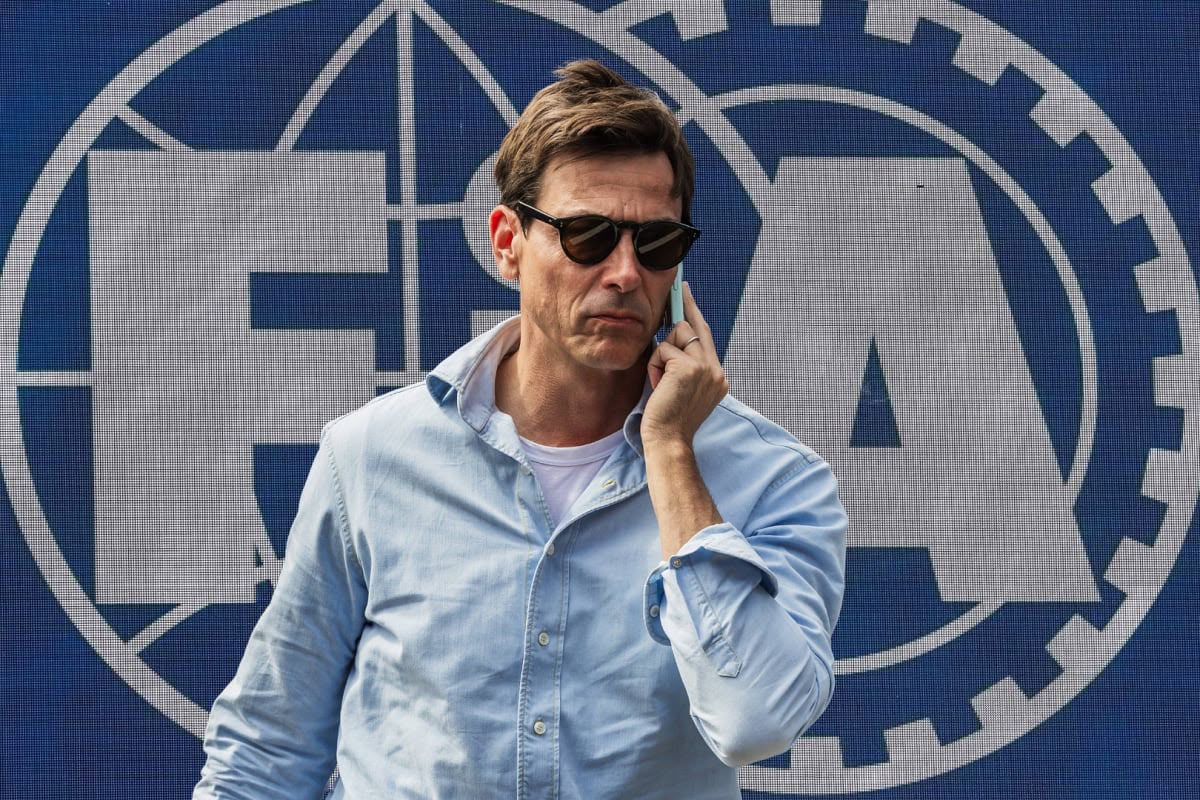
In response, Wolff confirmed that Mercedes had sought legal advice to explore whether there was any possible avenue to challenge the outcome or seek redress. While acknowledging that the chances of successfully overturning the result are slim, Wolff emphasized that the team felt compelled to investigate every possible option. He reportedly indicated that even the slightest possibility of restoring Russell’s position would be worth pursuing, though he admitted that regulatory and timing constraints make such an outcome highly unlikely.
The core issue lies in the structure of Formula 1’s regulatory framework. The FIA stewards have the authority to review decisions if new and significant evidence emerges, as was the case with Gasly. However, this mechanism is constrained by strict procedural timelines and limitations. Teams must file a request within a specific window, and the review must be based on evidence that was not available at the time of the original decision. In Gasly’s case, Alpine met these criteria, but other teams either did not act in time or were unable to present new evidence.
Even more problematic is the rule that prevents the reversal of penalties that have already been served during a race. The stewards themselves have acknowledged this limitation, noting that there is no regulation that allows them to undo such penalties. This has led to a situation where two drivers can be affected by the same erroneous data, yet only one can benefit from a correction, depending on the timing and nature of their penalty.
Wolff’s decision to involve lawyers highlights the seriousness of the issue. While legal action in Formula 1 is rare and often complex, the unprecedented nature of this situation has prompted Mercedes to at least examine the possibilities. According to reports, the team is evaluating whether there are any grounds to challenge the precedent set by the stewards’ decision or to argue that Russell was unfairly disadvantaged by a system error.
Despite these efforts, most experts believe that Mercedes faces an uphill battle. The regulatory framework of Formula 1 is designed to provide finality to race results, and altering outcomes after the fact is generally avoided unless there is a clear and procedurally valid basis for doing so. In this case, the fact that Russell served his penalty during the race significantly complicates any potential challenge.
The broader implications of the controversy extend beyond Mercedes. Other teams, including Red Bull and McLaren, have also expressed dissatisfaction with the handling of the situation and are reportedly considering their own responses. The incident has raised fundamental questions about the reliability of Formula 1’s timing systems and the processes used to enforce rules during a race.
It has also exposed a potential gap in the sport’s governance, where errors in data or technology can have irreversible consequences for some competitors while others are able to recover through post-race appeals. This inconsistency has led to calls for a review of the regulations, with some suggesting that the FIA should introduce mechanisms to address such scenarios more equitably in the future.
For Wolff, the episode is yet another frustration in what has been a challenging season for Mercedes. While the team has shown flashes of competitiveness, incidents like the Monaco penalty saga have undermined their efforts and cost them valuable points in the championship standings.
In the end, Wolff’s decision to consult lawyers may not change the outcome of the Monaco Grand Prix, but it sends a clear message about the team’s dissatisfaction with the current system. It also highlights the growing pressure on Formula 1’s governing bodies to ensure that their processes are not only accurate but also fair and consistent for all competitors.
As the sport moves forward, the Monaco controversy is likely to remain a talking point, prompting discussions about potential reforms and improvements. Whether or not Mercedes can achieve any form of redress, the incident has already left a lasting impact, serving as a reminder of the complexities and challenges of maintaining fairness in one of the world’s most technologically advanced and competitive sports.